Skip to content
Animals Top
Home>Animals>Mammal>Carnivora
Animal Profile IUCN: LC

Mustela felipei

Mustela felipei,Colombian Weasel

Colombian Weasel (scientific name: Mustela felipei) is the second smallest carnivore in the genus Mustela.Colombian Weasel is a species that needs high conservation priority due to the threat of habitat destruction and loss. At least five field expeditions in six distribution areas in Colombia have

Carnivora 586 views
Scientific Name Mustela felipei,Colombian Weasel
Length About 22 cm
Weight 120-150g
Lifespan No verification information
IUCN Status LC
Advertisement

Table of Contents

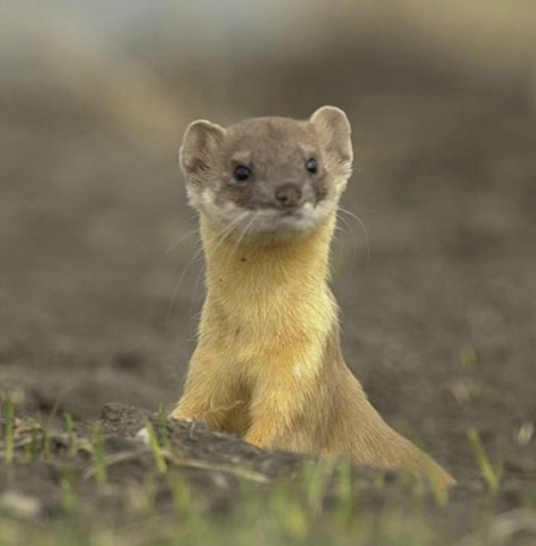
    Colombian Weasel (scientific name: Mustela felipei) is the second smallest carnivore in the genus Mustela.
    0dd7912397dda144f1775cfdb9b7d0a20cf48606.jpg

    Colombian Weasel is a species that needs high conservation priority due to the threat of habitat destruction and loss. At least five field expeditions in six distribution areas in Colombia have failed to detect the species (Ramírez-Chaves and Patterson 2014, J.F.González-Maya pers. comm. 2015). In addition, the natural habitats of three of the five known areas have been severely fragmented in recent years (2015), resulting in the species' dispersion.

    Listed in the 2016 IUCN Red List of Threatened Species ver 3.1 - Vulnerable (VU).


    Protect wildlife and eliminate bushmeat.

    Maintaining ecological balance is everyone's responsibility!



    At a glance

    Profile Details

    Key characteristics, appearance, and habitat information.

    Traits & Behavior

    It has a slender body, short legs, a short head, dark brown upper body and tail, and orange underparts.

    Appearance

    The average head-body length of the Columbian weasel is 22 cm, the tail is 11.5 cm long, and the weight is 120-150 grams. It is the second smallest carnivore in the genus Mustela, only slightly larger than the smallest weasel, and slightly smaller than the white ferret. They have a slender body, short legs, and a short head. They are the same type of animals as weasels, ferrets, minks, and otters. The upper body and tail are dark brown, the lower body is orange, and the fur is very long. They have webbed feet to help them provide stability in semi-aquatic habitats.

    Distribution & Habitat

    Distributed in Colombia and Ecuador.
    Advertisement

    Visual guide

    Browse available images of this species.

    Quick answers

    Mustela felipei FAQs