 LC
LC
Jewel Anemone
Corynactis viridis
The Jewel Anemone, commonly referred to as Corynactis viridis, is a small sea anemone famous for its bright colours and translucen···
Explore the enormous diversity of animals without backbones, from mollusks and arthropods to echinoderms, worms, and other major groups.
Use these shortcuts to move into more specific animal groups.
Invertebrates are the most diverse and widespread group of animals on Earth, accounting for the vast majority of species in the animal kingdom. Invertebrates do not have a backbone, and their body structures vary greatly from simple to complex, adapting to a variety of ecological environments.
Scientific name: Invertebrata (not a strict scientific classification, only describing animals with invertebrate characteristics)
Main characteristics:
Spineless: lack of backbone
Various sizes: From microscopic microorganisms to giant squids, the size range is huge.
Diversity: There are many species, including insects, mollusks, annelids, etc.
Diverse reproduction methods: Includes asexual reproduction and sexual reproduction.
Dominance: Plays an important role in terrestrial, marine and freshwater ecosystems.
Ecological role:
Decomposer: Promotes nutrient cycling.
Food chain base: Provides food for many vertebrates.
Pollinator: Insect pollination maintains plant ecosystems.
Evolutionary history:
Originated from the Cambrian explosion (about 540 million years ago).
They are the earliest group of animals to evolve and form the cornerstone of modern ecosystems.
Invertebrates are divided into several phyla. The following are the main invertebrate phyla and their representative categories.
| Classification level | Phylum | Class | Genus | Examples |
|---|---|---|---|---|
| Phylum | Porifera | Calcarea | Spongia | Lime sponge, glass sponge |
| Cnidaria | Scyphozoa | Aurelia | Jellyfish, anemone | |
| Anthozoa | Corallium | Red coral, staghorn coral | ||
| Platyhelminthes | Platyhelminthes | Turbellaria | Planaria | Turbellaria |
| Trematoda | Schistosoma | Schistosoma | ||
| Cestoda | Taenia | Pork tapeworm | ||
| Nematoda | Secernentea | Caenorhabditis | Nematodes | Roundworms |
| Annelida | Annelida | Polychaeta | Nereis | Nereis |
| Hirudinea | Hirudo | Leech, leech | ||
| Oligochaeta | Lumbricus | Earthworm | ||
| Mollusca | Mollusca | Gastropod (Gastropoda) | Helix | Snails, snails |
| Bivalvia | Mytilus | Mussels, clams | ||
| Cephalopoda | Sepia | Squid, octopus | ||
| Arthropoda | Arthropoda | Insecta | Formica | Ants, butterflies |
| Arachnida | Araneus | Spiders, scorpions | ||
| Crustacea | Cancer | Crabs, shrimps | ||
| Echinodermata | Echinodermata (Echinodermata) | Asteroidea | Asterias | Starfish |
| Echinoidea | Echinus | Sea urchin |
Spineless: lack of vertebrae, body structure ranges from simple to complex.
Diversity: diverse morphology, ranging from single cells to complex multicellular structures.
Gas exchange: gas exchange through the body surface or gills.
Circulatory system: from none to closed circulatory system (such as annelids)
Asexual reproduction: through division or budding (such as sponges).
Sexual reproduction: through fertilized eggs.
Found in the ocean, fresh water and land, it is an important component of the ecosystem.
Cambrian Explosion:
Invertebrates originated in the Cambrian period (about 540 million years ago) and diversified rapidly during the Cambrian Explosion.
Fossils representing early invertebrates include trilobites and brachiopods.
Ocean Domination:
During the Paleozoic Era, invertebrates dominated the oceans, including corals and echinoderms.
Land Invasion:
Arthropods (such as insects and arachnids) were the first invertebrates to adapt to life on land.
Decomposers:
Annelids (such as earthworms) decompose organic matter and improve soil.
Food chain base:
Insects and plankton are food sources for many vertebrates.
Pollination and seed dispersal:
Insects such as bees are important agents of plant pollination.
Representative species: Coral (Corallium), Starfish (Asterias), Anemone (Aurelia).
Distribution: Mainly distributed in tropical and temperate waters.
Representative species: Ants (Formica), snails (Helix).
Distribution: Adapted to various terrestrial ecological environments.
Representative species: Leech (Hirudo), mussel (Mytilus).
Distribution: Distributed in lakes, rivers and wetlands.
Environmental pollution:
Chemical pollution and plastic waste seriously affect marine invertebrates.
Climate change:
Rising temperatures and ocean acidification pose a threat to coral reefs and marine life.
Overfishing:
Commercial fishing puts pressure on invertebrate populations such as shrimp and crabs.
Protection measures:
Establish marine protected areas.
Study the contribution of invertebrates to the ecosystem.
Invertebrates refer to lower animal groups that do not have backbones. They are the primitive form of animals. Their species account for 95% of the total number of animal species. Distributed all over the world, there are about 1 million species in existence. Including protozoa, echinoderms, mollusks, flatworms, annelids, coelenterates, arthropods, nematodes, etc.
Search the animals shown on this page or narrow them by IUCN conservation code.
LC
Corynactis viridis
The Jewel Anemone, commonly referred to as Corynactis viridis, is a small sea anemone famous for its bright colours and translucen···
 LC
LC
Catostylus mosaicus
The Australian Blubber Jellyfish (Catostylus mosaicus), sometimes casually called “jelly blubber,” is a common large scyphozoan ···
 LC
LC
Carukia barnesi
Carukia barnesi is a tiny box jellyfish (class Cubozoa) widely discussed in connection with Irukandji syndrome, a potentially seve···
 LC
LC
Cnidopus verater
The Giant Green Anemone (Cnidopus verater), often simply called the Green Anemone, is one of the most eye-catching animals in Nort···
 LC
LC
Chironex fleckeri
Box jellyfish are members of the class Cubozoa, a group of cnidarians named for their cube-shaped bell. Box jellyfish is not a sin···
 LC
LC
Physalia utriculus
The Bluebottle (Physalia utriculus), sometimes called the Indo-Pacific man o’ war, is one of the best-known marine stingers on Au···
 LC
LC
Chrysolopus spectabilis
The Botany Bay Weevil (Chrysolopus spectabilis) is a distinctive Australian weevilin the family Curculionidae. Famous for its stri···
 LC
LC
Graphium sarpedon
The Blue Triangle Butterfly (Graphium sarpedon) is a striking swallowtail butterflyfound across parts of South Asia, Southeast Asi···
 LC
LC
Lepidoptera: various species associated with Australian mallee habitats
Australian mallee moths are not a single species, but a broad group of moths that live inAustralia’s mallee ecosystems. These mot···
 LC
LC
Hemianax papuensis
The Australian Emperor dragonfly (Hemianax papuensis, sometimes cited asAnax papuensis) is a large, powerful dragonfly in the fami···
 LC
LC
Dermestidae
Australian Carpet Beetles are a group of small dermestid beetles that commonly infest homes,museums and storage facilities in Aust···
 LC
LC
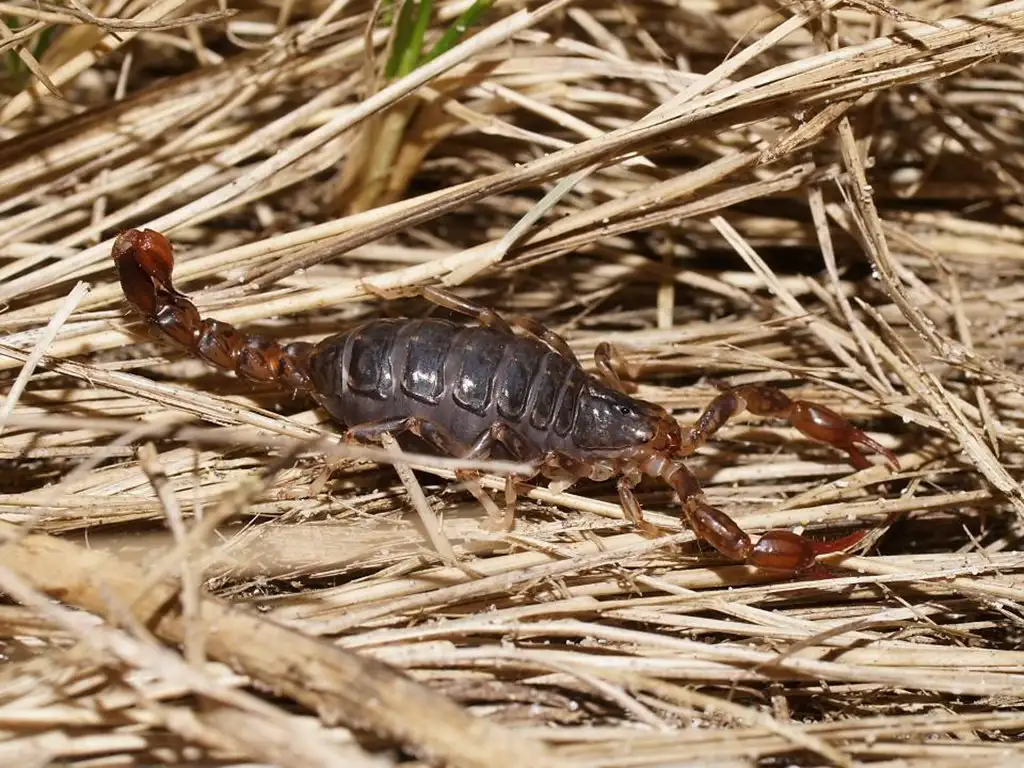
Order Scorpiones – forest- and wood-dwelling scorpions (e.g. Heterometrus spp., Cercophonius squama)
Wood or Forest Scorpions are not a single species but a loose group of scorpions that live mainlyin forests, woodlands and environ···
 LC
LC
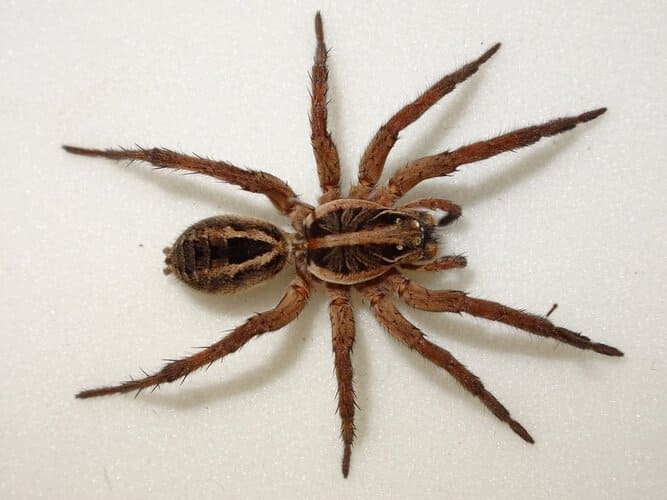
Lycosidae (wolf spider family)
Wolf spiders are members of the family Lycosidae, a large group of ground-dwellinghunting spiders with more than two thousand spec···
 LC
LC
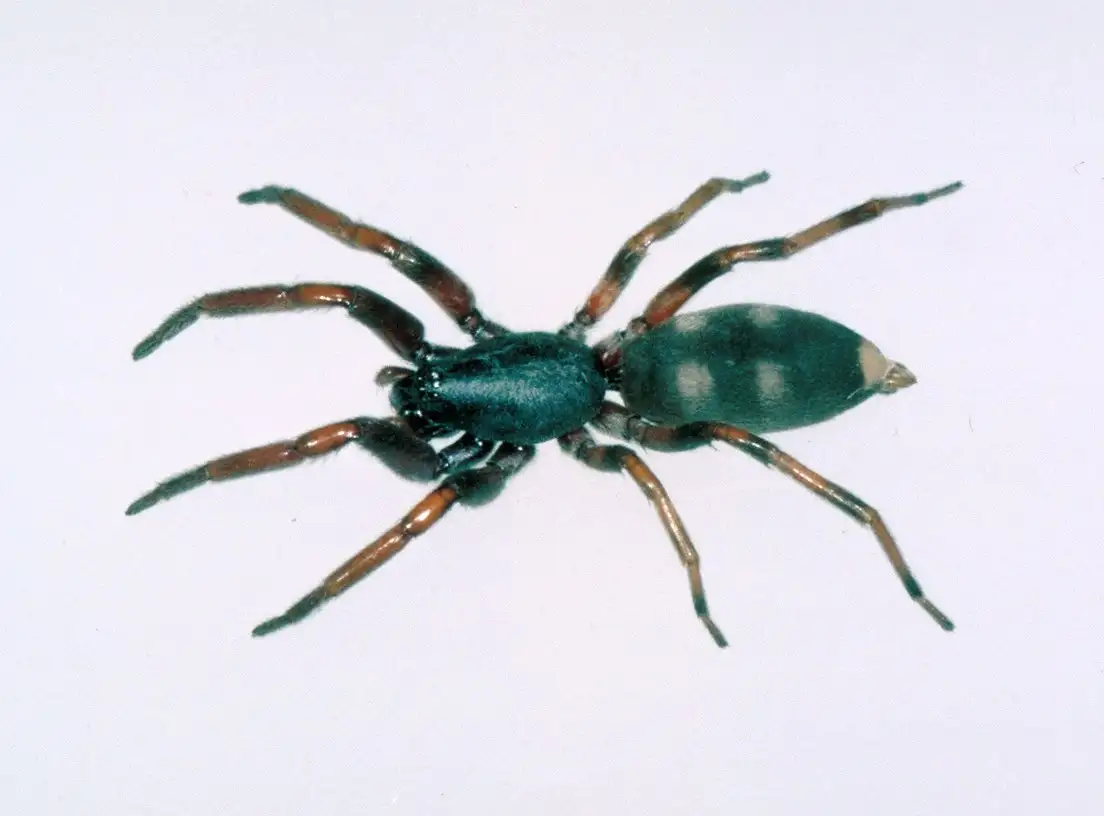
Lampona cylindrata and Lampona murina (family Lamponidae)
The White-tailed Spider is the common name for a small group of spiders with a distinct white patchat the tip of the abdomen, most···
 LC
LC
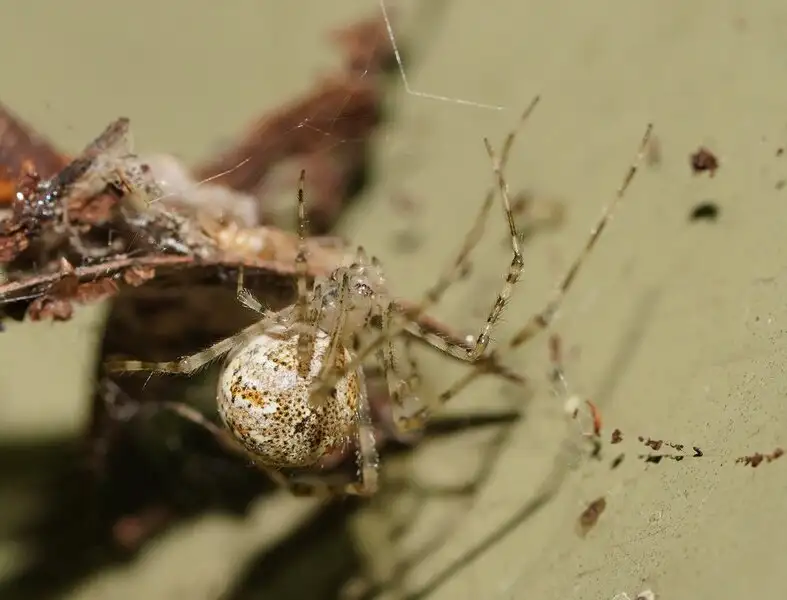
Cryptachaea gigantipes (Keyserling, 1890)
The White Porch Spider is the common name for Cryptachaea gigantipes, a small, pale cobweb spider in the family Theridiidae (the c···
 LC
LC
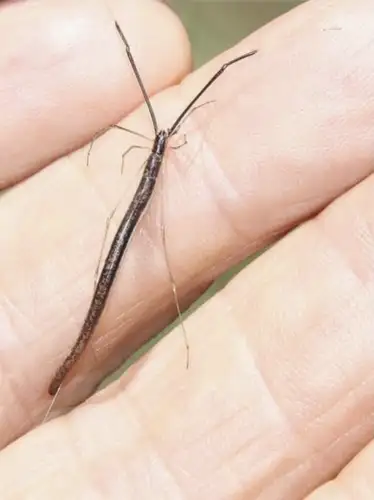
Order Amblypygi (whip spiders / tailless whip scorpions)
Whip spiders, also known as tailless whip scorpions, belong to the arachnid orderAmblypygi. Despite the English name they are neit···
 LC
LC
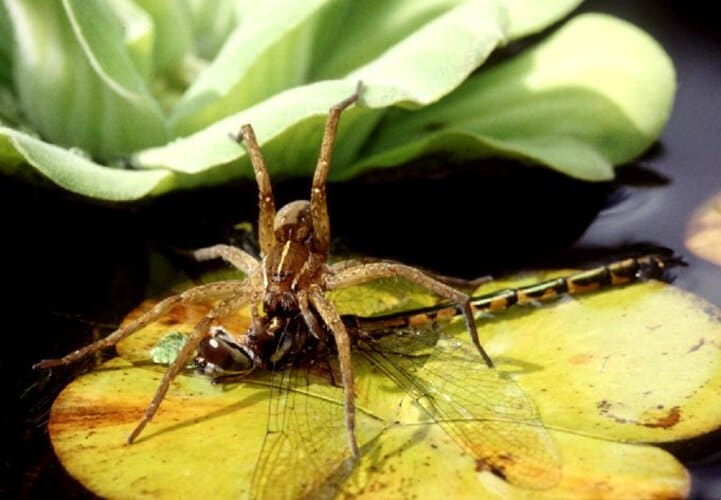
Argyroneta aquatica (Clerck, 1757)
The Water Spider, more precisely the Diving Bell Spider,refers to the species Argyroneta aquatica. It is the only known spider tha···
 LC
LC
Poecilopachys australasia (Griffith & Pidgeon, 1833)
The Two-spined Spider is the common name for Poecilopachys australasia, a small,brightly coloured orb-weaver famous for the two ho···
 LC
LC
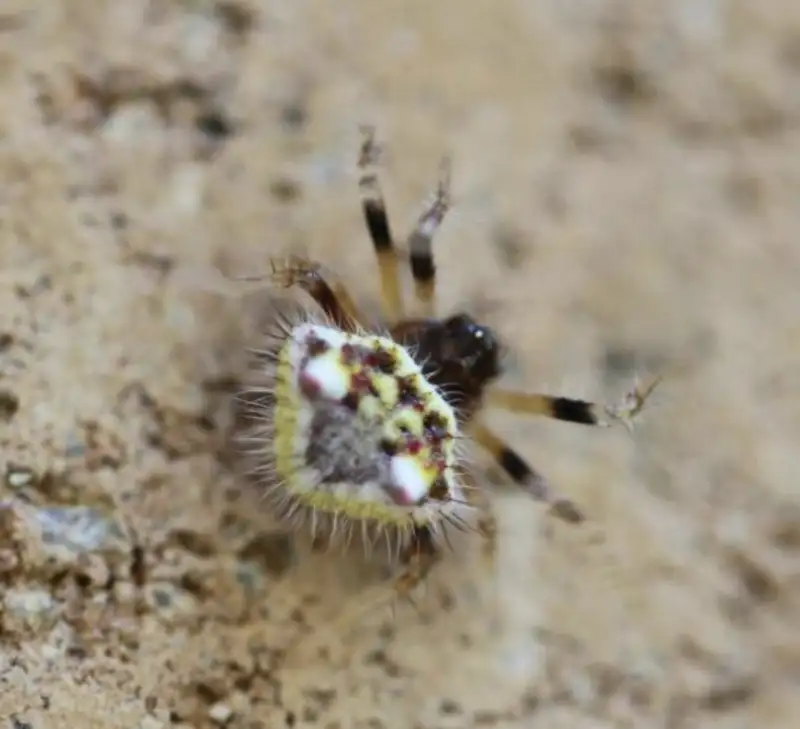
Primarily family Segestriidae and related tube-dwelling spiders
Tube spiders is a common name for spiders that build tube-like silken retreatsin cracks, under stones or behind bark and then wait···
 LC
LC
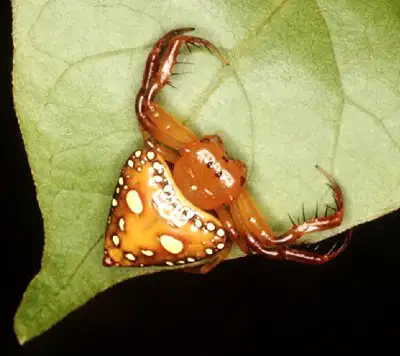
Arkyidae, especially genus Arkys (representative triangular spider group)
Triangular spiders is an informal name for a group of small spiders that have a distinctly triangularor shield shaped abdomen. Man···
 LC
LC
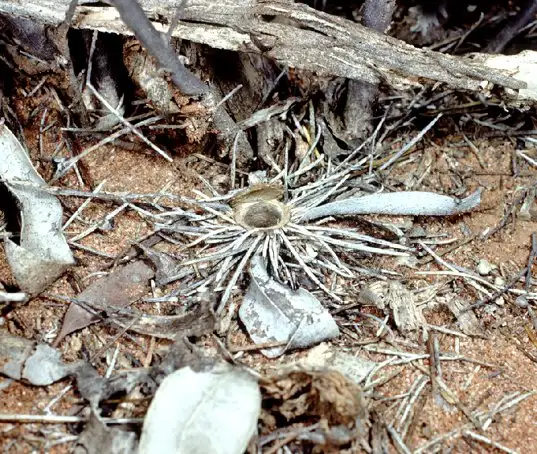
Idiopidae and related trapdoor spider families (representative group)
Trapdoor spiders are a broad group of small to medium sized mygalomorph spiders that specialise indigging burrows in soil and clos···
 LC
LC
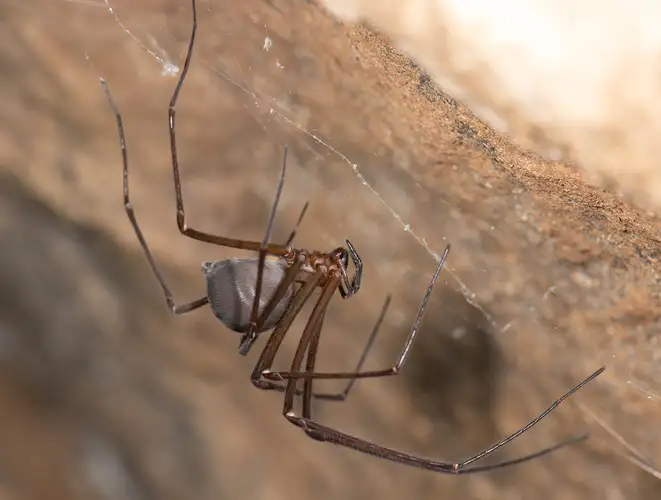
Hickmania troglodytes
The Tasmanian Cave Spider is a distinctive large cave and forest dwelling spider from the island of Tasmania.Its scientific name i···
 LC
LC
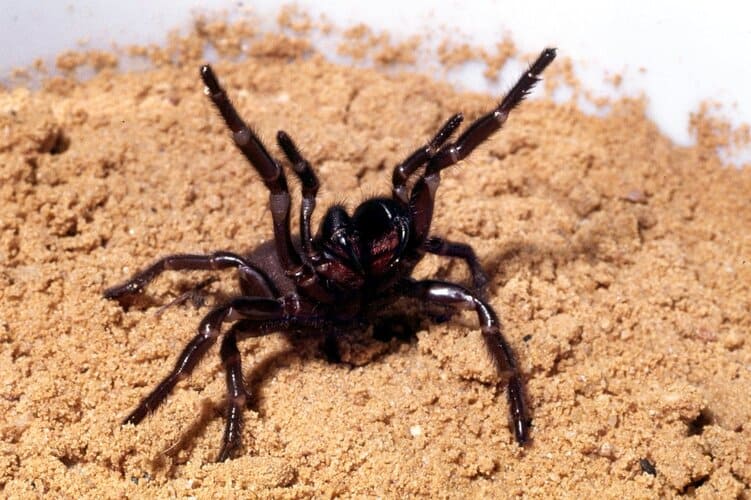
Atrax robustus O. P. Cambridge, 1877
The Sydney Funnel-web Spider is one of the best known highly venomous spiders in the world.Its scientific name is Atrax robustus, ···
 LC
LC
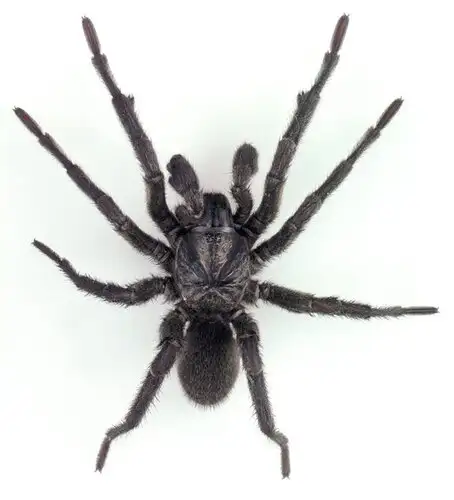
Arbanitis rapax (representative brown trapdoor spider from the Sydney region)
The Sydney Brown Trapdoor Spider is a medium sized, burrow dwelling mygalomorph from eastern Australia.The name is commonly applie···