Skip to content
Animals Top
Home>Animals>Mammal>Carnivora
Animal Profile IUCN: LC

Ocicat

Ocicat

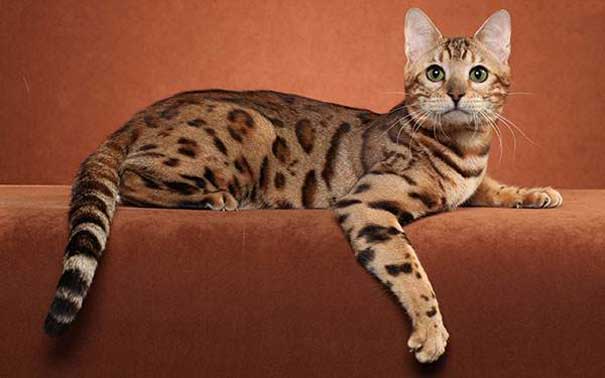
The first Ocicat kitten was born in Europe in 1984. The spots on the body are carefully bred. The entire coat is striped, except for the tip of the tail, and the body has a distinct spotted pattern. The coat color is different from the eye color, but blue eyes are not allowed. Another important feat

Carnivora 655 views
Scientific Name Ocicat
Length About 65 cm
Weight 5-7kg
Lifespan No verification information
IUCN Status LC
Advertisement

Table of Contents

    The first Ocicat kitten was born in Europe in 1984. The spots on the body are carefully bred. The entire coat is striped, except for the tip of the tail, and the body has a distinct spotted pattern. The coat color is different from the eye color, but blue eyes are not allowed. Another important feature is the strong and powerful appearance; the newborn kittens look like leopard cubs.
    f9fabcf7b586246b9d1ab5c71a32b768.jpeg

    The Ocicat is large and heavy, and its weight for an adult cat is 5-7 kg. It is similar in shape to the Abyssinian cat, with a slightly longer carcass, a deep chest and a wide body, hard bones and strong muscles. At the same time, it is full of beautiful taste, which is the biggest charm of the Ocicat.


    Protect wild animals and stop eating game.

    Maintaining ecological balance is everyone's responsibility!


    At a glance

    Profile Details

    Key characteristics, appearance, and habitat information.

    Traits & Behavior

    The entire body, except for the neck and tail, is covered with beautiful, lustrous wild markings.

    Appearance

    The eyes, chin, jaws and underparts of the body are lighter in color. The markings on the head, legs and tail are darker in color. The coat has spots or patterns on a base color of chocolate, blue or silver. The hair is fine and shiny and lies slightly against the body. The body hair is fine and soft and closely attached to the body. The body hair is individual and lighter on the base color and darker on the spots.

    Distribution & Habitat

    Originated from the United States
    Advertisement

    Visual guide

    Browse available images of this species.

    Quick answers

    Ocicat FAQs