The “Somali lion” is a real regional lion population, but Panthera leo somaliensis is no longer recognized as a separate valid lion subspecies under the current IUCN classification. Lions from Somalia were historically given that name, but modern taxonomy generally recognizes only two living lion subspecies: Panthera leo leo and Panthera leo melanochaita. Somali lions remain scientifically interesting because their genetics, appearance and present distribution are still poorly studied, and there is no reliable modern nationwide population estimate for Somalia.
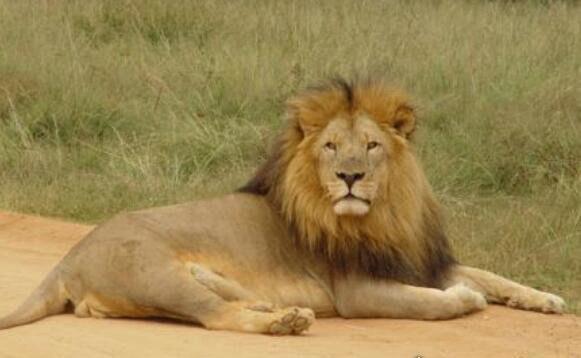
Lions from Somalia were historically described as Panthera leo somaliensis, but this name is not treated as a separate valid subspecies in the current IUCN classification.
What Is the Somali Lion?
The term Somali lion refers to lions historically occurring in Somalia and neighboring parts of the Horn of Africa.
Older zoological literature often used the scientific name:
Panthera leo somaliensis
That name was based on an earlier period when scientists divided African lions into many geographically named subspecies.
Modern genetic research has greatly simplified lion taxonomy.
Today, the lion is treated as a single species:
Panthera leo
with two widely recognized living subspecies under the current IUCN framework.
Is Panthera leo somaliensis Still a Valid Subspecies?
No, not under the current IUCN/SSC Cat Specialist Group classification.
The modern two-subspecies system recognizes:
| Current Subspecies | General Distribution |
|---|---|
| Panthera leo leo | West and Central Africa plus the surviving Asiatic lion population in India |
| Panthera leo melanochaita | Eastern and Southern Africa |
The historical name Panthera leo somaliensis is therefore generally treated as a synonym or historical regional name rather than a currently accepted third subspecies.
Because Somalia lies in eastern Africa, Somali lion populations would generally fall within the broad Panthera leo melanochaita grouping under this system.
However, this does not mean every question about Somali lion genetics has been settled.
Why Was It Called Panthera leo somaliensis?
The name has a complicated taxonomic history.
In 1891, German zoologist Theophil Noack described lions associated with the Somali Peninsula under the name Felis leo var. somaliensis.
At that time, large mammals were often divided into many regional forms based primarily on appearance, skull measurements and geography.
Later authors used combinations including:
Panthera leo somaliensis;
other regional East African lion names;
broader subspecies concepts that combined several of those names.
The situation changed as genetic evidence became available.
Modern lion taxonomy emphasizes large evolutionary lineages rather than giving separate subspecies status to every geographically distinctive population.
Is the Somali Lion Taxonomy Completely Settled?
No.
The current IUCN framework does not recognize P. l. somaliensis as a valid separate subspecies, but researchers have argued that lions in Somalia deserve much better study.
A 2022 review of Somali lions examined historical records, skull measurements, photographs, ecology and distribution.
The authors concluded that the available evidence was insufficient to provide a definitive answer about whether Somali lions represent a taxonomically distinctive population.
They called for modern genetic and conservation research.
This is an important distinction:
“Not currently recognized as a separate subspecies” does not mean “scientifically uninteresting or genetically identical to every other East African lion.”
Are Somali Lions Panthera leo melanochaita?
Under the current IUCN two-subspecies framework, lions from most of eastern and southern Africa are assigned to Panthera leo melanochaita.
Somalia is geographically within the eastern African region, so its lions are generally treated within that broad southern/eastern lineage.
However, northeastern Africa is an especially interesting region for lion phylogeography.
The boundary between the two major lion lineages is not a perfectly straight political border, and historical movement between populations complicates the picture.
Dedicated genomic samples from lions of verified Somali origin would help clarify their relationships much better than appearance alone.
Where Do Somali Lions Live?
Historically, lions occurred across much more of Somalia than they do today.
Early twentieth-century accounts reported them from:
Somaliland and the northern regions;
the Haud;
the Nugaal Valley;
southern Somalia;
areas around the Juba and Shabelle river systems.
Over time, their distribution contracted.
A 2022 scientific review concluded that surviving lions were thought to be concentrated mainly in southern Somalia, with smaller or less certain populations in parts of the north and riverine landscapes.
Those data should not be interpreted as a precise 2026 population map.
Years of conflict and limited wildlife monitoring make reliable nationwide surveys extremely difficult.
Are There Still Lions in Somalia?
Yes, available evidence indicates that lions still persist in Somalia, although their current numbers are poorly known.
Somalia continues to be recognized internationally as a lion range state.
The Federal Government of Somalia also participates in regional and international big-cat conservation initiatives.
However, there is no robust recent national census that allows a reliable statement such as “Somalia has exactly X lions.”
Any precise population figure should therefore be treated cautiously unless it comes from a modern field survey.
What Do Somali Lions Look Like?
Historical accounts often described Somali lions as relatively lean animals adapted to dry environments.
Some males were reported with comparatively reduced or sparse manes.
But these features do not provide a reliable way to diagnose a separate subspecies.
Lion appearance can vary because of:
age;
sex;
genetics;
temperature;
nutrition;
habitat;
individual variation.
Mane size in particular can vary enormously between individual male lions.
Were Somali Lions Maneless?
Not all of them.
Historical photographs and reports include Somali lions with different degrees of mane development.
Some adult males had reduced manes, which attracted attention because similarly sparse-maned lions are also known from hot, dry parts of East Africa such as the Tsavo region of Kenya.
But “Somali lion = maneless lion” is too simplistic.
Mane development is influenced by multiple biological and environmental factors.
A sparse mane cannot by itself identify a lion as being from Somalia.
Is the Somali Lion the Smallest Lion Subspecies?
There is no good modern evidence supporting that statement.
Older sources sometimes described Somali lions as unusually small, but modern taxonomy no longer recognizes P. l. somaliensis as a separate measurable subspecies with a standardized body-size range.
The old claim that it is “the smallest living lion subspecies” should therefore be removed.
Reliable general lion measurements are much broader.
Across the species, adult body size varies strongly with sex, geography, prey availability and individual condition.
How Big Is a Lion?
For the lion species overall, the IUCN Cat Specialist Group reports body masses of approximately:
110–272 kg (243–600 lb)
across adults of different sex and populations.
Smithsonian reports typical adult males at approximately:
150–250 kg (330–550 lb)
with females smaller.
These are general lion figures.
They should not be relabeled as a scientifically established “Somali lion weight range.”
How Long Do Lions Live?
Longevity varies by sex and environment.
Wild males often have shorter lives because territorial competition and injuries create high mortality.
Smithsonian notes that wild males rarely live beyond about 12 years, while females may reach approximately 16 years.
Captive lions receiving veterinary care can survive into their late teens or early twenties.
This is more accurate than assigning every Somali lion a fixed 10–20 year lifespan.
What Do Lions in Somalia Eat?
Like other lions, Somali lions are opportunistic carnivores whose prey depends on what is locally available.
Across Africa, lions typically focus on medium-sized and large ungulates.
Potential prey in the wider Horn of Africa can include:
warthogs and other wild pigs;
zebras where available;
young or vulnerable large ungulates;
smaller vertebrates when larger prey is scarce.
Lions may also kill livestock where wild prey has declined or where pastoral herds overlap lion habitat.
This human-livestock-wildlife interface is one of the major conservation challenges for lions across Africa.
Do Somali Lions Rarely Attack Livestock?
There is not enough modern evidence to support a broad statement that Somali lions “rarely prey on livestock.”
Livestock depredation varies enormously with:
wild prey abundance;
livestock husbandry;
season;
lion density;
availability of secure enclosures;
human settlement patterns.
In pastoral landscapes, conflict with livestock owners can become an important source of lion mortality.
For Somalia specifically, systematic modern field data remain limited.
Do Male Lions Always Eat First?
No fixed rule applies to every lion feeding event.
Lion prides have complex social relationships.
Large adult males can dominate access to a carcass, particularly when food is limited, but feeding order varies with:
who made the kill;
group size;
prey size;
age;
sex;
hunger;
social relationships.
The old formula “male first, highest-ranking female second, cubs last” is therefore too rigid.
How Do Lions Hunt?
Lions are primarily ambush predators.
They often hunt during cooler periods, including at night, dawn and dusk.
Females frequently cooperate when pursuing larger prey, although lions can also hunt alone.
They use vegetation, darkness and terrain to approach before making a relatively short rapid attack.
The forelimbs help seize or destabilize the prey, followed by a killing bite.
Do Lions Always Live in Prides?
No.
Lions are the most social living cats, but their social system is flexible.
A typical pride may contain related adult females, their offspring and one or more adult males.
However:
young males leave their natal prides;
adult males may form coalitions;
some lions spend long periods alone;
pride size changes with habitat and prey availability.
Lions living at low density may show much more dispersed social organization than animals in famous high-density East African study sites.
How Long Is Lion Gestation?
Lion pregnancy lasts approximately 3.5 months, or roughly 110 days.
A typical litter contains around one to four cubs, although larger litters can occur.
Cubs are born small, helpless and spotted.
The spots usually become less obvious as they mature, although faint markings may remain on some adults.
What Is the Conservation Status of the Somali Lion?
There is currently no separate IUCN Red List assessment for a valid subspecies called Panthera leo somaliensis.
The lion species, Panthera leo, is classified as:
Vulnerable (VU)
by the IUCN Red List.
Under the two-subspecies system:
Panthera leo melanochaita is classified as Vulnerable;
Panthera leo leo is classified as Endangered.
This means the old LC label on this Somali lion profile is incorrect.
Why Are Lions Threatened?
Major threats across the lion's range include:
habitat loss;
loss of wild prey;
retaliatory killing after livestock losses;
fragmentation of lion populations;
illegal killing;
poorly regulated exploitation in some areas.
In Somalia, researchers have also highlighted additional challenges linked to prolonged insecurity and illegal wildlife trade.
Is Illegal Wildlife Trade a Problem in Somalia?
Yes.
The 2022 review of Somalia's lions discussed evidence of cubs entering illegal trade and identified wildlife trafficking as one of the threats requiring greater attention.
Somalia has since increased formal cooperation with international wildlife-conservation organizations and has specifically emphasized combating illegal wildlife trafficking.
However, improving enforcement and generating basic population data remain important challenges.
How Many Lions Are Left in Somalia?
No reliable modern nationwide estimate is available.
This is one of the most important corrections to make when discussing Somali lions.
Conflict, remote landscapes and limited long-term wildlife monitoring make surveys difficult.
A scientific review published in 2022 could describe probable remaining distribution but could not provide a robust national population estimate.
Until standardized camera-trap, genetic or spoor surveys cover major parts of the country, precise numerical claims should be avoided.
Are Lions Extinct in Somaliland?
The historical record shows that lions once occurred widely across northern Somalia and Somaliland.
Today their status there is much less certain.
Recent conservation work in Somaliland has documented substantial habitat loss and community memories of lions disappearing from landscapes where they formerly occurred.
That does not justify declaring every part of northern Somalia completely lion-free without systematic surveys.
The safest conclusion is that lions have undergone major range contraction and any surviving northern populations appear to be sparse or poorly documented.
Can You Identify a Somali Lion by Its Mane?
No.
Mane appearance alone cannot establish geographic origin or subspecies.
Lion manes vary from:
very sparse;
short and pale;
full and blond;
large and very dark.
Age, hormones, genetics and environmental conditions all influence mane development.
Reliable population identification requires geographic records and ideally genetic evidence.
Why Does the Somali Lion Still Appear as a Subspecies Online?
Because taxonomy changes slowly across the internet.
Many wildlife websites copied information from older encyclopedias that recognized numerous regional African lion subspecies.
Those names then continued circulating long after major taxonomic revisions.
The same issue affects names such as:
Masai lion;
Katanga lion;
Transvaal lion;
Senegal lion;
Somali lion.
These names may still be useful when discussing historical populations or geography, but they do not necessarily correspond to currently accepted subspecies.
Does That Mean Regional Lion Populations Don't Matter?
No.
Taxonomic simplification should not be confused with conservation uniformity.
Even within the two currently recognized lion subspecies, populations can be genetically, ecologically and geographically important.
A locally adapted or isolated population may deserve conservation attention even if scientists do not assign it its own formal subspecies name.
This is especially relevant in poorly studied regions such as Somalia.
Why Somali Lions Need More Research
Somali lions remain poorly understood compared with famous populations in places such as the Serengeti, Maasai Mara or Kruger ecosystems.
Important unanswered questions include:
how many lions remain in Somalia;
where breeding populations still persist;
how connected they are to lions in Kenya and Ethiopia;
whether northern and southern populations are genetically distinct;
how often lions come into conflict with livestock;
how much illegal wildlife trade affects them.
Modern genetic sampling and systematic field surveys would be much more informative than trying to classify lions from mane appearance alone.
Somali Lion Quick Facts
| Fact | Current Best Answer |
|---|---|
| Common name | Somali lion |
| Species | Panthera leo |
| Historical scientific name | Panthera leo somaliensis |
| Current separate subspecies? | No |
| Current broad grouping | Generally associated with eastern African P. l. melanochaita under the IUCN two-subspecies framework |
| Country | Somalia |
| Reliable national population estimate | Not currently available |
| Species IUCN status | Vulnerable |
| Main threats | Habitat and prey loss, conflict with people, illegal killing and wildlife trade |
Frequently Asked Questions
Is Panthera leo somaliensis a valid subspecies?
Not under the current IUCN lion taxonomy. The name is best treated as a historical name for lions from Somalia. Modern taxonomy generally recognizes only Panthera leo leo and Panthera leo melanochaita.
What is the scientific name of the Somali lion?
The species is Panthera leo. Panthera leo somaliensis is a historical subspecies name that is no longer recognized as a separate valid subspecies by the current IUCN classification.
Are there lions in Somalia?
Yes, available scientific and conservation evidence indicates that lions still persist in Somalia, particularly in parts of the south, although their exact current distribution and abundance are poorly documented.
How many lions are left in Somalia?
There is no reliable recent nationwide population estimate. Long-term conflict, insecurity and limited wildlife monitoring have made comprehensive lion surveys difficult.
Is the Somali lion extinct?
No. Lions have undergone major declines in Somalia, but available evidence does not support declaring lions nationally extinct.
Is the Somali lion the smallest lion?
There is no reliable modern evidence supporting the claim that Somali lions are the world's smallest lion subspecies. The old subspecies itself is no longer formally recognized under the current two-subspecies classification.
Do Somali lions have no mane?
No. Historical Somali males varied in mane development. Some were sparsely maned, but others had clear manes. Mane size is too variable to identify a lion's taxonomic origin.
What subspecies are lions in Somalia?
Under the current IUCN framework, lions from eastern Africa are generally grouped within Panthera leo melanochaita. More genetic research on lions of verified Somali origin would help clarify their exact phylogeographic relationships.
What is the IUCN status of the Somali lion?
There is no separate current IUCN assessment for Panthera leo somaliensis. The lion species Panthera leo is classified as Vulnerable, and the eastern/southern African subspecies P. l. melanochaita is also classified as Vulnerable.
Why was Panthera leo somaliensis removed?
Modern genetic studies showed that the many traditional regional African lion subspecies did not correspond well to the deepest evolutionary divisions. The IUCN Cat Specialist Group therefore adopted a simplified system recognizing two major subspecies.
Are Somali lions genetically unique?
That remains incompletely resolved. A 2022 scientific review found enough historical and morphological interest to justify further research, but not enough evidence to establish Somali lions as a separate valid subspecies.
Scientific and Official Sources
IUCN Red List — Panthera leo taxonomy, conservation status and current two-subspecies framework.
IUCN/SSC Cat Specialist Group — current lion taxonomy, size and conservation information.
American Society of Mammalogists Mammal Diversity Database — Panthera leo and historical synonym somaliensis.
Gippoliti et al., 2022, Journal of Animal Diversity — “The lions of Somalia: a review of available morphological and socio-ecological data.”
Smithsonian's National Zoo and Conservation Biology Institute — general lion biology, body size, diet and lifespan.
Convention on Migratory Species — Somalia listed as a range state for Panthera leo.
Federal Government of Somalia, Ministry of Environment and Climate Change — recent international cooperation on big-cat and wildlife conservation.