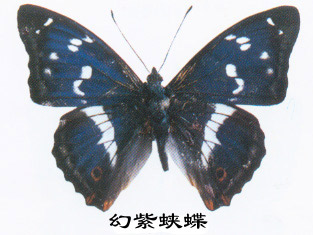
The camouflage coloration of the larval stage of the purple phantom butterfly is a good example of cryptic coloration. The adults lay their eggs on willow leaves in July, and the larvae feed on the willow leaves until they are 3rd instar. At this time, the light green slug-shaped larva crawls to the fork of a branch and spends the winter there. Overwintering larvae turn to light brown, exactly matching the color of the bark. When spring comes, the larvae resume feeding on the newly exposed leaf buds, and soon turn back to green, with the exact same shape as willow leaves. When resting, it disguises itself as a willow leaf. The pupa is another masterpiece of disguise. Its shape and color are very much like a dead willow leaf.