Most grasshoppers do not migrate somewhere warm for winter. In temperate climates, the adults of many common species die in late summer or fall after laying eggs, while the next generation survives underground as eggs inside protective pods in the soil. A smaller number of species overwinter as nymphs or adults and may become active on mild winter days.
This is why grasshoppers seem to “disappear” when cold weather arrives: for most species, the visible adults are gone, but the population is still present in another life stage. The exact winter strategy depends on the grasshopper species and local climate.
What Happens to Grasshoppers in Winter?
| Winter strategy | How common is it? | Where they spend winter | What happens in spring? |
|---|---|---|---|
| Overwinter as eggs | Most common | Egg pods buried in soil | Eggs resume development and hatch as temperatures rise |
| Overwinter as nymphs | Less common | Protected ground-level habitats | Nymphs become active on warm days and continue developing |
| Overwinter as adults | Species- and climate-dependent | Sheltered vegetation or protected microhabitats | Adults may become active during mild weather |
| Long-distance migration | Not the normal winter strategy for most grasshoppers | Varies in migratory locusts and a few highly mobile species | Depends on species and region |
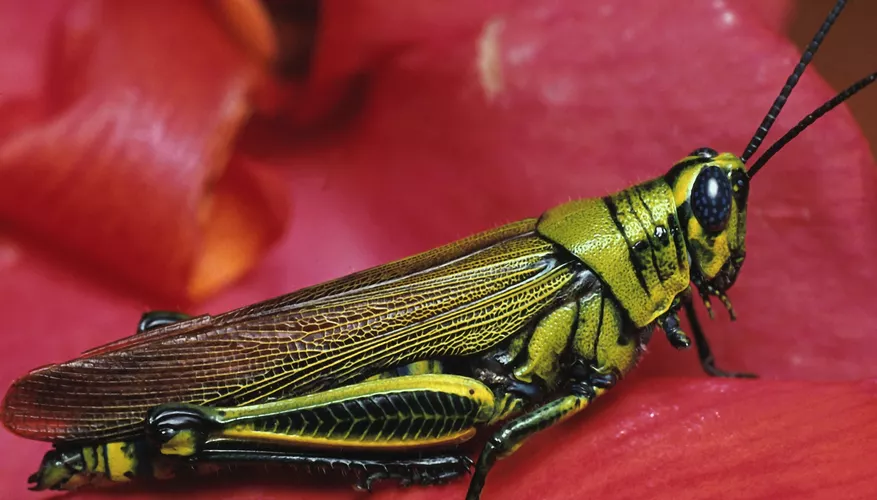
Adult grasshoppers are easy to notice in summer, but in many species the adults die after reproducing and the next generation survives winter as eggs underground.
Most Grasshoppers Survive Winter as Eggs in the Soil
The most common winter strategy is surprisingly simple: the adult female lays eggs in the ground before winter, and those eggs remain there until conditions are suitable for development and hatching.
Grasshopper eggs are usually deposited in clusters called egg pods. The female places them in soil, often in relatively undisturbed areas such as grassland, field margins, rangeland, roadside edges, fence lines, open lots, or other sites with suitable soil conditions.
For many pest grasshopper species, the egg is the main overwintering stage. The adult generation dies, but the eggs remain protected beneath the soil surface. When soil temperatures rise in spring or early summer, development resumes and young grasshopper nymphs emerge.
Colorado State University Extension notes that the egg stage is the overwintering stage for most grasshoppers, while Utah State University Extension similarly reports that grasshoppers commonly spend winter as eggs in soil pods.
Do Grasshoppers Hibernate?
People often use the word “hibernate” for any animal that becomes inactive during winter, but grasshoppers are better described in terms of overwintering and, in many cases, diapause.
Diapause is a programmed pause in development that helps insects survive unfavorable seasons. For many grasshoppers, this winter pause occurs inside the egg. The embryo does not simply freeze and restart like a machine; its development is regulated so that hatching occurs when environmental conditions become suitable.
A few grasshopper species overwinter as nymphs or adults instead. These insects may stay relatively inactive during cold periods and then move or feed when temperatures become mild enough.
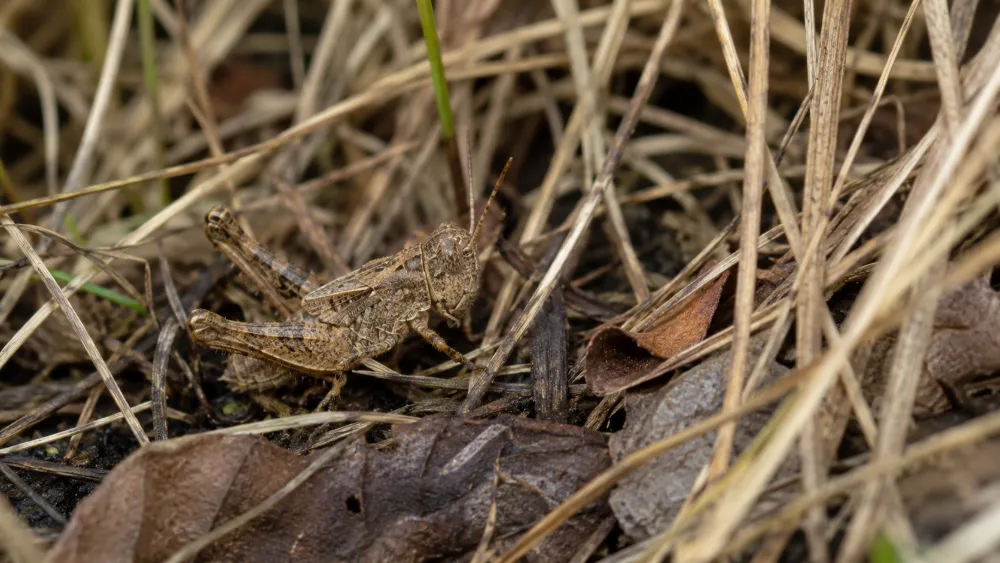
Why Do Adult Grasshoppers Disappear in Fall?
In species that overwinter as eggs, adult grasshoppers usually do not survive the entire winter. Their life cycle is timed so that adults feed, mate and lay eggs during the warmer months. After reproduction, the adults die as temperatures fall and the season ends.
That means the sudden absence of grasshoppers from a field or garden does not necessarily mean the population has been eliminated. Thousands of eggs may remain hidden beneath the soil surface until the following spring.
This also explains why a location can seem grasshopper-free throughout winter and then have many young grasshoppers appear within a relatively short period when warm weather returns.
Some Grasshoppers Spend Winter as Nymphs
Not every grasshopper follows the egg-overwintering pattern. A few species hatch earlier and enter winter as immature nymphs. Nymphs resemble smaller, wingless versions of adults and grow through a series of molts.
Colorado State University Extension gives the speckledwinged grasshopper as an example of a species that can overwinter as a nymph. These grasshoppers may become active during warm winter days and can continue developing toward adulthood before spring is fully established.
If you see a grasshopper moving on an unusually warm winter afternoon, it may therefore be a species that naturally survives the cold season above the egg stage rather than a newly arrived migrant.

Can Adult Grasshoppers Survive Winter?
Some species and populations can overwinter as adults, especially in climates where winter conditions are milder. Adult survival depends on species biology, temperature, shelter, food availability and local microclimates.
However, this should not be generalized to all grasshoppers. For many familiar temperate grasshopper species, adults die before or during winter and the eggs carry the population into the next year.
So if the question is “Where are all the adult grasshoppers in January?”, the most accurate answer for many regions is: most of last season's adults are gone, while their offspring are still eggs in the soil.
Do Grasshoppers Migrate South for Winter?
Most grasshoppers do not make a seasonal southward migration comparable to migratory birds. The original version of this article overstated migration as a general grasshopper winter strategy.
Some highly mobile grasshoppers and locusts can move long distances in response to food, population density, rainfall and changing environmental conditions. However, migration is not the standard explanation for the disappearance of most grasshoppers in temperate winters.
It is also important to distinguish grasshoppers from locusts. Locusts are certain grasshopper species capable of dramatic density-dependent changes in behavior and long-distance swarm movement; not every grasshopper is a locust.
For more background on the group, see Insect Classification and What Are Insects and Their Main Characteristics.
How Can Grasshopper Eggs Survive Freezing Weather?
Grasshopper eggs are much more cold-tolerant than an exposed summer adult might appear to be. The surrounding soil buffers rapid temperature changes, and snow cover can provide additional insulation.
Utah State University Extension notes that overwintering grasshopper egg pods can tolerate freezing conditions and that snow can help insulate the soil. A cold winter therefore does not automatically kill all grasshopper eggs.
Winter survival also depends on moisture and species. Extremely dry conditions, flooding, pathogens, predators and other environmental pressures can reduce egg survival, while favorable winter and spring weather can contribute to larger populations the following season.
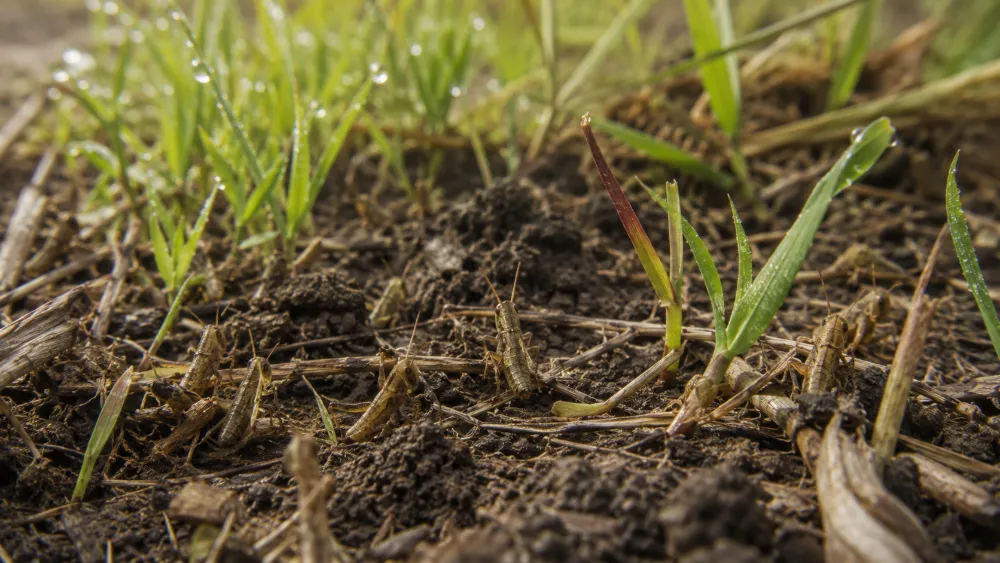
Does Snow Kill Grasshopper Eggs?
Usually, snow itself is not the main threat. In fact, a stable snow layer can insulate the ground from more extreme fluctuations in air temperature.
The eggs are buried in soil, so the temperature they experience can be very different from the coldest air temperature measured above the ground. This is one reason a harsh-looking winter does not always prevent a grasshopper outbreak the next summer.
What matters more is the combination of soil temperature, soil moisture, snow cover, spring weather and the condition of the egg pods.
When Do Grasshopper Eggs Hatch?
Hatching time varies by species and climate, but many grasshoppers emerge in spring or early summer after the soil warms sufficiently. Different species hatch at different times, so grasshopper emergence can continue over a period of weeks rather than happening on one single day.
After hatching, the young nymphs begin feeding and grow through several stages called instars. They molt repeatedly before developing full adult wings.
Oklahoma State University Extension reports that many grasshopper species develop through about five nymphal instars and may reach adulthood roughly five to eight weeks after hatching, depending on species and conditions.
Why Warm, Dry Springs Can Lead to More Grasshoppers
Winter is only part of the story. Spring weather has a major effect on how many young grasshoppers survive after hatching.
Warm conditions can speed egg hatch and nymph development. Persistent cool, wet weather can slow nymph activity and may increase mortality from weather, disease and other natural controls. Food availability also matters because newly hatched nymphs need suitable tender vegetation.
This is why grasshopper numbers can vary dramatically from year to year even when large numbers of eggs were laid the previous fall.
Where Are Grasshopper Eggs Found in Winter?
Egg pods are commonly placed in soil rather than on exposed leaves or branches. Depending on the species, favored sites can include:
undisturbed grassland and rangeland
field margins and fence lines
roadsides and open lots
weedy areas
pastures and harvested fields
sunny, relatively dry patches of suitable soil
Because the eggs are underground, you normally will not see them while walking through a winter field. Their hidden location is one reason people assume grasshoppers have left the area entirely.
What Do Grasshoppers Eat Before Winter?
Adults continue feeding while conditions remain suitable, building energy for activity and reproduction. Most grasshoppers are primarily plant eaters, feeding on grasses, leaves and other vegetation, although diet varies by species.
The important biological goal late in the season is reproduction. Females need enough resources to produce and deposit viable egg pods before cold weather ends the adult phase of the life cycle.
For a more detailed look at feeding, see Grasshopper Diets: An Overview of What Grasshoppers Eat.
What Happens When Spring Arrives?
As the soil warms, overwintered eggs resume development and hatch. Tiny nymphs move to the surface and begin feeding on available vegetation.
The first days after hatching are important. Young grasshoppers are more vulnerable than adults to adverse weather, limited food, predators, parasites and disease. Those that survive grow through successive molts until they develop into winged adults.
The cycle then repeats: adults feed and reproduce during the warm season, females lay egg pods, and in many species those eggs become the stage that bridges one year to the next.
Frequently Asked Questions
Where do grasshoppers go when it gets cold?
Most common grasshoppers do not go somewhere else. In many species, the adults die after reproduction and the population survives winter as eggs buried in the soil. A smaller number of species overwinter as nymphs or adults.
Do grasshoppers die in winter?
Many adult grasshoppers die in late summer or fall, but that does not mean the species disappears. Their eggs can remain alive underground and hatch the following spring.
Do grasshoppers hibernate underground?
Most do not spend winter underground as adult grasshoppers. Instead, many species overwinter as eggs in soil. Some insects enter diapause, a seasonal pause in development, during the egg stage.
Can you see grasshoppers in winter?
Yes, but it is uncommon in many temperate regions. Species that overwinter as nymphs or adults can sometimes become active on warm winter days.
Does a very cold winter kill grasshopper eggs?
Not necessarily. Egg pods are protected by soil and can be cold-tolerant. Snow cover may further insulate them. Winter and spring moisture, temperature and other environmental conditions all affect survival.
Are locusts and grasshoppers the same thing?
Locusts are grasshoppers, but not all grasshoppers are locusts. The term “locust” refers to certain grasshopper species that can undergo behavioral and physical changes associated with dense populations and swarming.
Official Sources and Further Reading
Colorado State University Extension — Grasshopper Life History
Utah State University Extension — Conditions for Grasshopper Survival
Final Takeaway
So, where do grasshoppers go in winter? For most familiar temperate species, they do not go anywhere at all. The adults finish their life cycle, while egg pods remain hidden in the soil until warmer conditions return. A few species survive winter as nymphs or adults, which is why an occasional grasshopper can still appear on a mild winter day. The key point is that grasshoppers survive the cold in different life stages depending on the species, and overwintering as eggs is by far the most common pattern.