Skip to content
Animals Top
Home>Animals>Mammal>Lagoiformes
Animal Profile IUCN: LC

Chinese pika

Chinese pika

The Chinese pika belongs to the subgenus <Conothoa>. The species was first published by Thomas (1911) as a subspecies of the gray pika (<Ochotona roylei chinensis>). After the publication, no scientist has collected and studied this taxon. Russian scientist Lissovsky (2013) believed that

Lagoiformes 671 views
Scientific Name Chinese pika
Length 180mm
Weight
Lifespan
IUCN Status LC
Advertisement

Table of Contents

    The Chinese pika belongs to the subgenus <Conothoa>. The species was first published by Thomas (1911) as a subspecies of the gray pika (<Ochotona roylei chinensis>). After the publication, no scientist has collected and studied this taxon. Russian scientist Lissovsky (2013) believed that this taxon belonged to the big-eared pika (<Ochotona macrotis>) without collecting specimens. More than a hundred years later, Liu Shaoying et al. collected the ground model specimen of this taxon again in 2017. Phylogenetic studies at the genome level confirmed that this taxon is an independent species (Wang et al., 2020), which is only distributed in Sichuan.

    1_Jiulei Image Converter.jpg

    2_Jiulei Image Converter.jpg

    At a glance

    Profile Details

    Key characteristics, appearance, and habitat information.

    Traits & Behavior

    Gray spots above the eyes

    Appearance

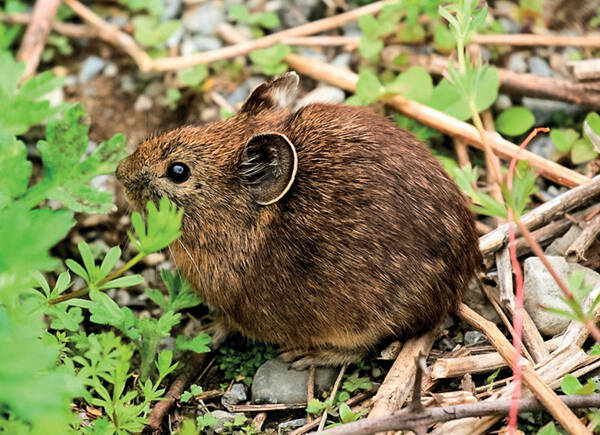
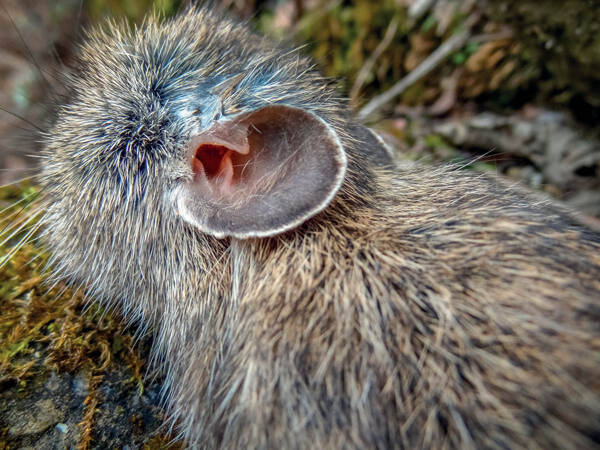
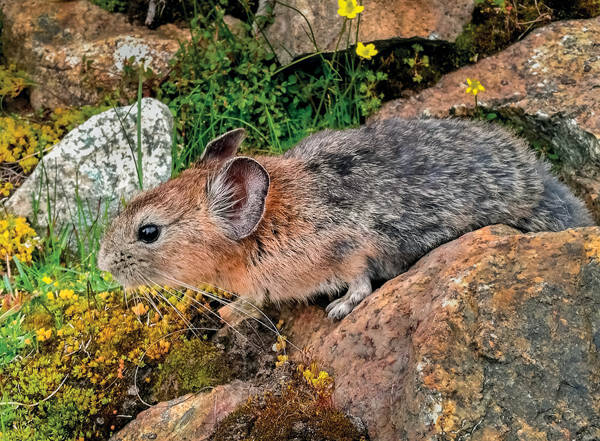
    The individual is medium-sized. The average body length is 180mm. The ears are large, averaging 30mm. The winter coat is brown in the front half of the body, and gray after the chest. There are gray and white spots above the eyes; there is a tuft of longer white hair in front of the ears, the ears are gray and white, and the ear edges are black. The abdomen is gray and white. The back of the front and back feet is white. In terms of skull morphology, the incisor foramen and palatine foramen are merged into a large foramen, and there is an oval foramen on the frontal bone.

    Distribution & Habitat

    It is endemic to China and is only distributed in Kangding and Litang, Sichuan.
    Advertisement

    Visual guide

    Browse available images of this species.

    Quick answers

    Chinese pika FAQs