Skip to content
Animals Top
Home>Animals>Birds>Landfowl
Animal Profile IUCN: LC

Ortalis squamata

Ortalis squamata,Scaled Chachalaca

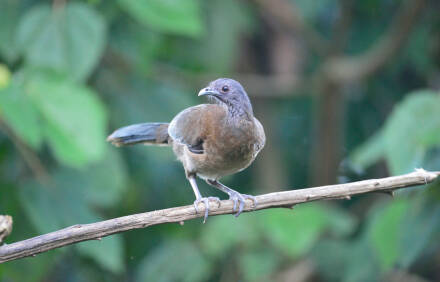
Scaled Chachalaca (Ortalis squamata), no subspecies.Like other pheasants of the same genus, the scaly Crested pheasant eats more leaves than fruit and occasionally pecks at insects. There will be loud and repeated beeps and alarm sounds. Generally in small, monogamous groups, breeding is most likely

Landfowl 469 views
Scientific Name Ortalis squamata,Scaled Chachalaca
Length About 50 cm
Weight 498-620g
Lifespan No textual research information is available
IUCN Status LC
Advertisement

Table of Contents

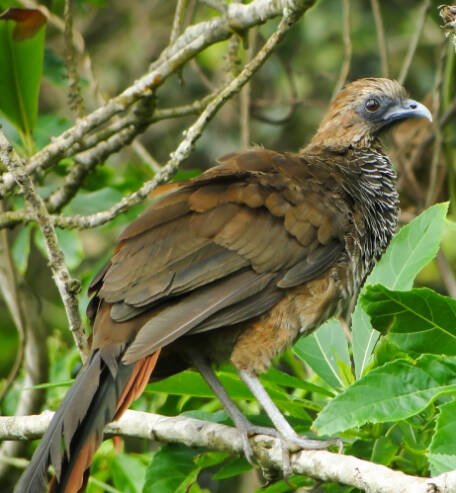
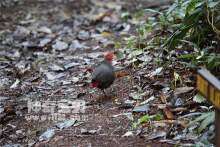
    Scaled Chachalaca (Ortalis squamata), no subspecies.
    bd3eb13533fa828be729cdc0f71f4134970a5a8e_ nine ray image converter. JPG

    Like other pheasants of the same genus, the scaly Crested pheasant eats more leaves than fruit and occasionally pecks at insects. There will be loud and repeated beeps and alarm sounds. Generally in small, monogamous groups, breeding is most likely to occur during the rainy season, between October and November. Each litter hatches an average of three chicks.

    Listed on the International Union for Conservation of Nature (IUCN) 2016 Red List of Threatened Species ver 3.1 - Not Threatened (LC).


    Protect wild animals and eliminate wild meat.

    Maintaining ecological balance is everyone's responsibility!


    At a glance

    Profile Details

    Key characteristics, appearance, and habitat information.

    Traits & Behavior

    Appearance

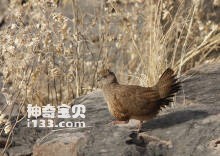
    The average body length of the pheasant is 50 cm, the male bird weighs 620 grams, and the female bird weighs 498 grams. The upper body feathers are mainly composed of brown markings, the tail brown to brown, the lower throat and thorax light brown, with a distinct white margin. Beak and legs are dark gray.

    Distribution & Habitat

    Distributed in Brazil.
    It inhabits the margins of tropical lowland evergreen forests, living mainly at altitudes from sea level to 800 m high.
    Advertisement

    Visual guide

    Browse available images of this species.

    Quick answers

    Ortalis squamata FAQs