Skip to content
Animals Top
Home>Animals>Birds>Landfowl
Animal Profile IUCN: LC

Rhynchortyx cinctus

Rhynchortyx cinctus,Tawny-faced Quail

Tawny-faced Quail (Rhynchortyx cinctus) feeds on plant seeds and insects. They usually live in pairs, but small groups of up to eight birds have been reported. Females begin laying eggs in early March and are monogamous.Listed on the International Union for Conservation of Nature (IUCN) 2016 Red Lis

Landfowl 496 views
Scientific Name Rhynchortyx cinctus,Tawny-faced Quail
Length 17-20cm
Weight 150-165g
Lifespan No textual research information is available
IUCN Status LC
Advertisement

Table of Contents

    Tawny-faced Quail (Rhynchortyx cinctus) feeds on plant seeds and insects. They usually live in pairs, but small groups of up to eight birds have been reported. Females begin laying eggs in early March and are monogamous.

    314 e251f95cad1c894f7b543753e6709c93d5101_ nine ray image converter. JPG

    Listed on the International Union for Conservation of Nature (IUCN) 2016 Red List of Threatened Species ver 3.1 - Not Threatened (LC).


    Protect wild animals and eliminate wild meat.

    Maintaining ecological balance is everyone's responsibility!


    At a glance

    Profile Details

    Key characteristics, appearance, and habitat information.

    Traits & Behavior

    Brown-red parts on the head and cheeks, with black stripes from the eyes to the neck

    Appearance

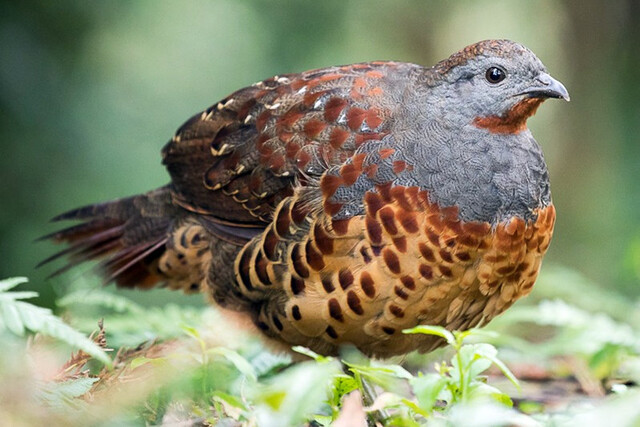
    The tea quail is 17-20 cm long and 150-165 g. The head and cheeks are brown-red, and there are black stripes through the eyes to the neck. The overall plumage is coloured grey and brown. The irises are black, and the beak and legs are iron gray.

    Distribution & Habitat

    It is found in Colombia, Costa Rica, Ecuador, Honduras, Nicaragua, and Panama. The natural habitat is subtropical or tropical wetland lowland forest and subtropical or tropical wetland mountain forest below 1450 meters above sea level.
    Advertisement

    Visual guide

    Browse available images of this species.

    Quick answers

    Rhynchortyx cinctus FAQs