Skip to content
Animals Top
Home>Animals>Birds>Landfowl
Animal Profile IUCN: LC

Anurophasis monorthonyx

Anurophasis monorthonyx,Snow Mountain Quail

Snow partrail is known as Anurophasis monorthonyx and Snow Mountain Quail.Listed on the International Union for Conservation of Nature (IUCN) 2016 Red List of Threatened Species ver 3.1 - Near Threatened (NT).Protect wild animals and eliminate wild meat.Maintaining ecological balance is everyone'

Landfowl 516 views
Scientific Name Anurophasis monorthonyx,Snow Mountain Quail
Length 25-28cm
Weight About 401g
Lifespan No textual research information is available
IUCN Status LC
Advertisement

Table of Contents

    Snow partrail is known as Anurophasis monorthonyx and Snow Mountain Quail.
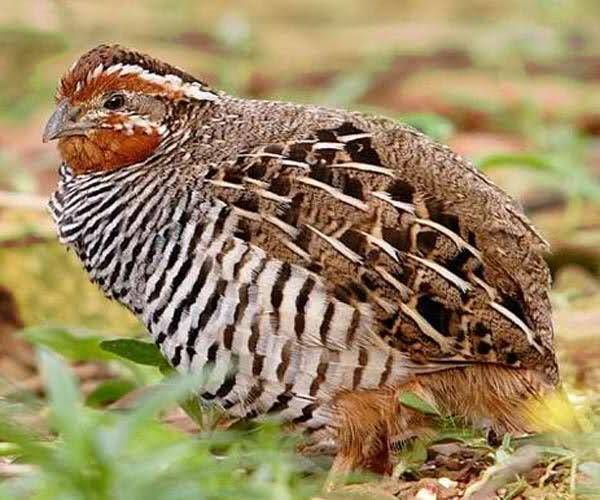
    8 c87a6f58b2026ccc663af298a9aedb6_ nine ray image converter. Jpeg

    Listed on the International Union for Conservation of Nature (IUCN) 2016 Red List of Threatened Species ver 3.1 - Near Threatened (NT).


    Protect wild animals and eliminate wild meat.

    Maintaining ecological balance is everyone's responsibility!

    At a glance

    Profile Details

    Key characteristics, appearance, and habitat information.

    Traits & Behavior

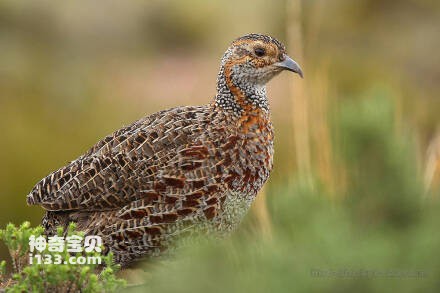
    There is a wide white crown between the eyes and the roof, and dense and finely broken black markings on the body

    Appearance

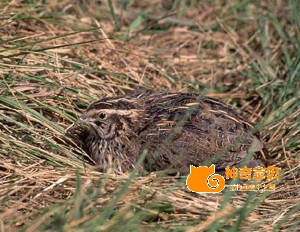
    Snow partridge is 25-28 cm long and weighs 401 grams. Chestnut yellow on the forehead, dark brown on the head, pillow and hindneck, deep chestnut yellow on the tip of the feather; There is a wide white crown between the eye and the crown. Reddish-brown brow lines, from forehead to neck; The eyes, cheeks and ear feathers are light brown. The back is pale yellowish-chestnut with dense and finely broken black markings. Inside and outside: there are yellowish-brown wavy thin transverse spots; The same goes for shoulder feathers. The wings are reddish brown, with large diamond-shaped black markings mixed with white stripes. The chin, larynx, and anterior part of the neck are russet brown, with distinct white and black transverse stripes from the neck to the thorax and abdomen.

    Distribution & Habitat

    Found in snowy mountains and alpine grasslands of Indonesia and New Guinea. It inhabits snowy mountains and alpine grasslands.
    Advertisement

    Visual guide

    Browse available images of this species.

    Quick answers

    Anurophasis monorthonyx FAQs