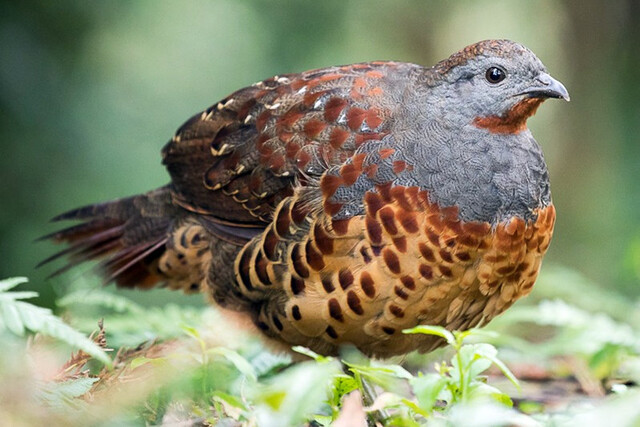
Coturnix pectoralis (also known as Pectoral Quail) is a quail that often travels in pairs rather than flocks. It is often active in the plains, wastelands, streams and hillsides where dense weeds or undergrowth grow, and sometimes near arable land. Mainly eat weed seeds, beans, grains and berries, young leaves, buds, etc., eat a lot of insects and larvae in summer, as well as small invertebrates.
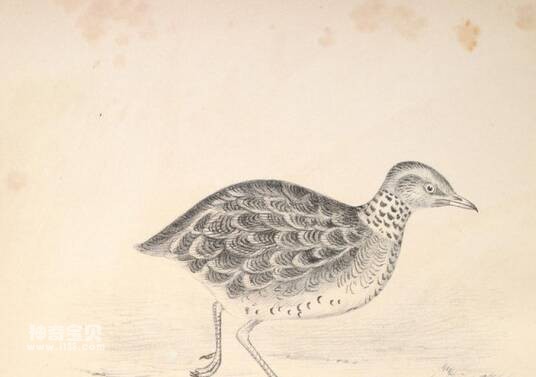
The breeding season for Australian quail is from May to July. Nest on the ground in grass, farmland, or grass or scrub on a slope. Male and female birds do not form a fixed mating relationship, but a multi-male mating system. Males usually occupy and start calling shortly after arriving at the breeding site, and males are very aggressive during the breeding season. Nest in plain grassland, farmland side or barren slope grass, thicket. The nest mainly uses the shallow pit in the concave of the ground, which is filled with dried thin grass stems, grass roots, grass leaves and feathers. Each clutch lays 7-15 eggs, white or olive brown, scattered with brown or rust spots, size 25.6-33×19-25 mm, weight 5.6-7 grams, incubation period 15-17 days.
Listed on the International Union for Conservation of Nature (IUCN) 2016 Red List of Threatened Species ver3.1: Not Threatened (LC).
Protect wild animals and eliminate wild meat.
Maintaining ecological balance is everyone's responsibility!