Skip to content
Animals Top
Home>Animals>Birds>Landfowl
Animal Profile IUCN: LC

Francolinus sephaena

Francolinus sephaena,Crested Francolin

Francolinus sephaena, or Crested Francolin, is a small, omnivorous pheasant bird.When a partridge is frightened, its dark crest will stand upright and its tail will rise 45 degrees as it walks. It feeds on fruits, seeds and insects. The nest is usually built under bushes, but occasionally it is buil

Landfowl 547 views
Scientific Name Francolinus sephaena,Crested Francolin
Length No textual research information is available
Weight No textual research information is available
Lifespan No textual research information is available
IUCN Status LC
Advertisement

Table of Contents

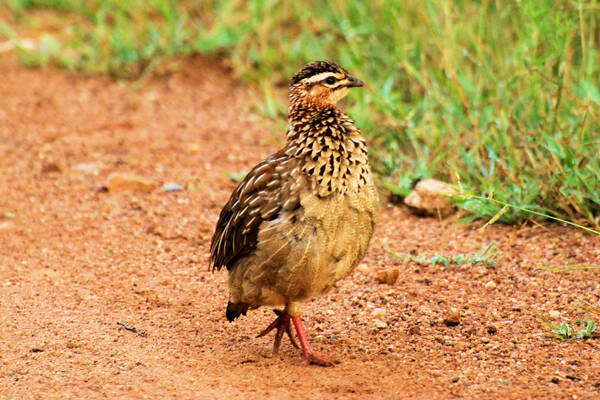
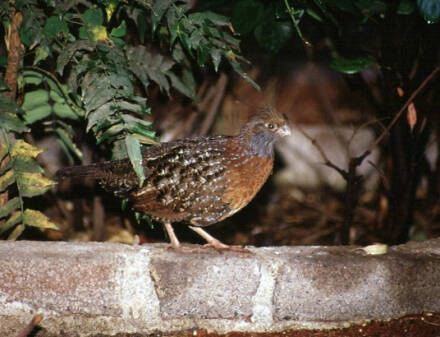
    Francolinus sephaena, or Crested Francolin, is a small, omnivorous pheasant bird.
    b5fd554bef915c7d83dbc6cf6b020f65_ nine ray image converter. Jpeg

    When a partridge is frightened, its dark crest will stand upright and its tail will rise 45 degrees as it walks. It feeds on fruits, seeds and insects. The nest is usually built under bushes, but occasionally it is built directly on the ground.


    International Union for Conservation of Nature (IUCN) Red List Protection Level: No Threat (LC).


    Protect wild animals and eliminate wild meat.

    Maintaining ecological balance is everyone's responsibility!

    At a glance

    Profile Details

    Key characteristics, appearance, and habitat information.

    Traits & Behavior

    The crest stands upright when frightened

    Appearance

    Its plumage varies from reddish-brown on the back to white on the chest, mixed with black and white dots. The top of the head is black, with thick white stripes above the eyes, the mouth is black and short, and the feet are red.

    Distribution & Habitat

    It is found in central and southern Africa (including the southern Arabian Peninsula and the entire African continent south of the Sahara Desert (Tropic of Cancer).)
    It inhabits woodlands, savannas, shrubland and bramble grasslands.
    Advertisement

    Visual guide

    Browse available images of this species.

    Quick answers

    Francolinus sephaena FAQs