Skip to content
Animals Top
Home>Animals>Birds>Landfowl
Animal Profile IUCN: LC

Pternistis camerunensis

Pternistis camerunensis,Cameroon Francolin

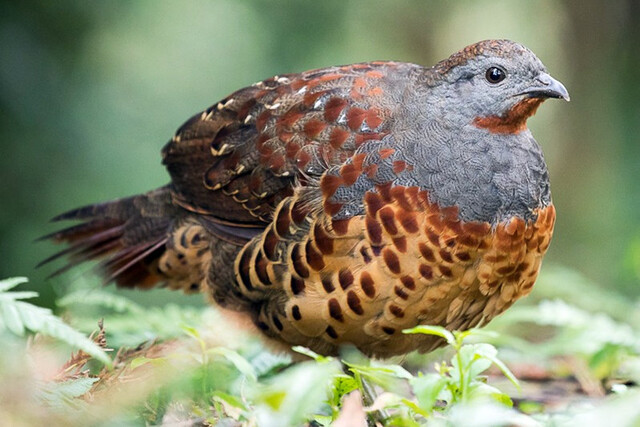
The camerunensis species is Cameroon Francolin (Pternistis camerunensis), without subspecies.Cameroonian colored partridge feeds mainly on berries, grass seeds and insects. Flying into a tree or running around in panic to avoid danger instead of flying.The Cameroonian colored partridge is endangered

Landfowl 507 views
Scientific Name Pternistis camerunensis,Cameroon Francolin
Length About 33 cm
Weight 509-593g
Lifespan No textual research information is available
IUCN Status LC
Advertisement

Table of Contents

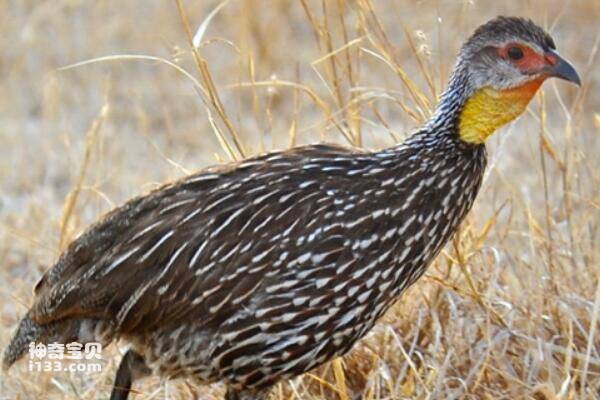
    The camerunensis species is Cameroon Francolin (Pternistis camerunensis), without subspecies.
    19 fa386c3395ee66177366958932bc49_ nine ray image converter. JPG

    Cameroonian colored partridge feeds mainly on berries, grass seeds and insects. Flying into a tree or running around in panic to avoid danger instead of flying.

    The Cameroonian colored partridge is endangered, with an estimated population of 600-1700 mature individuals. The range is limited to 200 km ² in the mountainous southeastern part of Cameroon.

    Listed on the International Union for Conservation of Nature (IUCN) 2016 Red List of Threatened Species ver 3.1 - Endangered (EN).


    Protect wild animals and eliminate wild meat.

    Maintaining ecological balance is everyone's responsibility!


    At a glance

    Profile Details

    Key characteristics, appearance, and habitat information.

    Traits & Behavior

    The beak and legs are red

    Appearance

    Cameroonian colored partridge is about 33 cm long. The male weighs 593 g and the female 509 g, very similar to the brightly colored partridge (Pternistis nobilis), but with a broader dark brown upper body and a lack of chestnut color. The lower body is gray. Lack of bare red skin around the eyes. The beak and legs are red.

    Distribution & Habitat

    It is found in the mountains of Cameroon. Habitat in primary forests and secondary forests, living in dense undergrowth.
    Advertisement

    Visual guide

    Browse available images of this species.

    Quick answers

    Pternistis camerunensis FAQs