Skip to content
Animals Top
Home>Animals>Birds>Landfowl
Animal Profile IUCN: LC

Pternistis swierstrai

Pternistis swierstrai,Swierstra's Francolin

Swierstra (scientific name: Pternistis swierstrai) foreign name Swierstra' s Francolin, no subspecies.The partridge is usually solitary. Look for grass seeds, bean seeds and insects among the forest leaves. When encountering danger, he prefers running to escape danger rather than flying. The bre

Landfowl 509 views
Scientific Name Pternistis swierstrai,Swierstra's Francolin
Length About 33 cm
Weight 375-565g
Lifespan No textual research information is available
IUCN Status LC
Advertisement

Table of Contents

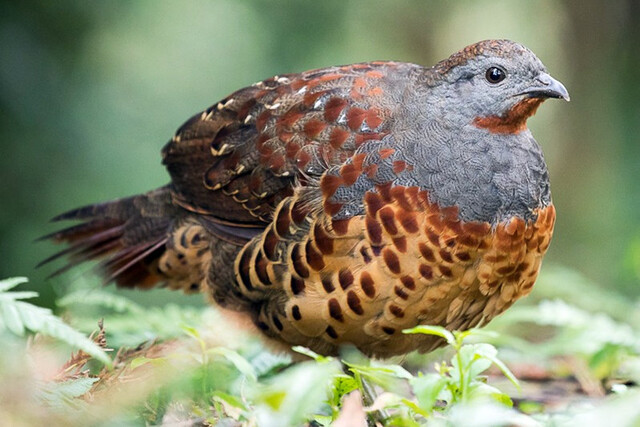
    Swierstra (scientific name: Pternistis swierstrai) foreign name Swierstra' s Francolin, no subspecies.
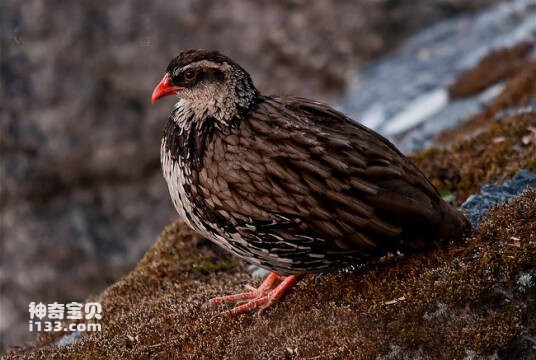
    5366 d0160924ab1882e16a2c39fae6cd7b890b31_ nine ray image converter. JPG

    The partridge is usually solitary. Look for grass seeds, bean seeds and insects among the forest leaves. When encountering danger, he prefers running to escape danger rather than flying. The breeding season is from May to July. It has also been suggested that the whole season of breeding can be year-round.

    Listed on the International Union for Conservation of Nature (IUCN) 2016 Red List of Threatened Species ver 3.1 - Endangered (EN).


    Protect wild animals and eliminate wild meat.

    Maintaining ecological balance is everyone's responsibility!


    At a glance

    Profile Details

    Key characteristics, appearance, and habitat information.

    Traits & Behavior

    The male bird is black and white with a broad black chest band with black spots

    Appearance

    The partridge was 33 cm long; Weight 375-565 grams. The forehead and crown are dark brown, the ears are brown, and the wide white eyebrows reach to the throat and neck. It is a mixed black and white land bird, the male is black and white, the chest is black with a wide breast band, black spots. The lower body is closer to the dark brown range. The female bird has a lower body similar to the male bird, but the plumage is paler and the back is iron-red rust. The beak and legs are orange.

    Distribution & Habitat

    It is found in Angola.
    It lives in scrub, on the edges of forests and around farmlands, including brush wastelands, rocky hillsides and tree-shaded rivers.
    Advertisement

    Visual guide

    Browse available images of this species.

    Quick answers

    Pternistis swierstrai FAQs