Skip to content
Animals Top
Home>Animals>Birds>Landfowl
Animal Profile IUCN: LC

Streptopelia roseogrisea

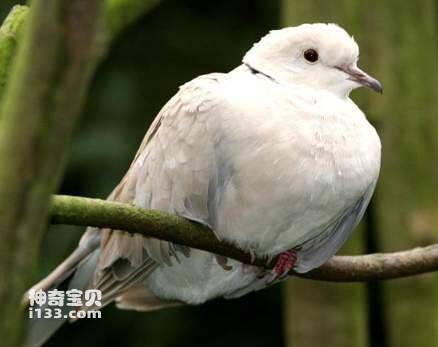
Streptopelia roseogrisea,African Collared-dove

Streptopelia roseogrisea, African Collared dove, a migratory bird that winters in northern Africa. The ringnecked turtle dove is a domesticated variant of the turtle dove that now has a New World wild population in California and Florida; Forage on the ground and eat lots of small seeds. Normal way

Landfowl 597 views
Scientific Name Streptopelia roseogrisea,African Collared-dove
Length About 28 cm
Weight No textual research information is available
Lifespan No textual research information is available
IUCN Status LC
Advertisement

Table of Contents

    Streptopelia roseogrisea, African Collared dove, a migratory bird that winters in northern Africa. The ringnecked turtle dove is a domesticated variant of the turtle dove that now has a New World wild population in California and Florida; Forage on the ground and eat lots of small seeds. Normal way of laying eggs.
    b58f8c5494eef01f3254a080e0fe9925bc317d36_ nine ray image converter. JPG


    Listed in the International Union for Conservation of Nature (IUCN) ver 3.1: Red List of Birds 2010.


    Protect wild animals and eliminate wild meat.

    Maintaining ecological balance is everyone's responsibility!


    Tags

    At a glance

    Profile Details

    Key characteristics, appearance, and habitat information.

    Traits & Behavior

    Appearance

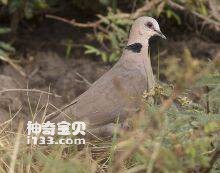
    It is 28 cm (11 inches) long. The body is light reddish-brown, the head blue-gray, the tail tip white.

    Distribution & Habitat

    It is distributed in Eurasia and northern Africa, including the whole of Europe, Africa north of the Tropic of Return, the Arabian Peninsula, and Asia north of the Himalayas - Hengduan Mountains - Minshan Mountains - Qinling Mountains - Huai River. The region of south-central Africa, including the southern part of the Arabian Peninsula and the entire African continent south of the Sahara Desert (Tropic of Cancer).
    Advertisement

    Visual guide

    Browse available images of this species.

    Quick answers

    Streptopelia roseogrisea FAQs