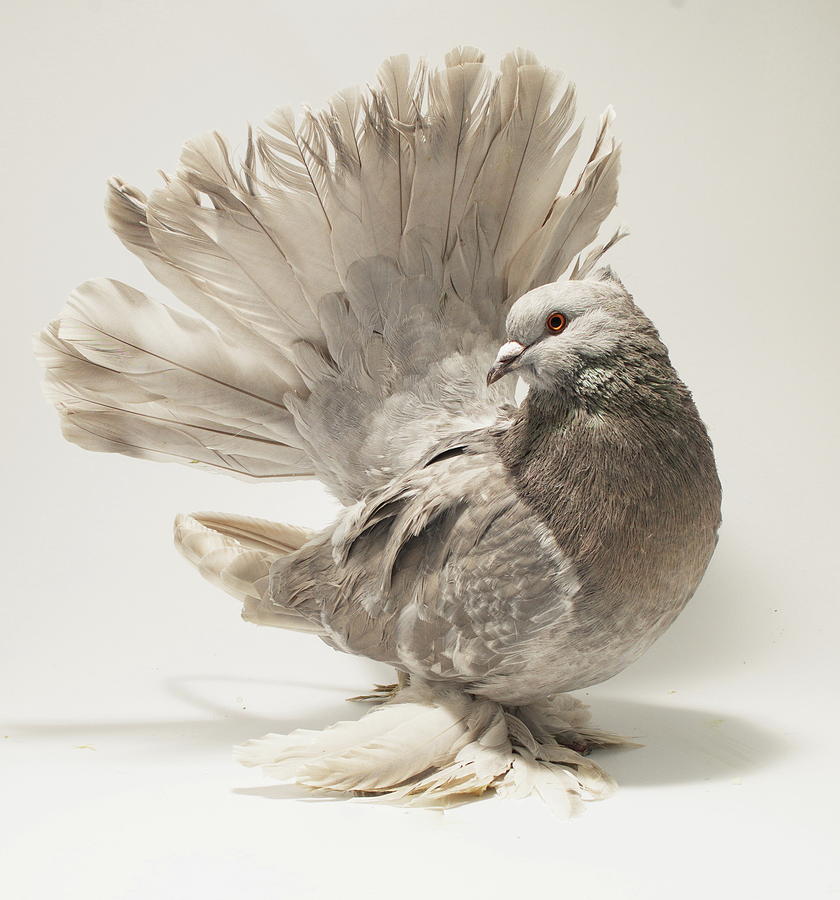
The Indian Fantail Pigeon is one of the most beautiful and graceful pigeon breeds, admired for its distinctive fan-shaped tail and elegant posture. Originating from India, this breed has become popular among pigeon enthusiasts worldwide due to its unique appearance, docile temperament, and suitability for both exhibition and as a pet.
Scientific Classification
| Category | Details |
|---|---|
| Scientific Name | Columba livia domestica |
| Common Name | Indian Fantail Pigeon |
| Family | Columbidae |
| Order | Columbiformes |
| Origin | India |
| Lifespan | 10-15 years (with proper care) |
History and Origin
The Indian Fantail is a domesticated pigeon breed believed to have originated in India. It is a variety of the Fantail Pigeon, which has several regional variations, including the American Fantail and English Fantail. The Indian Fantail is distinct due to its larger size, upright posture, and feathered feet. Over time, breeders have refined its characteristics, making it a favorite in pigeon shows and exhibitions.
Physical Characteristics
A. Appearance
✅ Distinctive Fan-Shaped Tail – The Indian Fantail has a tail with 30-40 feathers, spread like a fan, which gives it a majestic appearance.
✅ Large, Upright Posture – Unlike other Fantail varieties, the Indian Fantail stands more vertically, holding its chest high.
✅ Feathered Feet – One of its unique features is the presence of feathers on its legs, which add to its ornamental value.
✅ Smooth and Soft Feathers – The plumage is soft, dense, and often comes in various colors and patterns.
B. Size and Weight
| Characteristic | Details |
|---|---|
| Body Length | 10-12 inches (25-30 cm) |
| Weight | 350-450 grams |
| Wingspan | 20-24 inches (50-60 cm) |
C. Color Varieties
Indian Fantail Pigeons come in multiple color variations, including:
White (most common and highly preferred for exhibitions)
Black
Brown
Blue
Red
Silver
Pied (mixed patterns of two or more colors)
Behavior and Temperament
✅ Calm and Gentle – Indian Fantails are friendly and social, making them great for pigeon enthusiasts and beginners.
✅ Not Aggressive – They can be housed with other pigeons without conflicts.
✅ Intelligent and Trainable – They can recognize their owners and even be trained to return to their loft.
✅ Non-Flying Breed – Due to their heavy feather structure and upright posture, they are not strong flyers compared to racing pigeons.
Habitat and Housing
Proper housing is essential to maintain the health and beauty of Indian Fantails.
| Requirement | Ideal Conditions |
|---|---|
| Loft Size | Minimum 3-4 ft per bird |
| Temperature | 15-30°C (59-86°F); protect from extreme heat and cold |
| Humidity | Moderate humidity preferred |
| Bedding | Straw, hay, or wood shavings |
| Perches | Provide multiple perches at different heights |
| Ventilation | Good airflow to prevent respiratory issues |
| Safety | Keep protected from predators like cats, hawks, and rats |
Diet and Feeding Habits
Indian Fantail Pigeons require a balanced diet to maintain their feather quality and overall health.
A. Ideal Diet Composition
✅ Grains & Seeds: Corn, wheat, millet, barley, safflower seeds, sunflower seeds.
✅ Legumes: Peas, lentils, and soybeans for protein.
✅ Greens & Vegetables: Spinach, lettuce, carrots (rich in vitamins).
✅ Grit & Minerals: Oyster shells, crushed eggshells, and commercial grit for digestion and calcium.
✅ Fresh Water: Always provide clean, fresh water.
B. Feeding Frequency
Adult Pigeons: Feed twice a day (morning and evening).
Young Pigeons (Squabs): Need a diet higher in protein for growth.
Breeding and Reproduction
✅ Mating Behavior: Indian Fantails form monogamous pairs and are good parents.
✅ Egg-Laying: A female typically lays two eggs per clutch.
✅ Incubation Period: Around 17-18 days, with both parents taking turns incubating.
✅ Chick Care: Parents feed the squabs crop milk for the first 5-7 days.
Breeding Tips:
Provide a safe, clean nest box.
Ensure the temperature is stable (avoid extreme cold).
Avoid inbreeding to maintain genetic diversity.
Common Health Issues and Prevention
| Disease | Symptoms | Prevention |
|---|---|---|
| Pigeon Pox | Lesions on beak and feet | Vaccination, hygiene |
| Canker | Yellow deposits in the mouth | Regular water sanitation |
| Worm Infestation | Weight loss, weakness | Deworming regularly |
| Respiratory Infections | Sneezing, nasal discharge | Good ventilation, no overcrowding |
Cultural and Economic Significance
✅ Show and Exhibition Pigeon: Indian Fantails are widely bred for pigeon shows and competitions.
✅ Symbol of Beauty and Grace: In India, they are often associated with elegance and peace.
✅ Pet Market: Due to their calm nature, they are popular as pet pigeons.
✅ Religious & Symbolic Use: In some cultures, white fantail pigeons are released during weddings and ceremonies as a symbol of peace.
Conclusion: Why Indian Fantail Pigeons Are Special
The Indian Fantail Pigeon is an ornamental pigeon breed known for its majestic fan-like tail, elegant posture, and friendly temperament. Whether you’re a beginner pigeon keeper or an experienced breeder, this breed is an excellent choice for exhibitions, pets, and aviaries. By providing proper housing, diet, and healthcare, you can enjoy these beautiful birds for many years.