Skip to content
Animals Top
Home>Animals>Mammal>Rodents
Animal Profile IUCN: LC

Petaurisa philippensis

Petaurisa philippensis,Philippine flying squirrel, Giant flying squirrel

Frost-backed flying squirrels live in tropical and subtropical areas, mostly choosing dense tall tree forests. They build nests in tree crowns or tree holes. Their food mainly consists of fruits, seeds, tender branches and leaves of plants, and they also eat insects.Listed in the "List of Terre

Rodents 578 views
Scientific Name Petaurisa philippensis,Philippine flying squirrel, Giant flying squirrel
Length 54~66cm
Weight 1.5~2.5kg
Lifespan
IUCN Status LC
Advertisement

Table of Contents

    Frost-backed flying squirrels live in tropical and subtropical areas, mostly choosing dense tall tree forests. They build nests in tree crowns or tree holes. Their food mainly consists of fruits, seeds, tender branches and leaves of plants, and they also eat insects.
    1_九雷图片转化为.jpg

    Listed in the "List of Terrestrial Wildlife with Important Economic and Scientific Research Value Protected by the State" issued by the State Forestry Administration of China on August 1, 2000.

    Listed in the 2013 IUCN Red List of Threatened Species ver3.1—Low Risk (LC).

    Listed in the China Biodiversity Red List—Vertebrate Volume, with an assessment level of Vulnerable (VU)
    At a glance

    Profile Details

    Key characteristics, appearance, and habitat information.

    Traits & Behavior

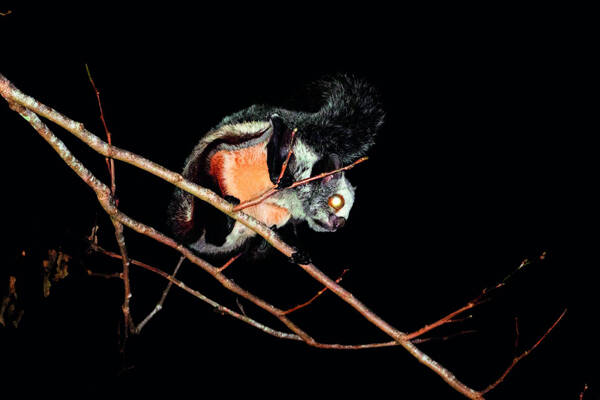
    The fur is thick, with white and grayish-white tips densely covering the head and back, as if covered with a layer of frost.

    Appearance

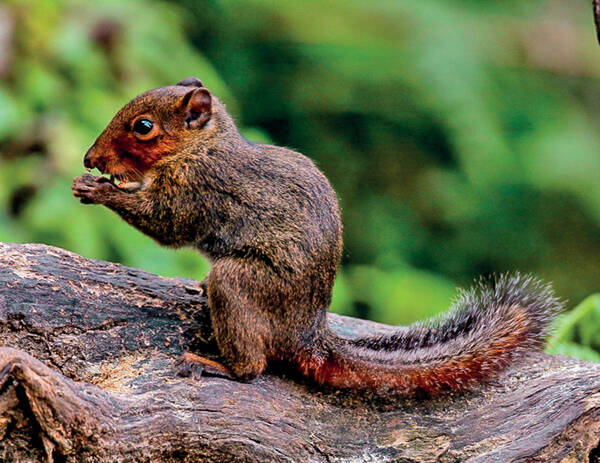
    A large flying squirrel. The back of the body is mainly dark chestnut brown, with dense white hair tips, giving the back of the body a frosted appearance. The ears are brown. The ventral side of the body is brown-yellow, the backs of the front and back feet are brown-black, and the tail is chestnut brown.

    Distribution & Habitat

    It is distributed in Yunnan, Guangxi, Hunan and Sichuan in China.
    Advertisement

    Visual guide

    Browse available images of this species.

    Quick answers

    Petaurisa philippensis FAQs