There is no reliable global ranking of the world's “most valuable” cricket species. A cricket's price can depend on the individual animal, its fighting performance, body size, song, appearance, origin and local collecting tradition rather than species alone. Some crickets are especially prized in Chinese fighting-cricket culture, others are kept for their songs in Japan and China, and several species have major commercial value as pet food or farmed insects. Here are 10 notable cricket species and what actually makes them valuable.
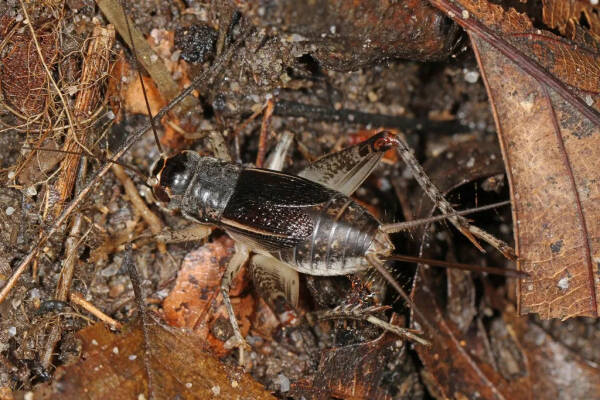
Field crickets have been kept for song and fighting for centuries, but the value of an individual cricket depends on much more than its species name.
Is There Really a Most Expensive Cricket Species?
Not in the way there is a recognized record for the world's largest or smallest animal.
No scientific organization maintains a global price ranking for cricket species.
Traditional cricket markets are also highly localized. A cricket prized by a fighting-cricket enthusiast in northern China may have little special monetary value in Europe or North America.
Individual quality matters enormously.
Traits that can affect cultural or collector value include:
body size and weight;
head and mandible size;
previous contest performance;
condition and age;
song quality;
color and appearance;
geographic origin;
local tradition;
rarity in captivity.
For this reason, it is more accurate to discuss valuable or culturally important cricket species than to claim there is a scientifically proven top-ten price ranking.
10 Crickets With Cultural or Commercial Value
| Cricket | Scientific Name | Why It Is Valued |
|---|---|---|
| Micado fighting cricket | Velarifictorus micado | Traditional fighting-cricket culture and behavioral research |
| Asian field cricket | Teleogryllus mitratus | Fighting tradition, food and farming |
| Two-spotted cricket | Gryllus bimaculatus | Fighting behavior, research, feed and insect farming |
| Japanese bell cricket | Meloimorpha japonica | Highly valued song and long Japanese insect-keeping tradition |
| Emma field cricket | Teleogryllus emma | East Asian field cricket used in biological and acoustic research |
| House cricket | Acheta domesticus | Commercial live feed and edible-insect farming |
| Tropical house cricket | Gryllodes sigillatus | Commercial feeder and farmed cricket |
| Fall field cricket | Gryllus pennsylvanicus | Aggression research and documented use by cricket-fighting enthusiasts |
| European field cricket | Gryllus campestris | Distinctive song and ecological interest |
| Tree cricket | Oecanthus pellucens | Musical calling song and cultural interest in singing insects |
This is not a price ranking. These species are included because they have documented cultural, behavioral, commercial or scientific significance.
Micado Fighting Cricket — Velarifictorus micado
Velarifictorus micado is one of the crickets most closely associated with East Asian fighting-cricket traditions.
The Orthoptera Species File lists the Chinese common name 迷卡斗蟋 for this species, while English sources may call it the Japanese burrowing cricket.
The species has also attracted modern scientific attention.
A 2026 biomechanics study examined jumping performance in Velarifictorus micado, explicitly describing it as a fighting cricket.
Like other field crickets, males are territorial and can engage in aggressive contests with rivals.
Is This the Only Chinese Fighting Cricket?
No.
This is one of the biggest problems with older English articles about Chinese cricket culture.
“Chinese fighting cricket” is sometimes used as though it refers to one universally agreed species, but historical and scientific sources document several field crickets in fighting traditions.
Depending on region and source, these can include species of Velarifictorus, Teleogryllus and Gryllus.
Asian Field Cricket — Teleogryllus mitratus
Teleogryllus mitratus is a widespread Asian field cricket.
Scientific reviews of edible and culturally important crickets have identified it as one of the species associated with Chinese cricket fighting.
It also has economic importance outside the fighting tradition because Teleogryllus crickets are used as food and feed in several Asian countries.
This combination illustrates why the word “valuable” needs context.
The same species may have sporting, cultural and food value in different communities.
Two-Spotted Cricket — Gryllus bimaculatus
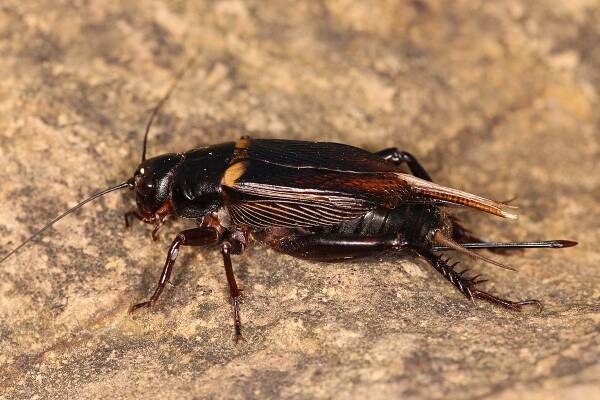
The two-spotted cricket, Gryllus bimaculatus, is recognized by pale spots near the bases of its forewings and is widely used in research and captive-animal feeding.
The two-spotted cricket is one of the world's most familiar large field crickets.
Its accepted scientific name is Gryllus bimaculatus.
The name refers to the pair of conspicuous pale or yellowish marks near the bases of the forewings.
This species occurs naturally across large parts of Africa, southern Europe and Asia.
It has several forms of human value:
it is used extensively in laboratory research;
male aggression has been studied in detail;
it is bred commercially as live food for reptiles and other captive animals;
it is also farmed as an edible insect in some regions.
Its importance therefore extends well beyond ornamental cricket keeping.
Japanese Bell Cricket — Meloimorpha japonica
The Japanese bell cricket is famous for sound rather than fighting.
Its accepted scientific name is Meloimorpha japonica. Older literature may use the synonym Homoeogryllus japonicus.
In Japanese it is known as suzumushi.
The species has been kept for generations because of the clear, bell-like song produced by males rubbing specialized structures on their forewings together.
Bell crickets appear in Japanese seasonal culture and literature, and keeping singing insects became a well-established hobby.
Why Does the Bell Cricket Sound So Pure?
The sound is produced by stridulation.
A recent biomechanical study of Meloimorpha japonica found that the structure of the wing's sound-producing file, wing-closing speed and wing resonance work together to maintain its unusually pure calling tone.
That makes its musical reputation more than a matter of folklore: the sound has distinctive physical properties.
Emma Field Cricket — Teleogryllus emma
Teleogryllus emma is a recognized East Asian field cricket also known as the Emma field cricket.
It occurs in parts of East Asia and has been used in studies of cricket biology, communication and genetics.
Like other Teleogryllus, males produce calling songs to attract females and interact aggressively with rival males.
It is a better choice for a scientifically grounded list than an untranslated hobby name that cannot be connected confidently to a taxonomic species.
House Cricket — Acheta domesticus
The house cricket may not command collector prestige, but economically it is one of the most important crickets in the world.
Acheta domesticus is bred commercially on a very large scale.
Its uses include:
live food for reptiles;
feed for amphibians and birds;
laboratory research;
human food products in markets where edible insects are permitted.
This is an important distinction.
A species can have high commercial value without individual specimens being expensive collectibles.
Tropical House Cricket — Gryllodes sigillatus
Gryllodes sigillatus, often called the tropical house cricket or banded cricket, is another species frequently bred commercially.
It belongs to the true cricket family Gryllidae.
Its importance comes mainly from reliable captive breeding and use as feeder insects rather than from traditional fighting or singing-insect culture.
This makes it a useful example of a cricket whose economic value comes from large-scale production rather than rare individual animals.
Fall Field Cricket — Gryllus pennsylvanicus
The fall field cricket of North America has played an interesting role in modern cricket-fighting research.
A scientific study of male weaponry in Gryllus pennsylvanicus found that males with relatively larger heads and mouthparts won more escalated contests when body size was controlled.
The same study noted reports that Chinese cricket-fighting communities in Philadelphia used this North American species for practice.
This provides an important lesson about traditional cricket fighting:
People may value particular individual traits more than a single species label.
European Field Cricket — Gryllus campestris
The European field cricket is a large, dark cricket known for the loud calling song males produce from burrow entrances.
It is native to parts of Europe and differs from commercially widespread tropical cricket species.
Its primary modern importance is ecological and acoustic rather than as a globally traded fighting cricket.
It is also a reminder that not every large, attractive field cricket should automatically be described as a “valuable fighting breed.”
Tree Cricket — Oecanthus pellucens
Tree crickets belong to the same broader cricket family but look quite different from heavy-bodied field crickets.
Oecanthus pellucens is a slender European and western Asian tree cricket famous for its clear calling song.
Singing insects have been kept and appreciated in several cultures, particularly in East Asia, because their seasonal calls are valued for aesthetic rather than competitive reasons.
That type of cultural value should be distinguished from the monetary value of a fighting animal.
Why Are Fighting Crickets Valuable?
Traditional fighting-cricket enthusiasts do not judge animals only by species.
Historically valued characteristics have included:
large head size;
strong mandibles;
large neck or pronotum;
appropriate body weight;
aggressive persistence;
good physical condition.
Modern research provides support for at least part of this traditional knowledge.
In experimental fights involving field crickets, relatively larger head and mouthpart size increased the probability of winning when contestants were otherwise closely matched.
That does not mean appearance guarantees victory, but it shows that some traits used by traditional cricket keepers have a genuine biological relationship with male competition.
Why Do Male Crickets Fight?
Male field crickets compete primarily over access to space, shelters and females.
A typical encounter can escalate through several stages.
The animals may:
make antennal contact;
produce aggressive signals;
spread or use their mandibles;
push;
bite;
grapple.
Eventually one male retreats and shows loser behavior, while the winner may produce a characteristic rivalry song.
Crickets have consequently become important laboratory animals for studying aggression, winner and loser effects and the neurobiology of social behavior.
Are Fighting Crickets a Special Breed?
Not necessarily.
Traditional enthusiasts may use the word “breed” informally for locally selected forms, colors or lineages, but that does not automatically make them recognized biological species or standardized breeds.
This distinction is crucial when translating Chinese insect-keeping terminology into English.
Names used by collectors may describe:
color forms;
regional populations;
body shapes;
traditional categories;
individual quality grades.
They should not automatically be converted into English species names without taxonomic evidence.
Why the Old “Most Valuable Cricket” Lists Are Confusing
Many online lists originated by translating Chinese singing-insect and fighting-insect terminology literally.
This creates phrases such as “ink cricket,” “coffin-headed cricket,” “iron cricket” or “yellowfly” that may make sense as literal translations of hobby names but do not function well as recognized English zoological names.
A reader then has no reliable way to determine which species is being discussed.
The safest approach is to provide a valid scientific name whenever a species-level identification can be verified.
If a traditional name cannot be matched confidently to a species, it should be presented as a cultural or trade name rather than invented as an English common name.
Are Japanese Bell Crickets Expensive?
Not necessarily.
The Japanese bell cricket is valued primarily because of its song and cultural history.
Captive breeding means individual animals do not have to be rare or extremely expensive to be culturally important.
This illustrates why “valuable” and “expensive” are not interchangeable.
Are Two-Spotted Crickets Valuable?
They can be economically valuable as a farmed species, but ordinary individuals are widely bred and are not inherently rare collectibles.
Gryllus bimaculatus is important in:
animal feed;
human food research;
neurobiology;
behavioral science;
commercial insect breeding.
Its value comes largely from usefulness and large-scale production.
What Makes a Cricket's Song?
Male crickets normally produce sound by rubbing specialized parts of their forewings together, a process called stridulation.
One wing carries a file-like row of microscopic teeth while another structure acts as a scraper.
Wing membranes then amplify the vibration.
Different cricket species have different calling-song patterns, which can help females recognize males of their own species.
Researchers can often identify cricket species partly by analyzing call frequency, pulse structure and timing.
Are Crickets and Katydids the Same?
No.
Crickets and katydids both belong to the insect order Orthoptera and suborder Ensifera, but they belong to different major families.
True crickets belong mainly to the family Gryllidae.
Katydids belong to the family Tettigoniidae.
Some traditional “singing insect” lists mix crickets and katydids together because both are kept for their calls. That is culturally understandable, but zoologically they should not all be labeled crickets.
Frequently Asked Questions
What is the most valuable cricket in the world?
There is no verified global species ranking. Exceptional individual fighting crickets can be highly prized, but their value depends on individual traits, performance, origin and local demand rather than species alone.
What is the Chinese fighting cricket?
Velarifictorus micado is one recognized species strongly associated with the Chinese fighting-cricket tradition. However, scientific and historical sources also document other field cricket species being used for fighting, so “Chinese fighting cricket” should not always be treated as one universal species name.
What is the scientific name of the two-spotted cricket?
The accepted scientific name is Gryllus bimaculatus.
What is the Japanese bell cricket?
The Japanese bell cricket, or suzumushi, is Meloimorpha japonica. It is particularly famous for the clear ringing song of adult males.
Why are some crickets expensive?
Collector or fighting-cricket prices can reflect body condition, size, mandibles, fighting performance, song, origin, rarity and seasonal demand. A high-value individual does not mean every member of the species has the same price.
Do crickets really fight?
Yes. Adult male field crickets can engage in structured aggressive contests involving antennal contact, signaling, pushing, biting and grappling. The loser usually retreats.
Does a bigger cricket always win?
No. Body size can matter, but it is not the only factor. Research has found that relative head and mouthpart size can influence contest success when opponents are otherwise closely matched.
Are fighting crickets different from feeder crickets?
Sometimes. Traditional fighting enthusiasts select particular species and individuals for aggressive traits, while commercial feeder insects are selected mainly for reliable breeding, growth and nutritional use. Some species, such as Gryllus bimaculatus, can be important in more than one context.
Are singing crickets pets?
They can be. Keeping crickets for their songs has a long history in East Asia, particularly in China and Japan. Japanese bell crickets remain one of the best-known examples.
Is a tree cricket really a cricket?
Yes. Tree crickets such as Oecanthus belong to the true cricket family Gryllidae, although their slender green or pale bodies look very different from typical dark field crickets.
Are katydids crickets?
No. Both are long-horned orthopteran insects, but katydids belong to Tettigoniidae while true crickets belong mainly to Gryllidae.
Scientific and Reference Sources
Orthoptera Species File — accepted taxonomy for Velarifictorus micado, Gryllus bimaculatus, Teleogryllus species and other Orthoptera.
Judge & Bonanno, PLOS ONE — male weaponry, fighting success and historical Chinese cricket-fighting practices.
Scientific review of edible crickets — cricket farming, cultural entomology and fighting-cricket traditions.
NCBI Taxonomy — current taxonomic records for Gryllus bimaculatus, Teleogryllus emma and Gryllodes sigillatus.
Research on Meloimorpha japonica — biomechanics and acoustic production of Japanese bell-cricket song.
Biomimetics, 2026 — jumping kinematics and performance in the fighting cricket Velarifictorus micado.