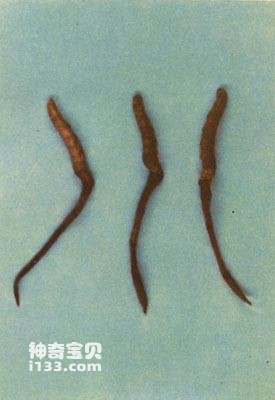
Referred to as "cordyceps", also known as "winter cordyceps", it is a precious Chinese herbal medicine. "Cordyceps" belongs to the Ascomycetes, Ergotaceae. It parasitizes on the larvae of the green bat moth, a bat moth insect of the Lepidoptera. In winter, cordyceps hibernates in the soil with the insect body, invades the insect body, grows hyphae, and covers the insect body to become sclerotia. In summer, stalked fruiting bodies grow from the insect body and sclerotia. Because the lower part is the insect and the upper part is the grass, it is called cordyceps. Cordyceps is mostly produced in Qinghai, Tibet, Yunnan and Ganzi and Aba in Sichuan. Cordyceps tastes sweet and sour, is flat in nature, and has a fragrant smell. It is a top-grade tonic. Traditional Chinese medicine and Tibetan medicine often use dried fruiting bodies and insect bodies as medicine. It has the effect of nourishing the lungs and kidneys. It is effective for tuberculosis, blood in sputum, asthma, night sweats, backache, impotence and spermatorrhea.