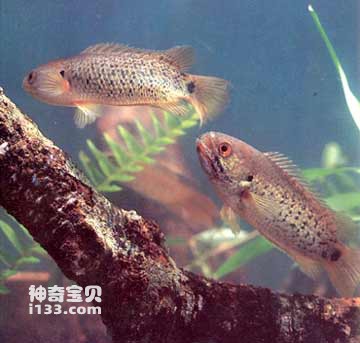
Climbing perch is commonly known as mountain crucian carp and flying crucian carp. The body shape is slightly similar to tilapia, but smaller, only 100 mm long.
Climbing bass inhabits still, slow-flowing, silt-rich water bodies. When the water body dries up or the environment is unsuitable, they often rely on methods such as swinging their gill covers, pectoral fins, and turning over to climb over banks and slopes, move to new waters, or lurk in the mud. The gills of the climbing perch are very developed and can breathe air, so it can survive being out of water for a long time. It can live for a long time when the water body is deprived of oxygen, out of water, or in slightly moist soil. Climbing bass feed on small fish, shrimps, zooplankton, insects and their larvae. In order to prey on aerial insects, they often rely on the well-developed spines, gill covers, pectoral fins and other organs on their heads to climb up the trees on the shore.