Skip to content
Animals Top
Home>Animals>Mammal>Primates
Animal Profile IUCN: LC

Allocebus trichoti

Allocebus trichoti

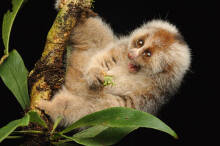
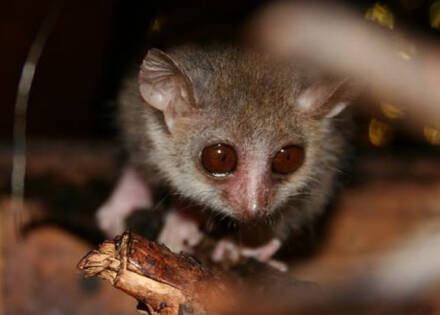
The hairy-eared mouse lemur (scientific name Allocebus trichoti') is a lemur native to northeastern Madagascar. It is the only species in the genus Allocebus. This animal is seriously endangered, with only about 100-1000 individuals left.The hairy-eared mouse lemur is a nocturnal animal that liv

Primates 576 views
Scientific Name Allocebus trichoti
Length 12-15cm
Weight 75-98g
Lifespan About 10 years
IUCN Status LC
Advertisement

Table of Contents

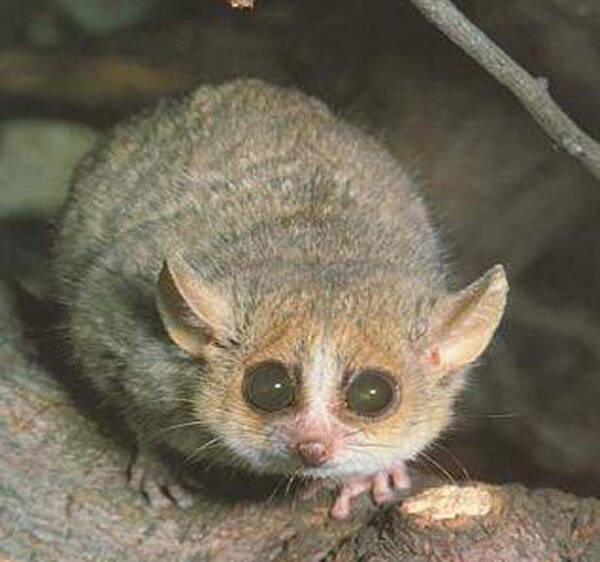
    The hairy-eared mouse lemur (scientific name Allocebus trichoti') is a lemur native to northeastern Madagascar. It is the only species in the genus Allocebus. This animal is seriously endangered, with only about 100-1000 individuals left.
    5bc450efa8bf97ce8c70e8ec6227e40f_九雷图片转化为.jpeg


    The hairy-eared mouse lemur is a nocturnal animal that lives in the woods. They are experts at climbing and jumping, and their tails are a good balance tool. They usually live alone, but sometimes in pairs. They build nests in tree holes and feed on flying insects, gum, young leaves and fruits.

    Females usually have three pairs of nipples. The gestation period is about 60 days, with 2-4 pups per litter (usually two to three). The weaning period is five to six weeks, and the young monkeys mature in one to two years.

    The IUCN Red List lists it as Data Deficient (DD).


    Protect wildlife and eliminate game.

    Maintaining ecological balance is everyone's responsibility!


    At a glance

    Profile Details

    Key characteristics, appearance, and habitat information.

    Traits & Behavior

    Small in size, but with a very long tail

    Appearance

    Mouse lemurs are smaller than other lemurs and are the smallest primates. They are usually only 13-28 cm long, with a relatively long tail that can be up to 1.5 times the body length.

    Distribution & Habitat

    Only found in Madagascar
    Advertisement

    Visual guide

    Browse available images of this species.

    Quick answers

    Allocebus trichoti FAQs