Skip to content
Animals Top
Home>Animals>Mammal>Primates
Animal Profile IUCN: LC

Microcebus griseorufus

Microcebus griseorufus

The specific habits of the red-gray dwarf lemur (scientific name: Microcebus griseorufus) are unknown.Listed in the 2014 Red List of Endangered Species of the World Conservation Union (IUCN) ver3.1 - Least Concern (LC).Protect wild animals and stop eating game.Maintaining ecological balance is every

Primates 542 views
Scientific Name Microcebus griseorufus
Length 9-11cm
Weight About 30g
Lifespan No verification information
IUCN Status LC
Advertisement

Table of Contents

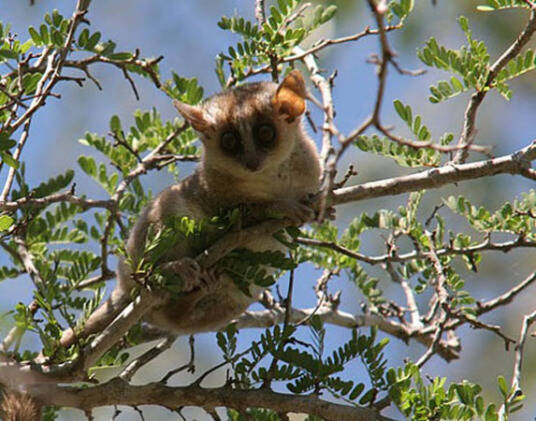
    The specific habits of the red-gray dwarf lemur (scientific name: Microcebus griseorufus) are unknown.
    ac4bd11373f0820279e2654840fbfbedab641b50_九雷图片转化为.jpg

    Listed in the 2014 Red List of Endangered Species of the World Conservation Union (IUCN) ver3.1 - Least Concern (LC).


    Protect wild animals and stop eating game.

    Maintaining ecological balance is everyone's responsibility!

    At a glance

    Profile Details

    Key characteristics, appearance, and habitat information.

    Traits & Behavior

    With alternating neutral skin colors

    Appearance

    The red-gray dwarf lemur is 9-11 cm long, with a tail length of 12-14 cm and a weight of 30 grams. It has a relatively solid skull. It has alternating neutral skin colors, including gray, light gray, and neutral gray. The back is light gray and neutral gray, the front two-thirds of the abdomen is light grayish white, and the rest is bicolor light grayish white and light gray with neutral gray. There is a cinnamon-colored dorsal stripe from the top of the head or shoulders to the end of the tail. The head of this species has a pale neutral gray spot above the nose, cinnamon around the eyes, and a clay-colored crest. The dorsal side of the tail is cinnamon, while the ventral side in the farthest two-thirds is gray-brown, and the nearly one-third of the cinnamon has faint brown-black stripes. The paws are grayish white and also black.

    Distribution & Habitat

    It is found in the south and southwest of Madagascar, from Lampohara in the south to the Tular region, in the southeast Beza-Mahafaly (south of the Onilahy River), as well as Tsimanampetsotsa, Berenty, and in the extreme south Petriky. It survives at altitudes of 0-250 m.
    Advertisement

    Visual guide

    Browse available images of this species.

    Quick answers

    Microcebus griseorufus FAQs