Skip to content
Animals Top
Home>Animals>Mammal>Primates
Animal Profile IUCN: LC

Microcebus jollyae

Microcebus jollyae,Grey-brown Mouse Lemur

Jolly's dwarf lemur (scientific name: Microcebus jollyae) is also known as Grey-brown Mouse Lemur. The name of this species is in honor of primatologist Alison Jolly.Populations of the Jolly dwarf lemur are reported to occur in the forests of Mananjari and Kianjavato. The area is located at an a

Primates 590 views
Scientific Name Microcebus jollyae,Grey-brown Mouse Lemur
Length No verification information
Weight No verification information
Lifespan No verification information
IUCN Status LC
Advertisement

Table of Contents

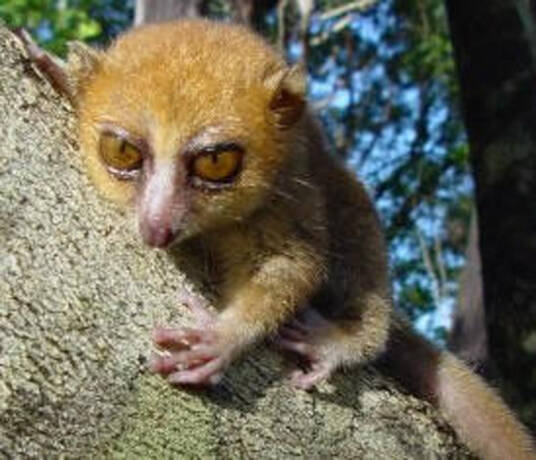
    Jolly's dwarf lemur (scientific name: Microcebus jollyae) is also known as Grey-brown Mouse Lemur. The name of this species is in honor of primatologist Alison Jolly.
    8cb1cb134954092322d7c0a29e58d109b2de49b4_九雷图片转化为.jpg

    Populations of the Jolly dwarf lemur are reported to occur in the forests of Mananjari and Kianjavato. The area is located at an altitude of 71 meters above sea level. The estimated extent of occurrence (EOO) is less than 190 square kilometers. This geographical range is severely fragmented and is experiencing a continuous decline in the area, extent, and quality of its habitat. Based on these premises, the species is listed as endangered.


    Listed in the IUCN Red List of Threatened Species in 2014 ver 3.1 - Endangered (EN).

    Listed in the CITES Appendix I of the Washington Convention as a protected animal.


    Protect wild animals and stop eating game.

    Maintaining ecological balance is everyone's responsibility!


    At a glance

    Profile Details

    Key characteristics, appearance, and habitat information.

    Traits & Behavior

    A small white patch on the nose

    Appearance

    The fur is a uniform reddish-brown color, with a small white patch on the nose and a completely gray chest and abdomen.

    Distribution & Habitat

    The Jolly dwarf lemur is found in southeastern Madagascar, extending from the northern Mananara River southward to the northern bank of the Mananzari River.
    Advertisement

    Visual guide

    Browse available images of this species.

    Quick answers

    Microcebus jollyae FAQs