Skip to content
Animals Top
Home>Animals>Mammal>Primates
Animal Profile IUCN: LC

Cercopithecus mitis

Cercopithecus mitis,Blue Monkey、Diademed Monkey

The scientific name of the blue monkey is Cercopithecus mitis, and its foreign names are Blue Monkey and Diademed Monkey. It moves in groups and feeds on wild fruits, leaves, bamboo shoots, crabs, frogs and other animals and plants.Listed in the IUCN Red List of Primates, ver.: 2008 - Low Concern (L

Primates
Scientific Name
Cercopithecus mitis,Blue Monkey、Diademed Monkey
Length
No verification information
Weight
No verification information
Lifespan
15-20years
IUCN Status
LC
Advertisement

Table of Contents

    The scientific name of the blue monkey is Cercopithecus mitis, and its foreign names are Blue Monkey and Diademed Monkey. It moves in groups and feeds on wild fruits, leaves, bamboo shoots, crabs, frogs and other animals and plants.

    d1889e2c9a72289a6af4eca735444301_九雷图片转化为.png

    Listed in the IUCN Red List of Primates, ver.: 2008 - Low Concern (LC).


    Protect wild animals and stop eating game.

    Maintaining ecological balance is everyone's responsibility!
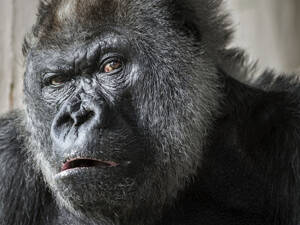


    At a glance

    Profile Details

    Key characteristics, appearance, and habitat information.

    Traits & Behavior

    The fur is mainly blue

    Appearance

    The green long-tailed monkey has long, soft and smooth hair, a small and round head, a relatively flat and large face, a short tail, and fluffy hair. Its hair is green in color. It has a round, simple body and strong limbs.

    Distribution & Habitat

    The green vervet monkey is distributed in Angola, Burundi, Congo, Democratic Republic of Congo, Ethiopia, Kenya, Malawi, Mozambique, Rwanda, Somalia, South Africa, Sudan, Swaziland, United Republic of Tanzania, Uganda, Zambia, Zimbabwe and other countries.
    Mainly inhabits subtropical evergreen broad-leaved forests

    Quick answers

    Cercopithecus mitis FAQs

    Follow your curiosity

    Keep Exploring Animals

    Read more about animal biology, compare similar-looking species, or browse the animal encyclopedia.