Yes, cats can get fish bones stuck in their mouth, throat, or esophagus. Cats are not naturally protected from fish bones, and it is not safe to assume that they can always swallow them without problems. Small bones may sometimes pass without causing injury, but sharp bones can become lodged, scratch tissue, cause choking, or damage the digestive tract. The safest way to give a cat fish is to serve plain, properly cooked fish with all visible bones removed.
A cat's rough tongue and carnivorous teeth help it handle meat, but they do not make fish bones harmless. Veterinary sources specifically identify bones as an important type of foreign body that can become stuck in a cat's esophagus.
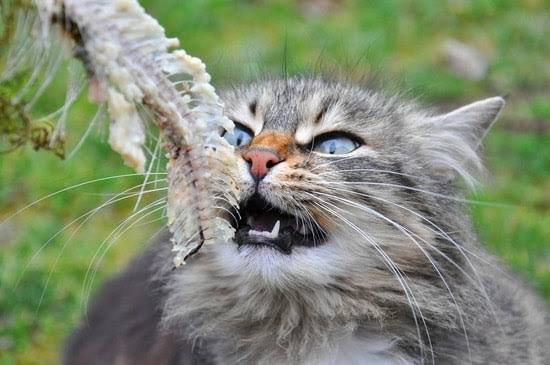
Cats may enjoy fish, but fish should be carefully deboned before it is offered as a treat.
Can Cats Eat Fish Bones?
Fish bones are not recommended as food for cats.
A cat may occasionally swallow a very small bone without any obvious problem, but that does not make bones safe.
Fish bones can be thin, pointed, and difficult to see. Depending on their size and shape, they may become stuck in the:
mouth;
back of the throat;
esophagus;
stomach;
intestines.
Veterinary references describe bones as one of the most common types of foreign objects found in the esophagus of cats and dogs.
For that reason, the safer advice is simple: remove the bones before giving fish to your cat.
Why Do Cats Sometimes Seem Able to Eat Fish Bones?
People often see outdoor cats eating whole prey or fish and assume cats have a special ability to avoid bones.
There are several reasons problems may not be obvious every time.
A cat may chew around some larger bones, strip meat from them, swallow very small pieces, or successfully pass some fragments through the digestive tract.
But this is not guaranteed.
Seeing a cat eat fish bones successfully once does not mean that the next bone cannot become lodged.
Veterinary medicine includes real cases of bones and other sharp foreign objects becoming trapped in the feline mouth, throat, or esophagus.
Do Cats Have Special Tongues That Protect Them From Fish Bones?
No.
A cat's tongue is covered with backward-facing structures called papillae. These give the tongue its rough, sandpaper-like texture.
The papillae help cats groom their fur and help scrape and manipulate food.
However, they are not a special fish-bone safety system.
In fact, the backward-facing nature of the tongue can sometimes make certain foreign materials difficult for a cat to spit back out. Veterinary sources note that thread and string can become difficult for cats to expel once caught in the mouth.
So the old idea that the rough tongue somehow keeps fish bones perfectly aligned and prevents choking is misleading.
Are Cats Evolutionarily Adapted to Eating Fish?
Not in the way people often assume.
Domestic cats are obligate carnivores, meaning they require nutrients that naturally come from animal tissues.
But being a carnivore does not mean the domestic cat evolved specifically as a fish specialist.
The ancestors of domestic cats primarily hunted small terrestrial prey such as rodents, birds, reptiles, and other small animals.
Many modern cats enjoy the smell and taste of fish, and fish is widely used in commercial cat food, but cats do not need whole bony fish in order to eat a natural diet.
Commercial cat foods containing fish are formulated and processed specifically to provide nutrients safely.
Can Fish Bones Get Stuck in a Cat's Throat?
Yes.
A sharp fish bone can become lodged in tissues around the mouth or throat.
It may also pass beyond the throat and become stuck in the esophagus, the muscular tube that carries food from the mouth to the stomach.
The Merck Veterinary Manual notes that foreign objects in a cat's esophagus can cause:
excessive drooling;
gagging;
repeated swallowing;
difficulty swallowing;
regurgitation;
reduced appetite;
lethargy.
A sharp object can also injure or even perforate the esophageal wall, which can lead to serious complications.
Signs That a Fish Bone May Be Stuck
Watch your cat closely if you know or suspect that it swallowed a fish bone.
Warning signs can include:
suddenly pawing at the mouth;
repeated gagging or retching;
excessive drooling;
repeated attempts to swallow;
difficulty swallowing food or water;
regurgitation;
coughing;
stretching the neck repeatedly;
refusing food;
acting unusually distressed or hiding.
If breathing becomes difficult, the gums appear blue or gray, or the cat collapses, treat the situation as an emergency.
What Should You Do If Your Cat Has a Fish Bone Stuck?
If your cat is showing persistent gagging, drooling, repeated swallowing, regurgitation, or difficulty eating after consuming fish, contact a veterinarian promptly.
Do not assume that the bone will automatically dissolve or work its way down.
A veterinarian may need to examine the mouth and throat and may recommend imaging or endoscopy if an esophageal foreign body is suspected.
Merck Veterinary Manual recommends removing diagnosed esophageal foreign bodies as soon as possible because prolonged obstruction increases the risk of inflammation, tissue injury, perforation, and later narrowing of the esophagus.
What If My Cat Is Choking?
Choking is different from a bone being partially lodged in the esophagus.
A cat that cannot breathe normally may show:
severe gagging;
frantic pawing at the mouth;
open-mouth distress;
raspy or abnormal breathing;
blue gums;
weakness or collapse.
This is a veterinary emergency.
If an object is clearly visible at the front of the mouth and can be removed easily and safely, it may be possible to remove it. However, do not blindly push fingers deep into the throat or push a sharp bone farther down.
After a true choking episode, veterinary examination is still advisable because the mouth, throat, or airway may have been injured.
Should You Give Bread to Push a Fish Bone Down?
No reliable veterinary evidence supports using bread, rice, or other bulky food to force a sharp fish bone down a cat's throat.
This home remedy can delay proper treatment and may push a lodged object deeper into injured tissue.
If your cat has signs of a foreign body, the safer approach is veterinary assessment.
Should You Pull a Fish Bone Out Yourself?
Only an object that is clearly visible, loose, and very easy to reach should ever be considered for simple removal.
A deeply embedded or poorly visible bone should be left for a veterinarian.
Sharp objects can tear tissue if pulled at the wrong angle, and a struggling cat can also injure itself or bite the person trying to help.
Veterinarians can use appropriate restraint, sedation, imaging, and endoscopy when necessary.
Are Cooked Fish Bones More Dangerous?
Cooked bones should not be deliberately fed to cats.
Cooking can change the structure of bones, and brittle fragments may break into sharp pieces.
Fish bones are already relatively thin and pointed, so feeding cooked fish with bones left inside provides no useful benefit.
PetMD recommends serving fish to cats thoroughly cooked and with the bones removed.
Are Raw Fish Bones Safe for Cats?
Raw fish bones are not automatically safe either.
Even an uncooked bone can become lodged, puncture tissue, or cause obstruction.
Raw fish also introduces additional food-safety concerns, including exposure to bacteria and parasites.
Therefore, switching from cooked bones to raw bones does not remove the underlying foreign-body risk.
Can a Cat Digest Fish Bones?
Some small bone fragments may be softened or broken down after reaching the stomach, but owners should not rely on digestion as a safety mechanism.
The greatest danger may occur before the bone ever reaches the stomach.
A sharp fragment can become trapped in the mouth, throat, or esophagus.
Bones that reach the gastrointestinal tract may also contribute to irritation, obstruction, or perforation depending on their size and shape.
The fact that some bones are eventually digested does not make intentional feeding safe.
What If My Cat Swallowed a Small Fish Bone but Seems Fine?
If your cat swallowed a tiny bone and is completely normal, the bone may pass without causing a problem.
Do not panic solely because one small bone was swallowed.
However, watch for changes such as:
vomiting;
drooling;
gagging;
difficulty swallowing;
loss of appetite;
abdominal pain;
lethargy;
straining to defecate.
If any abnormal signs develop, contact your veterinarian and tell them that a fish bone may have been swallowed.
Can a Fish Bone Puncture a Cat's Stomach or Intestines?
Yes, although not every swallowed bone will do so.
Sharp foreign objects can injure the digestive tract.
PetMD notes that swallowed fish bones may cause obstruction or perforation and can also become lodged in the mouth, throat, or esophagus.
Gastrointestinal obstruction can become life-threatening if it interferes with normal passage of food and fluid or damages the intestinal wall.
Can Fish Bones Cause Internal Bleeding?
A sharp bone has the potential to injure tissue and blood vessels, particularly if it punctures the throat, esophagus, stomach, or intestine.
Serious perforation is uncommon compared with simply eating a piece of boneless fish, but it is one of the reasons veterinarians treat sharp foreign bodies seriously.
Do not wait for obvious blood before seeking veterinary care if your cat is showing persistent signs of obstruction or pain.
What Is the Safest Way to Feed Fish to a Cat?
If you want to offer fish as an occasional treat, use a simple preparation.
| Preparation | Recommendation |
|---|---|
| Plain cooked fish | Yes, in a small amount |
| Fish with bones removed | Preferred |
| Fish with salt or seasoning | Avoid |
| Fish cooked with onion or garlic | Do not feed |
| Raw fish | Not recommended as a routine treat |
| Cooked fish bones | Do not intentionally feed |
| Whole fish with sharp bones | Avoid for ordinary pet feeding |
Use fish as an occasional addition rather than replacing a nutritionally complete cat food.
Does Fish Need to Be Part of a Cat's Diet?
No.
Cats need a nutritionally complete diet formulated for their species, but they do not specifically need fish.
A properly formulated commercial diet can provide the protein, amino acids, vitamins, minerals, and essential fats a cat needs whether or not fish is one of the main ingredients.
Fish can be a useful source of protein and certain fatty acids, but it is not a mandatory food for every cat.
Can Kittens Eat Fish Bones?
Fish bones should not be deliberately offered to kittens.
Kittens are smaller, which means even a relatively small fragment can represent a significant obstruction or choking hazard.
If fish is offered as a treat, it should be plain, properly cooked, carefully deboned, and given in a very small amount appropriate for the kitten's size.
A nutritionally complete kitten food should remain the main diet during growth.
Can Senior Cats Eat Fish Bones?
Senior cats should also be given boneless fish rather than whole bony pieces.
Older cats may have dental disease, missing teeth, reduced chewing ability, or other medical problems that make handling bones even less predictable.
If an older cat has kidney disease, gastrointestinal disease, food allergies, or is eating a prescription diet, discuss extra foods with the veterinarian before adding them.
Do Wild Cats Eat Bones?
Wild felids often consume parts of whole prey, including small bones.
However, this does not mean every bone is safe for a domestic pet cat.
Natural feeding always involves some risk, and wild animals can suffer oral injuries, broken teeth, choking, and digestive injuries too.
Pet owners have the opportunity to reduce avoidable hazards by removing sharp bones before feeding.
Why Do Cats Like Fish So Much?
Many cats are attracted to the strong smell and high protein content of fish.
Fish oils and fats can also make fish highly palatable.
Modern cat foods frequently use tuna, salmon, whitefish, and other fish ingredients, further reinforcing the cultural image of cats loving fish.
Individual preferences vary, however. Some cats strongly prefer poultry or other meats and show little interest in fish.
Is Canned Tuna Safer Than Fish With Bones?
Commercial canned tuna intended for people generally has fewer obvious bone hazards than a whole cooked fish, but it is not designed to serve as a complete feline diet.
Large amounts of human tuna can create nutritional imbalance if it repeatedly replaces balanced cat food.
Choose a nutritionally complete cat food when fish is intended to be a regular part of the diet.
Fish Bones: Myth vs Fact
| Claim | What the Evidence Supports |
|---|---|
| Cats never get fish bones stuck | False. Bones can lodge in the mouth, throat, or esophagus. |
| A cat's rough tongue protects it from fish bones | False. The tongue helps manipulate food but does not eliminate bone risk. |
| Cats evolved specifically to eat fish | Misleading. Domestic cats are carnivores but are not specialized fish-eaters. |
| Small bones always dissolve safely | False. A bone may become stuck before it ever reaches the stomach. |
| Cooked fish bones are safe | No. Bones should be removed before fish is fed. |
| Plain boneless cooked fish can be a treat | Yes, for many healthy cats when given in moderation. |
Frequently Asked Questions
Can cats eat fish bones?
It is safer not to feed fish bones deliberately. Sharp bones can become stuck in the mouth, throat, or esophagus and may also injure the gastrointestinal tract.
Why don't cats always choke on fish bones?
Some cats successfully chew around or swallow very small bones, but there is no special mechanism that guarantees safety. Veterinary cases of bone foreign bodies do occur in cats.
Can cats digest fish bones?
Some small bone fragments may break down after reaching the stomach, but this cannot be relied upon. Bones can become lodged before reaching the stomach or cause problems farther along the digestive tract.
What are the signs of a fish bone stuck in a cat's throat?
Signs can include gagging, excessive drooling, pawing at the mouth, repeated swallowing, regurgitation, difficulty eating, and obvious distress.
What should I do if my cat swallowed a fish bone?
If your cat is completely normal after swallowing a very small bone, monitor closely. If gagging, drooling, regurgitation, difficulty swallowing, vomiting, pain, or other abnormal signs develop, contact a veterinarian promptly.
Can a fish bone kill a cat?
Serious complications are uncommon but possible. A sharp bone can cause choking, perforation, or gastrointestinal obstruction, all of which can become life-threatening without treatment.
Can I give my cat cooked salmon with bones?
Remove the bones first. Plain, fully cooked boneless salmon can be offered in a small amount to many healthy cats.
Are raw fish bones safer than cooked bones?
No bone should be considered risk-free. Raw fish also introduces bacterial and parasitic concerns, so boneless cooked fish is the more practical choice for an occasional treat.
Does a cat's tongue help remove fish bones?
The rough papillae on a cat's tongue help with grooming and food handling, but they do not reliably detect or remove dangerous bones.
Should cats eat fish every day?
Fish does not need to be offered separately every day. A nutritionally complete cat food should provide the main diet, and extra fish should remain a small treat unless it is part of a properly formulated complete food.
Veterinary and Reference Sources
Merck Veterinary Manual — Disorders of the Esophagus in Cats
Merck Veterinary Manual — Esophageal Foreign Bodies in Small Animals
Final Takeaway
Cats can get fish bones stuck, and fish bones should not be treated as harmless simply because cats are carnivores. Their rough tongues and sharp teeth help them handle meat, but they do not prevent bones from becoming lodged or causing injury.
The safest way to share fish with a pet cat is to cook it plainly, remove all visible bones, avoid seasoning, and keep the portion small. If a cat develops gagging, excessive drooling, repeated swallowing, regurgitation, breathing difficulty, or other signs of distress after eating fish, seek veterinary help rather than relying on home remedies.