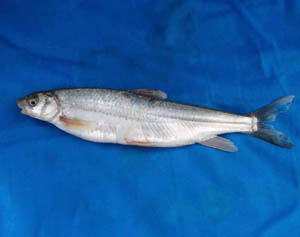
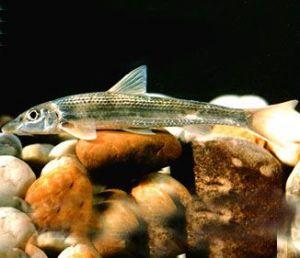
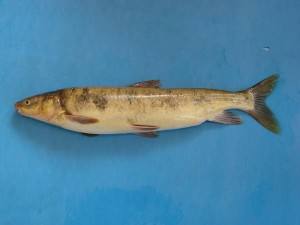
Red-lipped loach, Leptobotia rubrilabris (Dabry de Thiersant, 1872), belongs to the Cypriniformes, Cobitidae, and the genus Leptobotia. It is a fish endemic to the upper reaches of the Yangtze River.
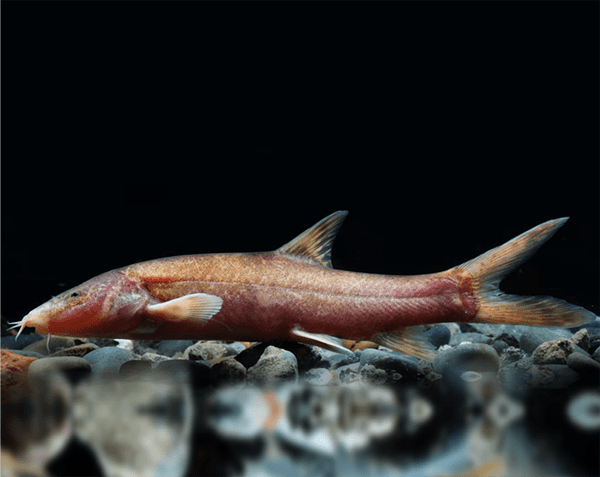
The red-lipped loach is larger, second only to the long loach. It has edible value. The population is small, and it is difficult to catch in many water systems and river sections. In the 1950s, it accounted for a certain proportion of the catch in the lower reaches of the Minjiang River, but it is now scarce.
In addition to the "red lips" feature, the body color of the red-lipped loach varies greatly. Some are bright red, with irregular brown-black spots of different sizes on the sides of the body, or only with spots on the back, or without spots on the whole body and brown.
The head kidney of the red-lipped loach is extremely small and is a lymphatic organ. The urinary system consists of the mesonephros, ureters and bladder. The mesonephros consists of renal corpuscles and renal tubules. The renal corpuscles are aggregated and are most distributed in the middle segment of the mesonephros. The size of the glomerulus is (64.00±5.10)μm, which belongs to the mesonephros of typical freshwater teleosts. The renal tubules can be divided into the cervical segment, the first proximal tubule, the second proximal tubule, the distal tubule and the collecting duct. The epithelium of the first and second proximal tubules is a single-layer columnar epithelium, and the free surface of the epithelial cells has abundant brush borders. The free surface of the distal tubule and the collecting duct lumen has no brush border. The epithelium of the ureter is a pseudostratified epithelium, the submucosal layer is very thin or absent, and the muscular layer is composed of circular muscle and longitudinal muscle, and the boundary between the two is unclear. The bladder is a ureteral bladder, the mucosal epithelium is a transitional epithelium, and secretory cells are distributed in the epithelium.
Listed in the second level of the "List of National Key Protected Wildlife in China". (Only for wild populations)
Protect wild animals and eliminate game.
Maintaining ecological balance is everyone's responsibility!