Skip to content
Animals Top
Home>Animals>Fish>Small fish
Animal Profile IUCN: LC

Hippocampus jayakari

Hippocampus jayakari

Jia's seahorse, Latin name Hippocampus jayakari, is a species of Syngnathidae in the order Acanthopterygii of the class Actinopterygii.Although it looks gentle, the Chiari seahorse is a voracious carnivore that eats any animal it can swallow, mainly small crustaceans, fish and other invertebrate

Small fish 662 views
Scientific Name Hippocampus jayakari
Length About 14 cm
Weight About 10g
Lifespan 3-5years
IUCN Status LC
Advertisement

Table of Contents

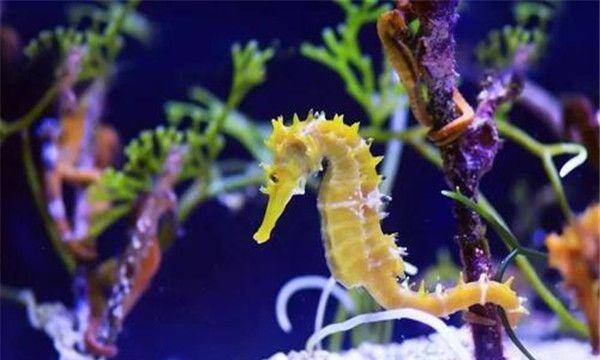
    Jia's seahorse, Latin name Hippocampus jayakari, is a species of Syngnathidae in the order Acanthopterygii of the class Actinopterygii.
    80df2cf506be461866c3a3141346be4f_九雷图片转化为.jpeg

    Although it looks gentle, the Chiari seahorse is a voracious carnivore that eats any animal it can swallow, mainly small crustaceans, fish and other invertebrates.
    3a24665abc05e8ce534718953668586a_九雷图片转化为.jpeg

    Male Chiari seahorses have pouches and are responsible for hatching, with a gestation period of 4-6 weeks. Newly hatched seahorses live alone and are not cared for by their parents.

    The IUCN Red List lists them as Data Deficient (DD).


    Protect wild animals and stop eating game.

    Maintaining ecological balance is everyone's responsibility!


    At a glance

    Profile Details

    Key characteristics, appearance, and habitat information.

    Traits & Behavior

    Greedy, males have pouches

    Appearance

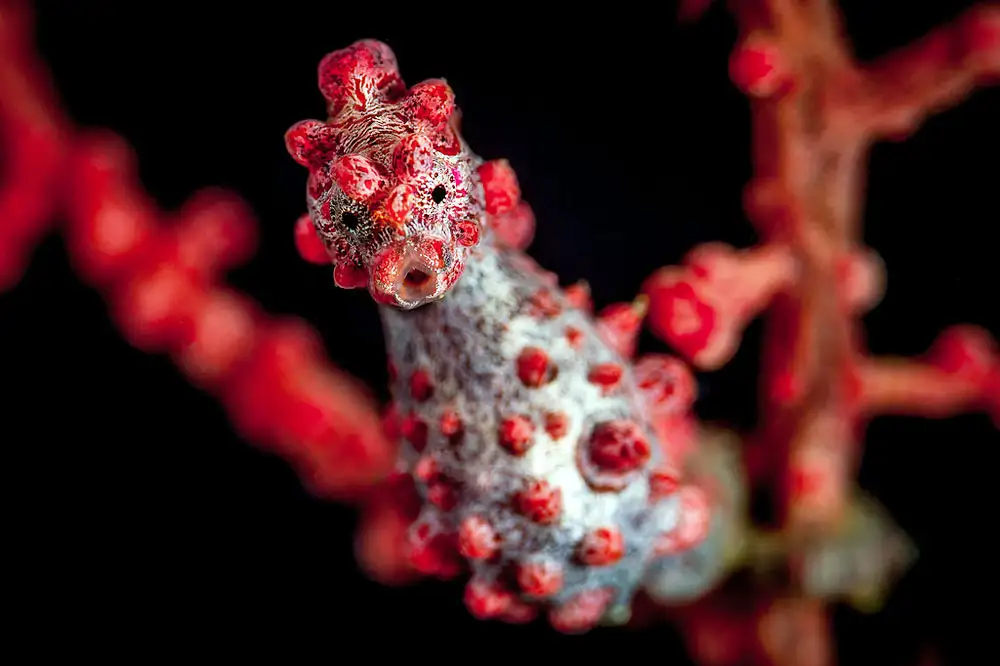
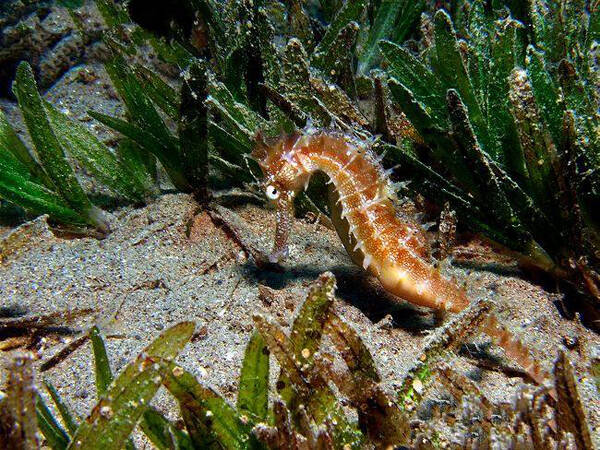
    The body of the Chiari hippocampus is 14 cm long and has a light cream-colored body with white spots.

    Distribution & Habitat

    The Jaipur seahorse is distributed in the Red Sea and the Arabian Sea in the western Indian Ocean.
    The Jaipur seahorse mainly lives in the shallow coastal reefs covered with seaweed, seagrass, and sea surface, with a water depth of 2 to 3 meters, and the deepest range of activity is 20 meters.
    Advertisement

    Visual guide

    Browse available images of this species.

    Quick answers

    Hippocampus jayakari FAQs