
Yellow-footed Rock-wallaby
The yellow‑footed rock‑wallaby (Petrogale xanthopus) is one of Australia’s most distinctive marsupials, famous for bright yellow‑orange limbs, bold facial markings and a banded tail. Unlike wallabies of open plains, this species is a rock specialist: steep cliffs, boulder fields and narrow crevi...

Swamp Wallaby
The swamp wallaby is a common wallaby of eastern Australia’s forests and scrubby edges. It is typically dark‑coated and wary, feeding mainly at dawn and dusk and spending the day hidden in dense vegetation. When disturbed, it often vanishes into thick cover rather than sprinting long distances acr...

Red-necked Pademelon
The red‑necked pademelon is a small macropod of wet forests and rainforest edges in eastern Australia. It is shy and quick, often appearing briefly along forest tracks or edges at dusk or at night before slipping back into dense cover.Compared with open‑country kangaroos, this species depends heav...

Red-legged Pademelon
The red‑legged pademelon is a small macropod best known for its rusty red “legs” and its preference for dense, wet forests. It is most active at night or around dawn and dusk, spending daylight hours hidden in thick understorey, which is why it can be hard to spot even within its range.Unlike ope...

Red Kangaroo
The red kangaroo is an iconic mammal of Australia’s inland and one of the largest living marsupials. It is built for open country, moving efficiently over long distances with powerful, energy‑saving hopping.Unlike many large mammals that must stay close to water, red kangaroos are remarkably well...

Quokka
The quokka is a small wallaby endemic to southwest Western Australia and widely known for its rounded face and “smiling” expression. The best‑known population lives on Rottnest Island near Perth, where quokkas are relatively easy to see compared with the mainland.Even so, the species is not “saf...

Parma Wallaby
The Parma wallaby is a small, shy macropod found in forested landscapes of New South Wales, Australia. It is best known for its conservation story: after being presumed extinct for decades, it was confirmed again in the wild in the 1960s, making it one of Australia’s most notable “rediscovered” m...

Eastern Grey Kangaroo
The eastern grey kangaroo (Macropus giganteus) is one of Australia’s most familiar large kangaroos and a classic image of the continent’s wildlife: grey-brown fur, powerful hind legs, a long balancing tail and an energy-efficient hopping gait. It often lives in open grassland and woodland edges, f...

Eastern Grey Kangaroo
The eastern grey kangaroo (Macropus giganteus) is one of Australia’s most familiar large kangaroos and a classic image of the continent’s wildlife: grey-brown fur, powerful hind legs, a long balancing tail and an energy-efficient hopping gait. It often lives in open grassland and woodland edges, f...

Brush-tailed Rock-wallaby
The brush-tailed rock-wallaby (Petrogale penicillata) is an agile, cliff-dwelling marsupial native to rocky escarpments and gorges of eastern Australia. Built for life on steep terrain, it can leap between narrow ledges, sprint across boulder fields and vanish into rock crevices when threatened. Alt...

Black-striped Wallaby
The Black-striped Wallaby (Notamacropus dorsalis, formerly Macropus dorsalis) is a medium-sized, grass-eating macropod native to eastern Australia. It takes its name from the distinctive dark stripe that runs along the midline of the back from the shoulders towards the base of the tail. Once more wi...

Huon Tree Kangaroo
The Huon tree kangaroo (Dendrolagus matschiei), also known as Matschie’s tree‑kangaroo, is one of the best‑known tree‑kangaroo species from New Guinea. It is a true forest specialist with a very small natural range, centered on Papua New Guinea’s Huon Peninsula, where it lives in montane rainfo...
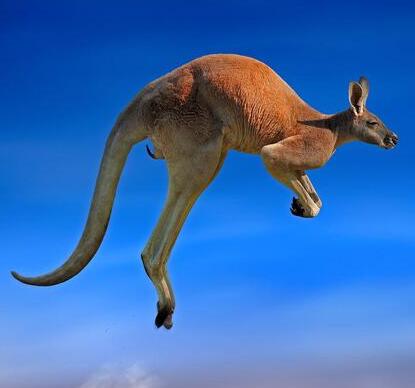
kangaroo
Kangaroo (English: kangaroo, ganguro) is a mammal belonging to the genus Macropodidae, family Macropodidae, order Diprotodonta. The word "kangaroo" usually refers to the four largest species in the family Macropodidae, namely the red kangaroo, the eastern grey kangaroo, the western grey ka...
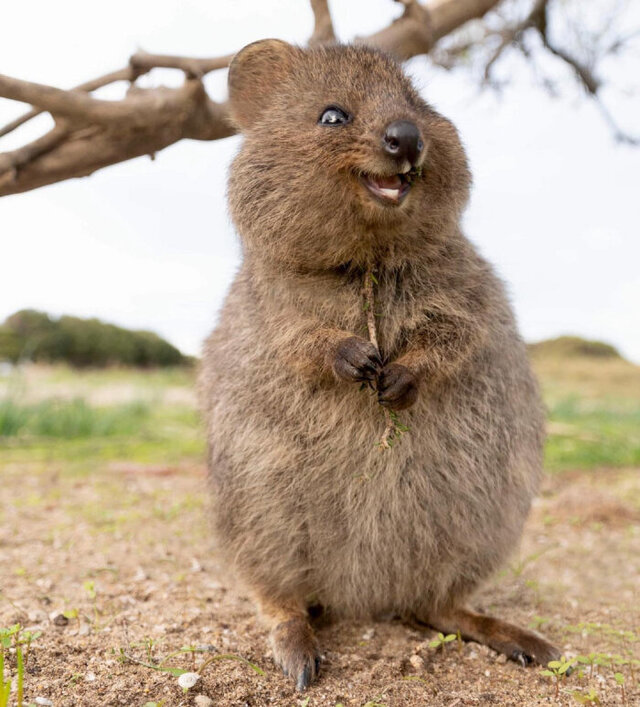
Setonix brachyurus
The quokka (scientific name: Setonix brachyurus) is a marsupial mammal of the family Macacuidae. It is one of the smallest kangaroos and looks like a mouse. It is called "the happiest animal in the world" because of its chubby face and "sweet" smile. They are very friendly and ar...
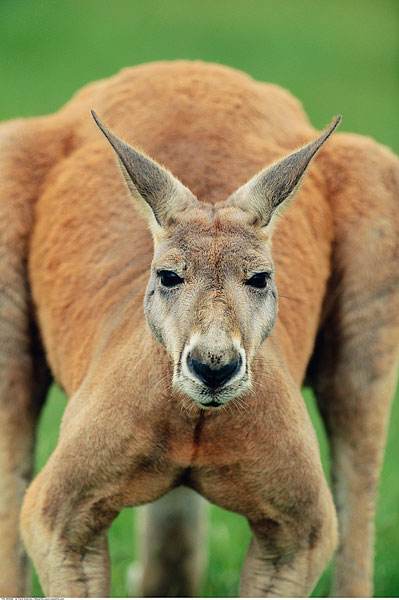
Macropus rufus
The common large kangaroo is called the red kangaroo, which is also the most famous one. Its image is widely known by people all over the world. Look at its unruly temperament, sparse stubble, and strong chest. Its muscles are coiled and its veins are exposed. It looks very social at first glance.Th...
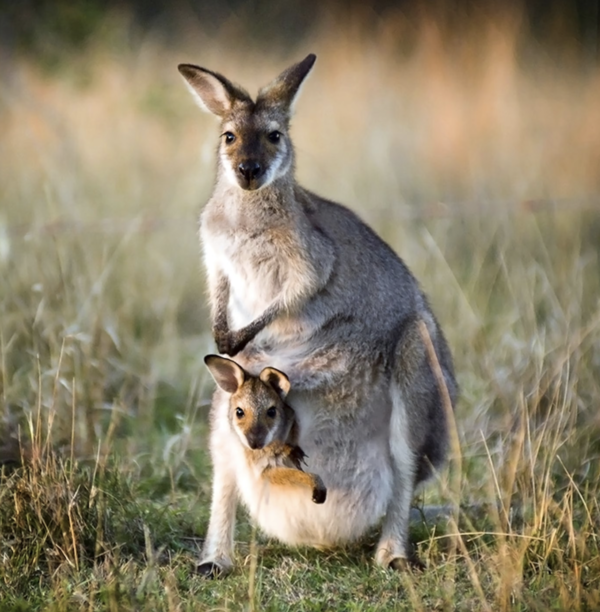
Do All Kangaroos Have Pouches? A Comprehensive Exploration
Kangaroos are one of Australia's most iconic marsupials, known for their powerful hind legs, long tails, and, most notably, pouches. But do all kangaroos have pouches? This question sparks curiosity, especially among those interested in marsupial biology, zoology, and evolutionary adaptations. I...