
Large-eared Flying-fox
The large‑eared flying‑fox (Pteropus macrotis), also called the big‑eared flying fox, is an Old World fruit bat in the flying‑fox genus Pteropus. It is a mostly nocturnal species associated with lowland tropical forests and coastal habitats across parts of Indonesia and New Guinea.Like many flyi...

Flying Foxes
“Flying foxes” are large fruit bats, most famously the species in the genus Pteropus. They have a fox-like face with a longer snout and large eyes, which is why many people describe them as “foxes with wings.” Unlike many small insect-eating bats that rely heavily on echolocation, flying foxes t...

Black Flying-fox
The black flying-fox (Pteropus alecto) is a large fruit bat in the family Pteropodidae and one of the most abundant flying-foxes in northern Australia and parts of New Guinea. It is a prominent nocturnal pollinator and seed disperser in tropical and subtropical forests and wetlands, forming dense da...
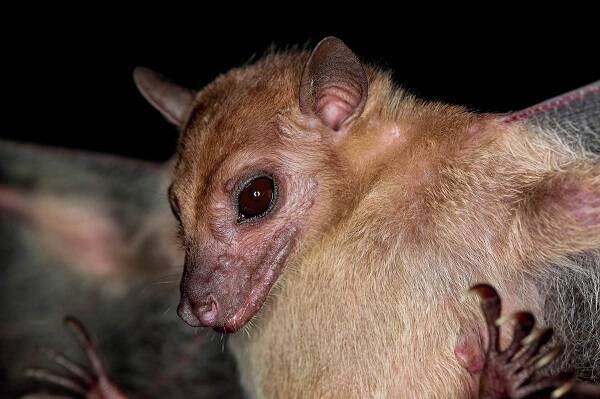
Rousettus leschenaulti
Brown fruit bats are typical tropical bats that do not hibernate. Although they often live in the same cave with other bats, they never mix with them. In addition, in caves where fruit bats live, fruit bats dominate the population, which seems to be a phenomenon of interspecies exclusion. In the hot...
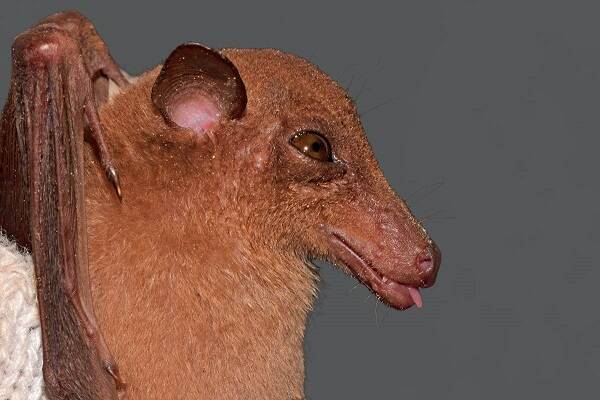
Macroglossus sobrinus
Andersen's long-tongued fruit bat (<M. sobrinus>) was named by Andersen (1911) based on the specimens of Gunong Igari, Malaysia. It was originally considered to be a subspecies of the small long-tongued fruit bat (<M. m. sobrinus>). However, Medway (1969) believed that Andersen's...
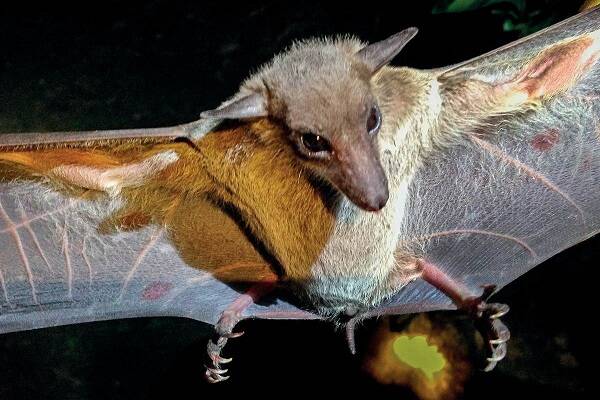
Eonycteris spelaea
The tongue of the long-tongued fruit bat is very long, with a brush-like protrusion at the tip, a tridentate papillae in the center of the tongue, and a forearm length of 47.31-51.01 mm. It is similar to the long-tongued fruit bat (Eonycteris spelaea), but the second finger has a claw, the wing memb...