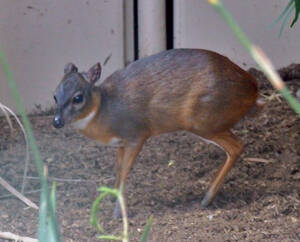
Neotragus pygmaeus
Royal Antelope (scientific name: Neotragus pygmaeus) English Royal Antelope, French Antilope royale, German Kleinstbokchen, no subspecies.The Bess Island Antelope is very similar to the Royal Antelope, but is only found in central Africa. The Baird's Island Oryx has small black and white marking...
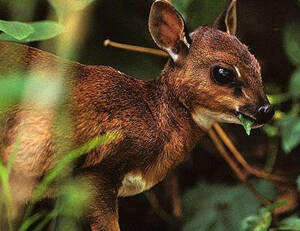
Neotragus batesi
Bates' Pygmy Antelope (scientific name: Neotragus batesi) English: Bates' Pygmy Antelope, Dwarf Antelope, German: Batesbokchen, no subspecies.The Bet's Island Oryx is similar in appearance to the Royal Island Oryx (Neotragus pygmaeus) of West Africa, but can be distinguished by its large...
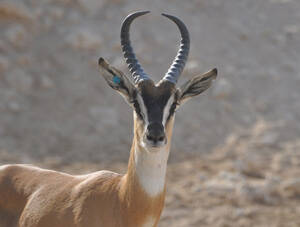
Nanger soemmerringii
Somali gazelle (scientific name: Nanger soemmerringii) is also known as Soemmerring's Gazelle in foreign languages. There are three subspecies.Once upon a time, the attractive Somali gazelle would gather in large groups of hundreds during seasonal migration. This spectacular sight is already ver...
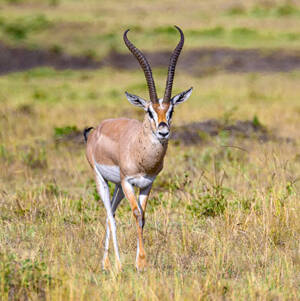
Nanger granti
Grant's gazelle (scientific name: Nanger granti) is a large, light-haired antelope with three subspecies.Grant's gazelle is migratory, and they migrate seasonally throughout their range, except in areas where there is abundant forage supply throughout the year. The species migrates in herds,...
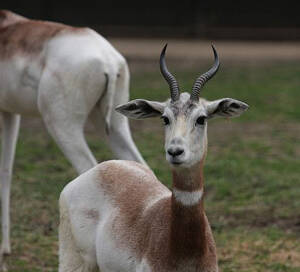
Nanger dama
Nanger dama (scientific name: Nanger dama) is also known as Dama Gazelle, Addra Gazelle, and Mhorr Gazelle. There are three subspecies.Nanger dama migrates for a long time, moving into the Sahara Desert in the rainy season and to the open jungle in the dry season. When in the desert, they live toget...
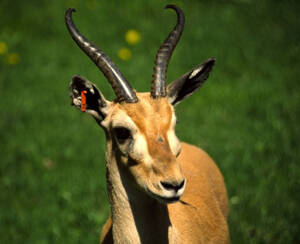
Eudorcas tilonura
Eritrean Gazelle (scientific name: Eudorcas tilonura) English Heuglin's Gazelle, Eritrean Gazelle, French Gazelle d'Erythrée, German Eritreagazelle, no subspecies.The Eritrean gazelle lives east of the Nile. In the past, the species was considered to be distinct from the Thomson's gazel...
Eudorcas albonotata
Mongalla Gazelle (scientific name: Eudorcas albonotata) English: Mongalla Gazelle, French: Gazelle de Mongalla, German: Mogallagazelle, no subspecies, a medium-sized antelope.The Mungara gazelle (Eudorcas albonotata) is a species of gazelle found in floodplains and savannas of South Sudan. It was fi...
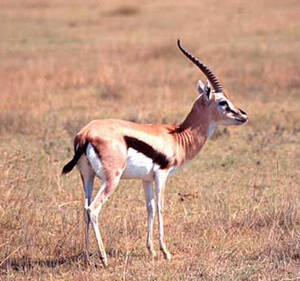
Ammodorcas clarkei
Clark's Gazelle (scientific name: Ammodorcas clarkei), also known as Clark's Gazelle in English, has no subspecies and is a medium-sized antelope.The sand antelope is a solitary or social diurnal mammal that can move alone or in small family groups of 3-9 individuals. It feeds in the morning...
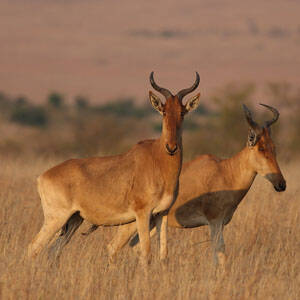
Alcelaphus buselaphus
Red Hartebeest (scientific name: Alcelaphus buselaphus) is also known as Red Hartebeest in foreign languages. The Red Hartebeest and the Zambian Hartebeest were once independent species. In 2013, they were classified as subspecies of the Hartebeest. So far, the Hartebeest genus has only one species,...
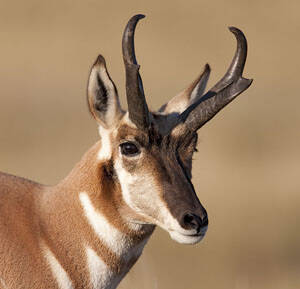
Antilocapra americana
Pronghorn (scientific name: Antilocapra americana) is also known as pronghorn in foreign languages. There are 5 subspecies.Pronghorn likes to live in groups. In summer, they form small groups of about 50-100 people, and in winter, they gather into large groups of thousands of people. When encounteri...
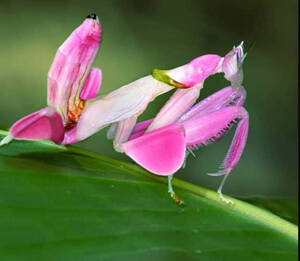
Hymenopus coronatus
Orchid Mantis (scientific name: Hymenopus coronatus) is an animal of the family Hymenopidae and the class Insecta.Wild orchid mantises live in the tropical rainforests of Malaysia. It is a diurnal insect with a high predatory instinct, and will prey on each other even if they are of the same species...
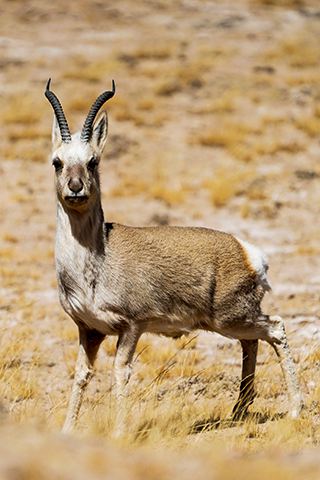
Procapra picticaudata
Tibetan Gazelle, also known as Tibetan Gazelle in English, has no subspecies and is a typical high mountain cold desert animal.For those who are familiar with the creatures in the Hoh Xil area, the easiest way to distinguish between Tibetan antelopes and Tibetan antelopes is to see which one has a &...
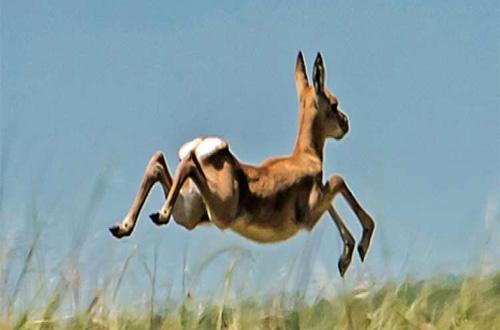
Procapra gutturosa
Mongolian Gazelle is called Mongolian Gazelle in foreign language. It has no subspecies.Mongolian Gazelle likes to live in groups. When migrating northward in spring, groups of 6,000 to 8,000 have been observed. In the summer pasture, males separate from the group. The group stays together for a lon...
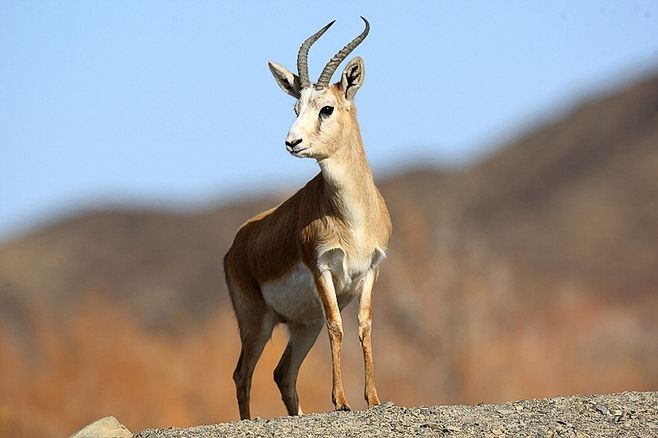
Gazella subgutturosa
The goitered gazelle is a typical animal that lives in desert and semi-desert areas. It is shaped like a gazelle and is good at running. The male gazelle's throat is enlarged during the estrus period, resembling a goose's throat, hence the name "goitered gazelle". The swelling of t...
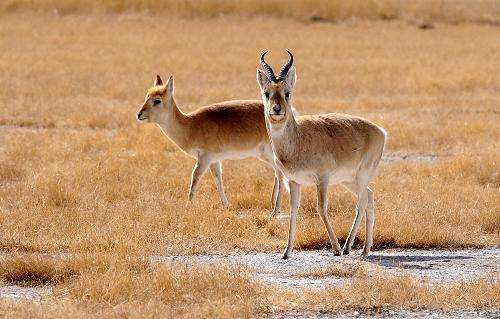
Procapra przewalskii
In 1875, Russian naturalist Przewalski discovered this animal unique to China on the Ordos grassland in Inner Mongolia, China, but he always mistakenly thought it was a Tibetan gazelle. It was not until 13 years later that it was officially named "Przewalski's gazelle". However, in his...

Sauroposeidon
Sauroposeidon was a giant long-necked plant-eating dinosaur from the Early Cretaceous of North America. It is famous for its extraordinary neck vertebrae, which suggest that it was one of the tallest dinosaurs ever discovered. Although it is sometimes mentioned alongside the biggest sauropods of all...
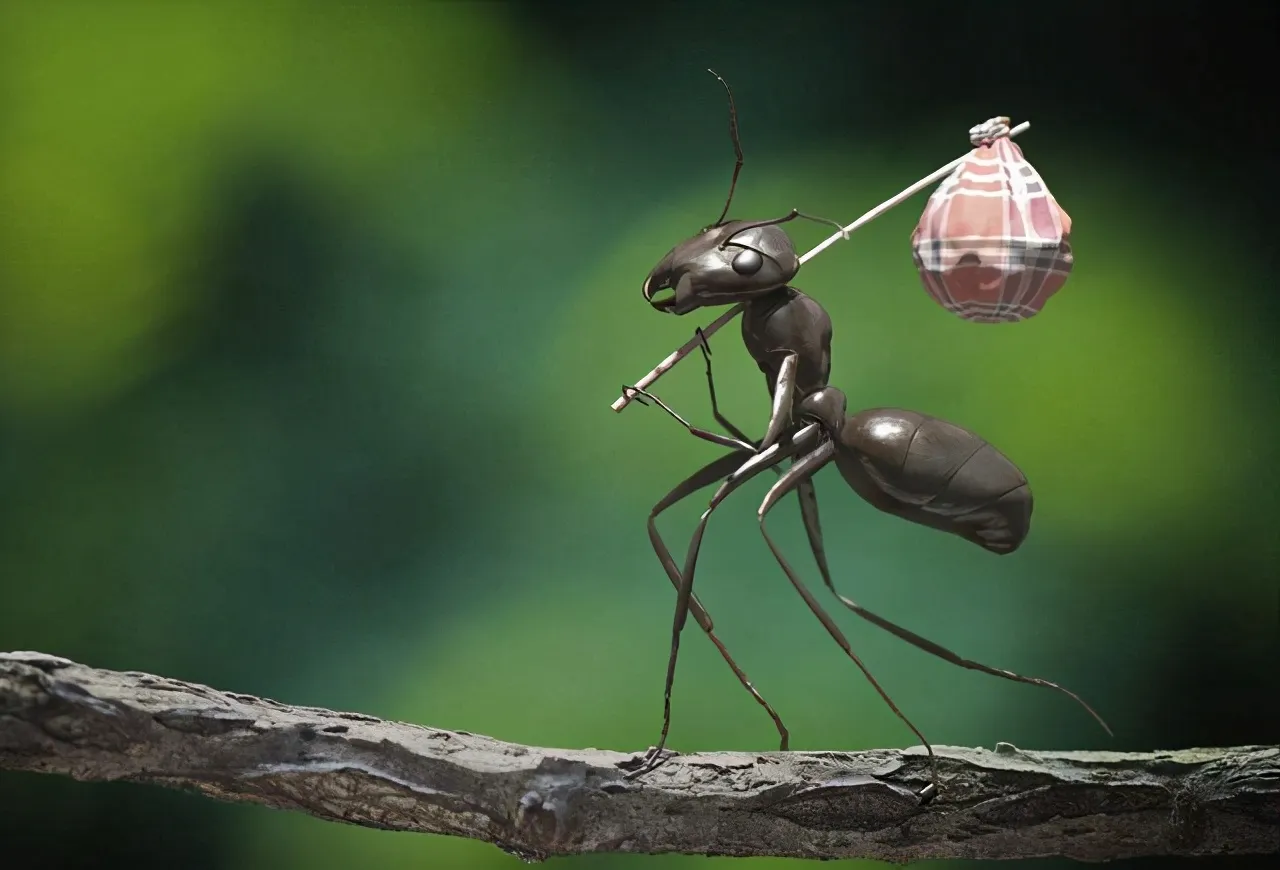
How long do ants generally live? ——Uncovering the secrets of ant life
Ants are one of the most common insects on Earth. They are widely distributed, have diverse lifestyles, and are known for their highly socialized group life. Many people may think that ants are small and must have a short lifespan, but in fact, the lifespan of ants varies according to their species,...

The different types of giant pandas: including species differences, habitats and ecological characte
The giant panda (Ailuropoda melanoleuca) is a rare animal unique to China. It is known as a "national treasure" and has received widespread attention around the world. Not only does it attract countless people's attention because of its cute appearance, but its endangered status also t...
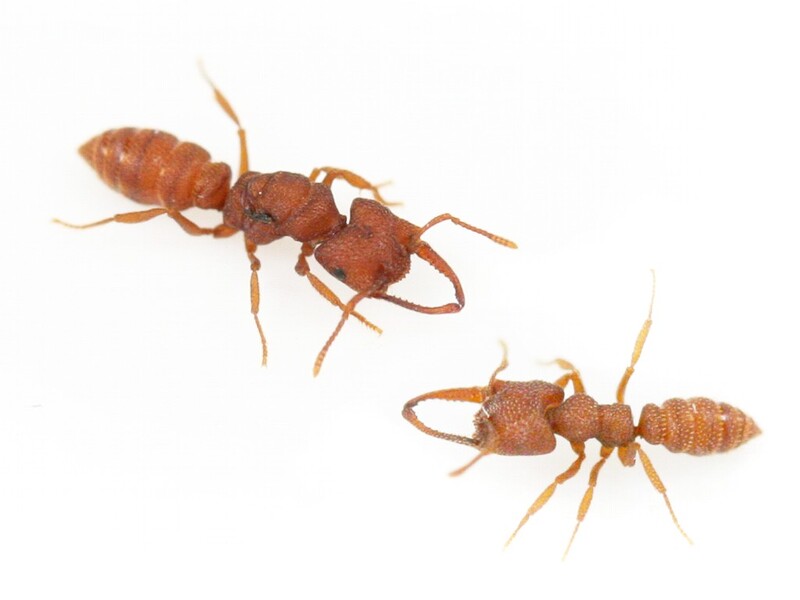
Top 10 most sensitive animals in the world
Untrained humans usually have a reaction time of 200 to 300 milliseconds, while humans blink at about 100 milliseconds. However, many animals are much faster than humans. Today, I have compiled a list of the top ten most responsive animals in the world, including Camilla ants, splay-necked spiders,...