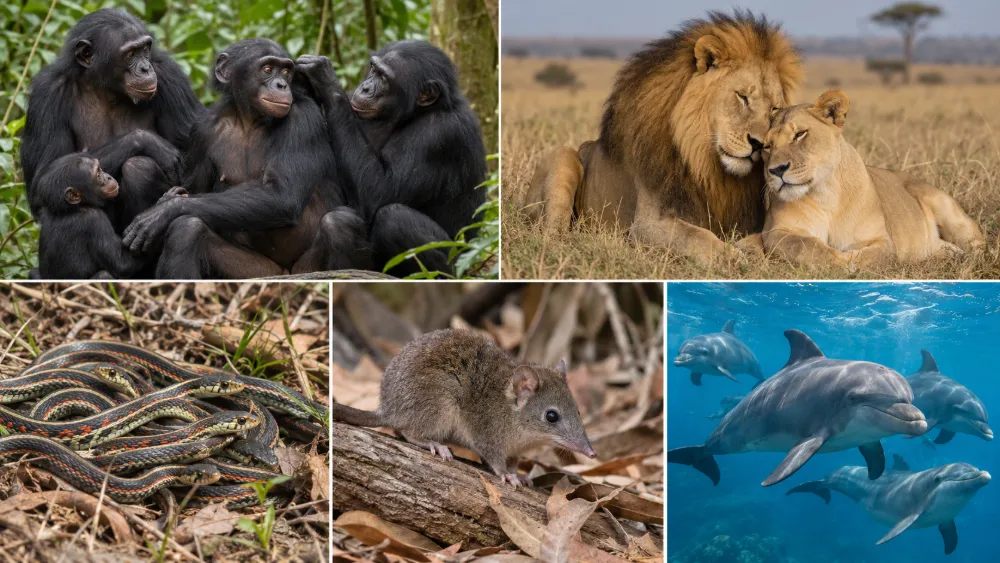
Quick answer: There is no official scientific ranking of the “most resilient animals,” because resilience can mean surviving freezing, dehydration, oxygen loss, starvation, injury, heat, salinity changes, or rapid environmental change. Strong examples include tardigrades, planarians, wood frogs, African lungfish, dromedary camels, cockroaches, goldfish, mummichogs, coyotes, and the jellyfish Turritopsis dohrnii. Each survives a different type of stress, so the useful comparison is how the animal survives rather than pretending one species wins every category.
This revised list focuses on animals with unusually well-documented physiological, regenerative, or ecological resilience. It also corrects several common myths—for example, camel humps store fat rather than water, cockroaches are not uniquely immune to radiation, and the “immortal jellyfish” is capable of life-cycle reversal but is not impossible to kill.
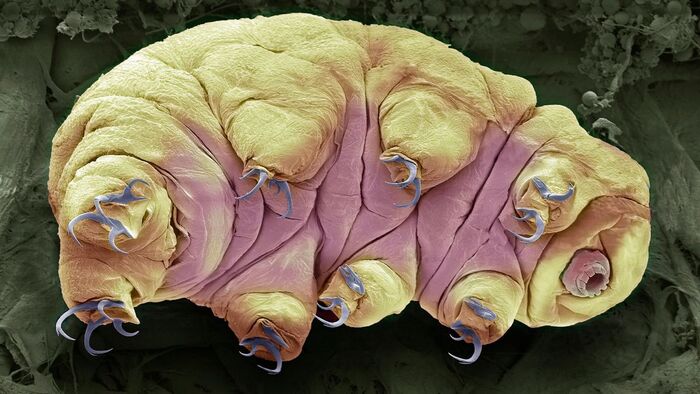
Tardigrades can enter cryptobiosis, allowing some species to survive extreme dehydration and long periods of freezing.
10 Most Resilient Animals at a Glance
| Animal | Main resilience | Key survival mechanism | Important caveat |
|---|---|---|---|
| Tardigrade | Dehydration, freezing, long dormancy | Cryptobiosis | Not every species tolerates every extreme equally |
| Planarian | Severe tissue injury | Pluripotent stem cells and regeneration | Regenerative ability varies among planarian species |
| Wood Frog | Whole-body freezing | Cryoprotective glucose and urea | Freeze tolerance has temperature and duration limits |
| African Lungfish | Drought and prolonged food shortage | Aestivation and metabolic depression | Survival occurs in a dormant state, not normal activity |
| Dromedary Camel | Heat and dehydration | Water conservation, variable body temperature, rapid rehydration | The hump stores fat, not a tank of water |
| Cockroach | Food scarcity and environmental disturbance | Low energy demands and flexible physiology | Not the most radiation-resistant animal or insect |
| Goldfish | Severe oxygen shortage | Anaerobic metabolism that produces ethanol | This does not mean poor aquarium water is safe |
| Mummichog | Salinity, hypoxia, temperature fluctuation | Exceptional physiological plasticity | Tolerance still has biological limits |
| Coyote | Rapid habitat and human-landscape change | Behavioral and dietary flexibility | Ecological adaptability differs from extreme-stress physiology |
| Turritopsis dohrnii | Damage, stress, and life-cycle reversal | Cellular reprogramming and reverse development | “Biologically immortal” does not mean invulnerable |
What Does “Most Resilient Animal” Mean?
Resilience is not one measurable trait like body mass or running speed. It describes the ability to withstand disturbance, recover from damage, or continue functioning under difficult conditions.
Animals can therefore be resilient in completely different ways:
Physiological resilience: surviving freezing, dehydration, hypoxia, heat, or salinity change.
Regenerative resilience: replacing lost or damaged tissues.
Metabolic resilience: drastically reducing energy use during drought, cold, or food shortage.
Ecological resilience: adapting behavior and diet when habitats change.
Developmental resilience: reversing or reorganizing life stages after stress.
That is why no single species can scientifically be crowned the “toughest animal on Earth” under every definition.
Tardigrade
Tardigrades, commonly called water bears, are microscopic animals famous for entering cryptobiosis.
During cryptobiosis, normal activity essentially stops and metabolism falls to extremely low levels. This allows some tardigrade species to tolerate severe dehydration, freezing, and other stresses that would rapidly kill an active animal.
One of the clearest long-term examples came from Antarctic tardigrades recovered from moss that had been stored at −20°C for 30.5 years. Researchers revived two individuals and an egg, and one revived adult plus the hatchling later reproduced successfully.
This does not mean every tardigrade can survive for decades under any condition. Their famous resilience depends on species, life stage, the type of cryptobiosis, temperature, hydration state, and how rapidly environmental stress occurs.
It is also misleading to say tardigrades are simply “indestructible.” They can die from heat, radiation, mechanical damage, or other stresses when conditions exceed their biological limits.
For a closer comparison of extreme dormancy and fasting, see Animals That Can Survive the Longest Without Food.
Planarian
Planarians are flatworms famous for regeneration rather than for surviving deserts or frozen environments.
Many well-studied planarian species contain abundant adult stem cells called neoblasts. Some neoblasts are pluripotent, meaning they can generate many different cell types needed to rebuild missing tissues.
After injury, positional signals are reset around the wound and guide stem cells in reconstructing the missing structures. This allows some planarians to regenerate a head, tail, nervous tissue, gut tissue, and other body regions after major injury.
However, the popular statement that “every piece of any flatworm becomes a complete new worm” is too broad. Regenerative capacity varies substantially across flatworm and planarian species, and a fragment must retain the biological ability to reorganize and rebuild the correct body pattern.
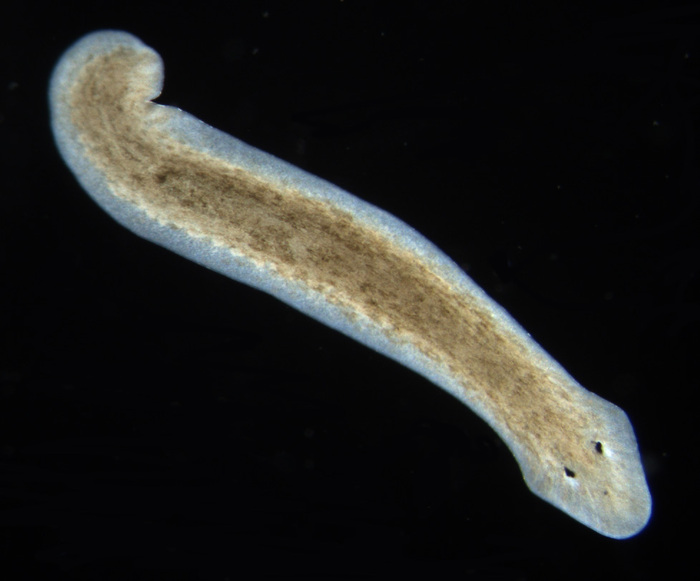
Planarians use adult stem cells called neoblasts to rebuild missing tissues after major injury.
Wood Frog
The wood frog (Lithobates sylvaticus) survives a type of stress that would be fatal to most vertebrates: substantial freezing of body fluids.
When temperatures fall below freezing, wood frogs rapidly mobilize glucose from liver glycogen. High concentrations of glucose, together with urea and other protective mechanisms, help limit cellular damage as extracellular ice forms.
Research on Alaskan wood frogs found individuals capable of surviving temperatures as low as about −16°C and enduring a two-month freezing period at −4°C under experimental conditions.
While frozen, normal movement stops and major physiological functions are profoundly suppressed. After thawing, the frogs can restore circulation, breathing, movement, and normal organ function.
This is true freeze tolerance—not merely hiding underground where temperatures remain above freezing.
Wood frogs are also included in our broader guide to Animals That Survive Extreme Cold.
African Lungfish
African lungfish in the genus Protopterus are extraordinary drought survivors.
When seasonal waters disappear, a lungfish can burrow into mud and secrete mucus that hardens into a cocoon. It then enters aestivation, a state of profound metabolic depression.
During aestivation, locomotion nearly stops, feeding stops, and many organs change how they function. Lungfish rely on air breathing and dramatically reduce energy expenditure while waiting for water to return.
Scientific reviews describe African lungfish surviving aestivation for years under suitable conditions. This makes them among the most remarkable vertebrates for surviving long droughts and food shortages.
The key point is that this is not normal active life without food or water. Aestivation is a specialized survival state that changes the animal's metabolism, nitrogen handling, circulation, muscles, and other organ systems.
Dromedary Camel
Dromedary camels (Camelus dromedarius) are resilient because they remain functional under heat and water stress that would quickly debilitate many large mammals.
Camels conserve water through highly concentrated urine, dry feces, specialized nasal heat and moisture exchange, and physiological control of body temperature. Allowing body temperature to fluctuate reduces the need for evaporative cooling during extreme heat.
Recent dehydration studies have experimentally water-restricted dromedaries for up to 20 days while documenting multiple physiological adjustments related to water preservation, oxidative stress, and fat metabolism.
One persistent myth needs correcting: camel humps do not store water. They store fat. Using stored fat contributes energy and produces some metabolic water, but the hump is not a built-in water bottle.
Camels are also capable of rapid rehydration when water becomes available, supported by blood and kidney adaptations that help tolerate major changes in hydration state.
Cockroach
Cockroaches are genuinely resilient insects, but their reputation is often exaggerated.
Species such as the American cockroach (Periplaneta americana) can endure significant food deprivation and adjust tissue activity during starvation. Experiments show that prolonged starvation suppresses cell proliferation in the midgut and that normal activity rebounds after feeding resumes.
Their survival advantages also include a relatively low metabolic demand, protective exoskeleton, broad diet in many pest species, rapid reproduction, and an ability to exploit small sheltered spaces.
But the famous claim that cockroaches would be the only animals left after nuclear war is not scientifically accurate.
Older radiation experiments actually found the American cockroach to be more radiation-sensitive than several other arthropods tested. Cockroaches can tolerate more ionizing radiation than humans in some circumstances, but they are far from the most radiation-resistant organisms.
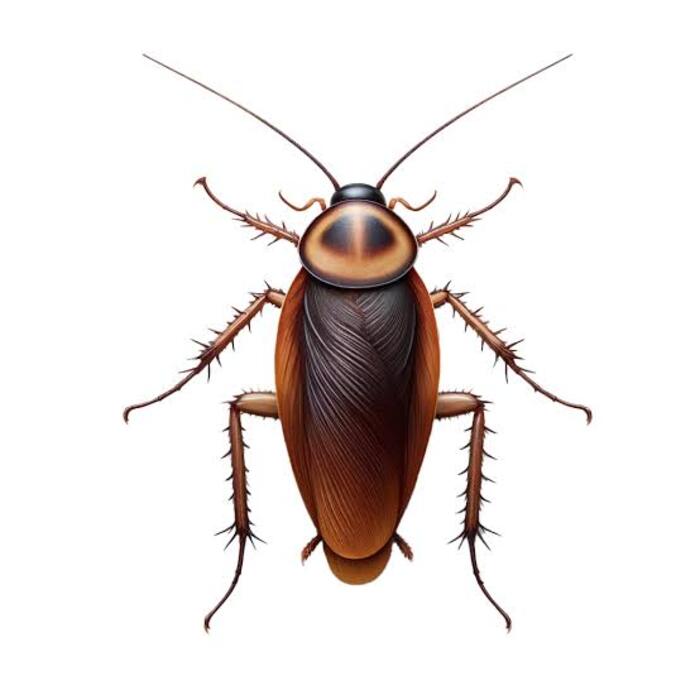
Cockroaches tolerate starvation and environmental disturbance well, but their famous nuclear-radiation reputation is greatly exaggerated.
Goldfish
Goldfish (Carassius auratus) have an unusual biochemical adaptation to oxygen shortage.
Most vertebrates relying heavily on anaerobic metabolism accumulate lactate, which eventually causes damaging acidosis. Goldfish and closely related crucian carp can redirect carbohydrate metabolism so that much of the end product becomes ethanol.
The ethanol can then diffuse out through the gills. This unusual pathway helps members of the genus Carassius endure severe hypoxia or anoxia far better than most vertebrate animals.
This adaptation is especially useful in cold, ice-covered freshwater habitats where oxygen can become severely depleted.
However, this fact should never be turned into aquarium advice. Goldfish still require adequate tank volume, filtration, oxygenation, and good water quality. The ability to tolerate oxygen shortage does not make chronic poor husbandry harmless.
Mummichog
The mummichog (Fundulus heteroclitus), also known as the Atlantic killifish, is one of the best laboratory models for environmental resilience in fish.
It lives in estuaries and salt marshes where conditions can change dramatically over short periods. Water temperature, salinity, dissolved oxygen, pH, and pollutant exposure may all fluctuate.
Mummichogs are strongly euryhaline, meaning they can adjust to an unusually broad range of salinities. Experimental work shows that their gill and other osmoregulatory tissues can rapidly switch between salt-secreting and salt-absorbing functions.
They are also unusually tolerant of hypoxia. Reviews of the species describe adaptation to wide fluctuations in salinity, oxygen, pH, and temperature, while some populations have also evolved resistance to particular pollutants.
This combination of physiological plasticity and local evolutionary adaptation is why Fundulus heteroclitus has become a major model in environmental and evolutionary biology.
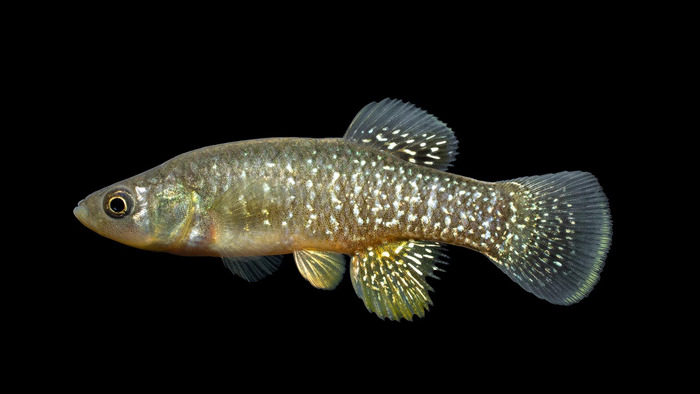
Mummichogs thrive in highly variable estuarine habitats and are famous among biologists for physiological plasticity.
Coyote
The coyote (Canis latrans) represents a different kind of resilience: ecological and behavioral adaptability.
Coyotes historically occupied much of western and central North America, but they expanded their geographic range dramatically as landscapes changed and large competing predators declined in many areas.
Today they live in deserts, grasslands, forests, agricultural landscapes, suburbs, and major cities.
The Smithsonian describes coyotes as showing strong behavioral, dietary, and phenotypic plasticity. They can alter diet, movement, social behavior, and activity timing according to local conditions.
National Park Service studies also show that urban coyotes often shift more of their activity into nighttime hours, reducing direct overlap with people.
This does not make coyotes physiologically comparable with a frozen wood frog or cryptobiotic tardigrade. It illustrates a separate but equally important form of resilience: surviving rapid ecological change by changing behavior.
Turritopsis dohrnii — The “Immortal Jellyfish”
Turritopsis dohrnii is widely called the immortal jellyfish because it can reverse its normal developmental direction.
When a medusa is damaged, stressed, weakened, or aging, it can transform into a cyst-like stage and reorganize into an earlier polyp stage. New medusae can later be produced from the colony.
This process involves extensive cellular reprogramming and transdifferentiation. Genetic studies have identified changes in pathways associated with DNA repair, telomere maintenance, pluripotency, redox biology, and cellular reprogramming during life-cycle reversal.
Laboratory work has shown that life-cycle reversal can occur repeatedly, which is why scientists discuss the species in the context of biological immortality.
But the phrase must be interpreted correctly. An individual can still be eaten, infected, physically destroyed, or killed by unsuitable environmental conditions. “Biologically immortal” refers to the potential to escape normal one-way aging through repeated developmental rejuvenation—not literal invulnerability.
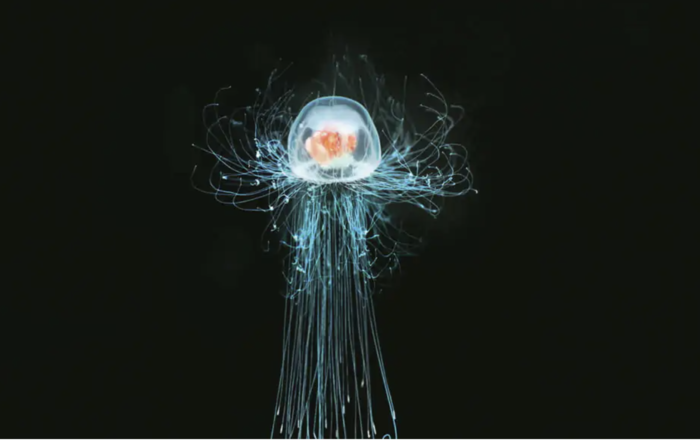
Turritopsis dohrnii can reverse from the medusa stage toward an earlier polyp stage, a rare form of developmental resilience.
Why Earthworms Were Removed From the Top 10
Earthworms are ecologically important and many species can tolerate substantial environmental variation, but the old version treated soil aeration and ecosystem importance as though those traits automatically proved exceptional individual resilience.
That mixes two different ideas.
An animal can be ecologically valuable without being one of the most extreme physiological survivors. Wood frogs and African lungfish provide clearer, experimentally documented examples of survival under severe environmental stress, so they are stronger choices for this list.
Why Sparrows Were Removed From the Top 10
House sparrows and several other sparrow species are highly successful around people, but “urban success” alone is not enough to make a species one of the world's ten most resilient animals.
Coyotes offer a stronger example for ecological resilience because their range expansion, flexible diet, urban behavior, and responses to human landscapes are exceptionally well documented.
The revised list therefore avoids adding common urban animals merely because they live near people.
Are Cockroaches Really the Toughest Animals on Earth?
No.
Cockroaches have many traits that make pest species difficult to eliminate, but they do not outperform tardigrades in cryptobiosis, wood frogs in vertebrate freeze tolerance, lungfish in multi-year aestivation, or some other insects in radiation resistance.
“Toughest” only makes sense after defining the stress being measured.
Can Tardigrades Survive in Space?
Some tardigrades have survived direct exposure to space conditions for limited experimental periods, especially when protected from the highest levels of solar ultraviolet radiation.
That does not mean they can live, feed, and reproduce indefinitely in open space. Their survival depends on entering a dormant state and on the exact combination of vacuum, radiation, temperature, exposure time, and protective shielding.
Can Wood Frogs Freeze Solid and Come Back to Life?
Wood frogs can survive extensive freezing of extracellular body water, with breathing, heartbeat, and movement ceasing during the frozen state.
They are not literally transformed into one solid block of ice: intracellular freezing would be extremely damaging. Their biochemical adaptations help control where ice forms and protect cells from dehydration and injury.
Do Camels Store Water in Their Humps?
No. Camel humps store fat.
Camels survive dehydration through whole-body physiological adaptations involving the kidneys, blood, nasal passages, body-temperature regulation, water conservation, and rapid rehydration—not by carrying a reservoir of liquid water in the hump.
Are Goldfish Hard to Kill Because They Can Live Without Oxygen?
Goldfish are unusually tolerant of low oxygen, but they are not immune to poor water quality.
Ammonia, nitrite, extreme temperature, unsuitable pH, chronic crowding, disease, and prolonged oxygen shortage can still injure or kill them. Their ethanol-producing anaerobic pathway is a specialized adaptation, not permission to keep them in stagnant bowls.
What Is the Difference Between Resilience and Endurance?
Endurance usually means sustaining activity for a long period—for example long-distance migration, swimming, or running.
Resilience is broader. It means withstanding or recovering from a severe challenge such as freezing, dehydration, tissue damage, hypoxia, or habitat change.
A camel may be resilient to dehydration, while a migratory bird may have outstanding flight endurance. Some species have both, but the terms should not be treated as synonyms.
For sustained physical-performance examples, see Animals With the Best Endurance.
Which Animal Is the Most Resilient Overall?
If “resilient” means surviving the widest range of extreme physical stresses through dormancy, tardigrades are the most famous candidate.
If the question is limited to vertebrates, the answer changes by stress:
Freezing: wood frog
Drought and aestivation: African lungfish
Dehydration and desert heat: dromedary camel
Anoxia: goldfish and crucian carp
Rapidly changing estuarine conditions: mummichog
Human-altered landscapes: coyote
That is a more scientifically useful answer than assigning every animal one arbitrary toughness score.
Frequently Asked Questions
What is the most resilient animal in the world?
Tardigrades are among the strongest candidates because some can survive dehydration, freezing, and extremely long cryptobiotic dormancy. There is no official scientific overall ranking because different animals specialize in different stresses.
What animal can survive the harshest conditions?
Tardigrades can survive several extreme conditions by entering cryptobiosis. Wood frogs, lungfish, camels, and mummichogs are standout examples among vertebrates for specific environmental extremes.
Are tardigrades indestructible?
No. They are exceptionally resilient under certain conditions, especially when cryptobiotic, but sufficiently intense heat, radiation, chemical exposure, mechanical damage, or unsuitable recovery conditions can kill them.
What animal is best at surviving freezing?
The wood frog is one of the best-known freeze-tolerant vertebrates. Alaskan populations can survive exceptionally low temperatures by combining cryoprotectants and controlled extracellular freezing.
What animal is best adapted to drought?
African lungfish are extraordinary drought survivors because they can aestivate inside a mucus-lined mud cocoon for prolonged periods. Dromedary camels are exceptional among active large mammals for heat and dehydration tolerance.
Can cockroaches survive nuclear radiation?
Cockroaches can tolerate more radiation than humans in some tests, but they are not uniquely radiation-proof. Experimental studies have found several other arthropods to be more radiation-resistant.
Why are goldfish resilient?
Goldfish can tolerate severe oxygen shortage partly because they convert anaerobic metabolic products into ethanol, which can be released through the gills. This helps prevent dangerous lactate accumulation.
Why are mummichogs so hardy?
Mummichogs inhabit variable estuaries and can rapidly adjust to changes in salinity, temperature, oxygen, and other environmental conditions. Different populations have also evolved local adaptations.
Are coyotes resilient animals?
Yes, in an ecological sense. Coyotes have expanded across much of North and Central America and successfully use deserts, forests, farms, suburbs, and cities by adjusting diet and behavior.
Is the immortal jellyfish really immortal?
Turritopsis dohrnii can repeatedly reverse its life cycle under certain conditions, which can allow it to escape normal one-way aging. It can still die from predation, disease, injury, or environmental stress.
Scientific and Reference Sources
Cryobiology — Antarctic Tardigrades Revived After More Than 30 Years
Cold Spring Harbor Perspectives in Biology — Planarian Regeneration and Stem Cells
Journal of Experimental Biology — Extreme Freeze Tolerance in Alaskan Wood Frogs
BMC Veterinary Research — Camel Kidney Adaptations During Dehydration
Annals of the Entomological Society of America — Radiation Sensitivity of Arthropods
Genome Research — Reverse Development in Turritopsis dohrnii
PNAS — Genomic Mechanisms Behind Turritopsis dohrnii Rejuvenation
Final Takeaway
There is no single scientifically proven “most resilient animal” because animals survive different kinds of stress. Tardigrades excel at cryptobiosis, planarians at regeneration, wood frogs at freeze tolerance, lungfish at aestivation, camels at dehydration, goldfish at anoxia, mummichogs at rapidly changing aquatic conditions, coyotes at ecological adaptation, and Turritopsis dohrnii at developmental rejuvenation.
The useful lesson is not that one animal is universally tougher than every other species. Evolution has produced many different solutions to survival, and the most impressive animal depends entirely on the challenge being measured.