Quick answer: There is no scientifically standardized ranking of the animals with the “shortest noses,” because a mammal nose, a fish snout, an amphibian naris, and an insect antenna are not the same anatomical structure. Better examples include golden snub-nosed monkeys, short-snouted seahorses, shortnose sturgeon, shortnose gar, and brachycephalic dogs such as Pugs. Other animals—including Hydra, spiders, bees, and ants—do not have a vertebrate-style external nose at all and detect chemicals using very different sensory systems.
This distinction matters. A bee does not have a tiny 4 mm “nose,” and a jumping spider does not have a 3.5 mm nose. Those measurements compare structures that are not anatomically equivalent. The list below instead shows animals with genuinely short or flattened snouts and animals that sense their environment without an external nose.
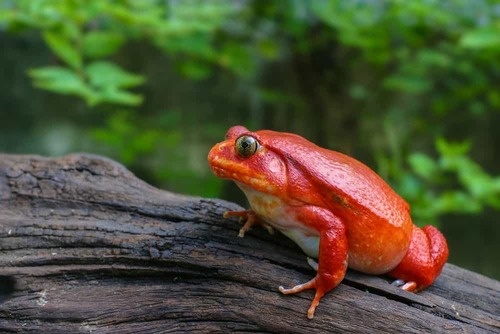
Frogs have paired external nares on the snout, but they do not have a projecting mammalian-style nose.
Animals With Short Noses, Snouts or No External Nose
| Animal | Nose or snout type | How it senses chemicals or uses the snout |
|---|---|---|
| Hydra | No nose or nostrils | Sensory cells and a simple nerve net detect chemical and mechanical cues |
| Jumping Spider | No vertebrate-style nose | Sensory hairs and other receptors detect mechanical and chemical information |
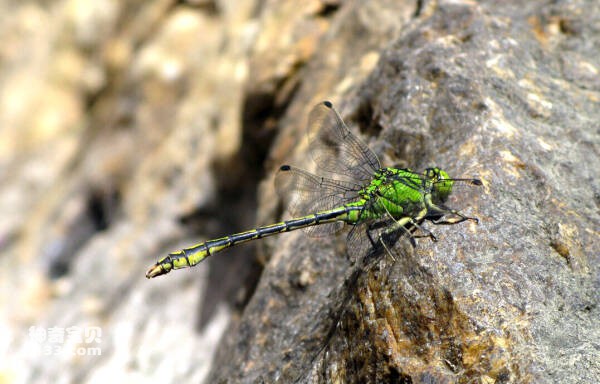
| Honey Bee | No nose | Olfactory receptors are concentrated in the antennae |
| Ant | No nose | Antennae detect odors and pheromones |
| Frog | Small external nares on a short snout | Nasal cavities contain olfactory sensory tissue |
| Golden Snub-Nosed Monkey | Very flat, reduced projecting nose | Forward-facing nostrils on a flattened face |
| Short-Snouted Seahorse | Short upturned snout | Snout is less than about one-third of head length |
| Shortnose Sturgeon | Relatively short projecting snout | Barbels beneath the snout help locate bottom-dwelling prey |
| Shortnose Gar | Shorter, broader snout than longnose gar | Jaw and snout shape distinguish it from related gar species |
| Pug | Very short brachycephalic muzzle | Human selective breeding produced a shortened skull and muzzle |
Why There Is No Scientific “Shortest Nose” Ranking
Comparing nose length across the entire animal kingdom sounds simple, but it is not anatomically meaningful.
In mammals, the external nose and muzzle contain nasal passages connected to olfactory tissue. In fish, researchers usually describe the projecting front of the head as a snout. Frogs have external openings called nares. Insects do not have vertebrate noses at all; many detect airborne chemicals mainly with sensory receptors on their antennae.
Spiders are different again. They lack antennae and a vertebrate nose, instead using specialized sensory structures distributed on the body and appendages.
For this reason, statements such as “an ant has a 5 mm nose” or “a jumping spider has a 3.5 mm nose” are not scientifically useful. The measurement may describe part of the head, but it is not measuring the same organ found in a mammal.
Hydra
Hydra are tiny freshwater cnidarians with tentacles surrounding a mouth. They have no nose, nostrils, brain, or centralized sensory organ comparable with those of vertebrates.
That does not mean they are insensitive to their surroundings. Hydra possess sensory neurons within a simple nerve net and can respond to chemical, mechanical, light, and other environmental cues.
Research on Hydra neurobiology shows that their nervous system is distributed through the body rather than concentrated into specialized structures such as a nose connected to a large brain.
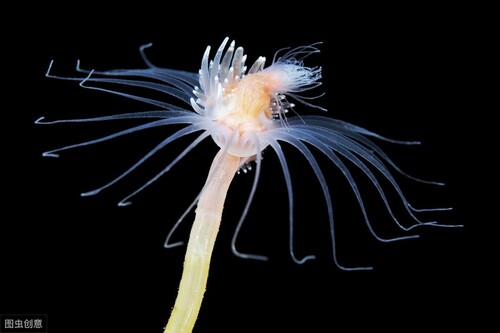
Hydra have no nose or nostrils; sensory neurons distributed through the body help them respond to their environment.
Jumping Spider
Jumping spiders have no nose like a mammal and no insect-like antennae.
Instead, spiders gather sensory information through their eyes, sensory hairs, receptors on their legs and other body structures. Jumping spiders are especially famous for their sophisticated vision.
Research from Cornell also demonstrated that jumping spiders can detect airborne sound using sensitive hairs on their legs and body. This is a useful reminder that sensory organs do not need to resemble human ears or noses to perform similar information-gathering roles.
It is therefore incorrect to assign a jumping spider a precise “nose length” in millimeters.
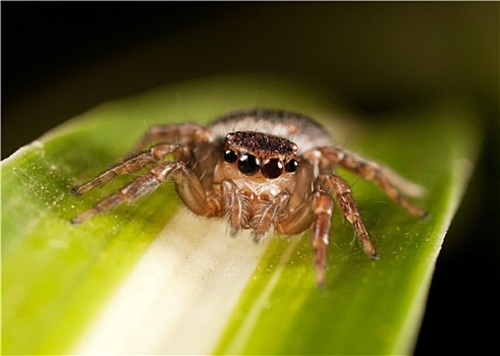
Jumping spiders have no projecting nose; they rely on specialized eyes, sensory hairs, and other receptors.
Honey Bee
Honey bees (Apis mellifera) have an excellent sense of smell, but they do not have a nose on the front of the head.
Their main olfactory organs are the antennae. Olfactory sensory neurons occur in microscopic structures called sensilla on the antennae, where volatile chemicals can be detected and transmitted to the bee's nervous system.
Smell helps honey bees distinguish floral odors, detect pheromones, recognize social signals, and locate food.
So when someone says that a bee “smells with its nose,” the closest functional equivalent is actually the pair of antennae.
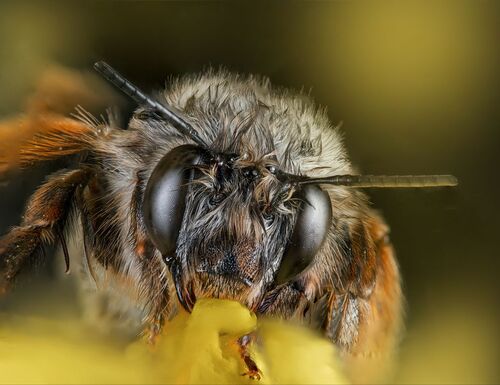
Honey bees smell primarily through sensory receptors on their antennae rather than through an external nose.
Ant
Ants also lack a vertebrate-style nose. Their paired antennae are among their most important sensory organs.
Odor receptors on the antennae allow ants to detect pheromone trails, food odors, nestmates, alarm signals, and other chemical information.
Stanford research on ant behavior describes antennal contact and smell as central to how colonies coordinate foraging. Harvard researchers have likewise shown how ants actively move their antennae while following odor trails.
This makes ants extremely sophisticated chemical sensors despite having no recognizable nose.
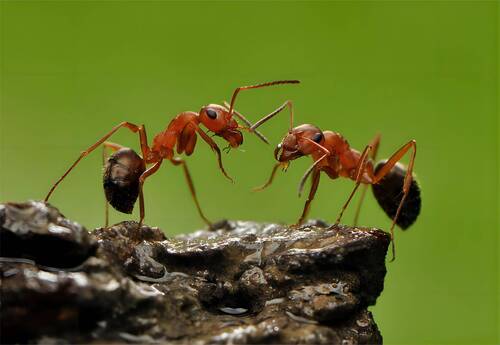
Ant antennae act as major chemical-sensing organs and are essential for following pheromones and recognizing other ants.
Frog
Frogs do have a true vertebrate olfactory system, but their external nose looks very different from the projecting noses of many mammals.
Adult amphibians have paired nasal sacs that connect to the outside through the external nares and to the mouth through internal nares. On a frog, the external nares appear as two small openings on the upper surface of the snout.
The nasal cavity contains olfactory sensory tissue, allowing frogs to detect chemical information from their environment.
It is therefore more accurate to say that frogs have a short snout with small external nostrils—not that they have “no nose at all.”
Golden Snub-Nosed Monkey
The golden snub-nosed monkey (Rhinopithecus roxellana) is one of the clearest mammalian examples of an unusually flat nose.
Snub-nosed monkeys in the genus Rhinopithecus are characterized by a flattened nose and forward-facing nostrils. In the golden snub-nosed monkey, folds of skin around the nostrils make the already reduced projection even more distinctive.
These primates live in mountainous forests of China, including regions with cold winters. Researchers have suggested that nasal morphology in some snub-nosed monkeys may be associated with adaptation to cold montane conditions, although the evolutionary history of the trait is complex.
Unlike insects and spiders, this is a true example of a mammalian nose that is visibly shortened and flattened.
Short-Snouted Seahorse
The short-snouted seahorse (Hippocampus hippocampus) has a genuinely short snout relative to closely related seahorses.
The Marine Life Information Network describes its snout as short and upturned, measuring less than one-third of the head length.
This helps distinguish it from the long-snouted seahorse (Hippocampus guttulatus), which occurs in some of the same European waters.
The short-snouted seahorse occurs in shallow coastal habitats including seagrass, seaweed, estuaries, and rocky areas in parts of Europe and the Mediterranean region.
Shortnose Sturgeon
The shortnose sturgeon (Acipenser brevirostrum) is a North American sturgeon named for its relatively short snout.
NOAA notes that it can be distinguished from the Atlantic sturgeon partly by its smaller snout shape, along with differences in body size, mouth structure, and scute patterns.
Four barbels hang beneath the snout. These fleshy sensory structures help the fish locate prey on or within muddy and sandy river bottoms before the mouth sucks the food up.
The species occurs in rivers and estuaries along the Atlantic coast of North America and is federally protected in the United States.
Shortnose Gar
The shortnose gar (Lepisosteus platostomus) is another fish whose common name refers directly to snout proportions.
It belongs to the same ancient-looking fish family as the longnose and alligator gars.
Texas Parks and Wildlife distinguishes the shortnose gar from the longnose gar, whose narrow snout is at least ten times longer than it is wide. The shortnose species has a noticeably shorter, broader head profile.
This is a much stronger example of a “short-nosed animal” than assigning an invented millimeter nose measurement to an insect.
Pug
The Pug is a domestic dog breed with an intentionally shortened muzzle.
Veterinarians describe Pugs as brachycephalic, meaning the skull bones of the face are shortened. The breed standard also describes the muzzle as short, blunt, and square.
However, the appearance has an important welfare dimension. A severely shortened facial structure can reduce airway space, and brachycephalic dogs can develop breathing problems collectively known as brachycephalic obstructive airway syndrome.
That is why the Pug belongs on a list of short-muzzled animals, but an extremely flat face should not automatically be treated as a desirable or harmless trait.
Do Insects Have Noses?
No, not in the vertebrate sense.
Many insects detect smells using olfactory receptors located mainly on the antennae. In honey bees, all olfactory sensory neurons are located in antennal sensory structures, while ants use antennae extensively to detect pheromones and other chemical signals.
Calling an antenna a “nose” can be a useful analogy for children, but anatomically it is an antenna containing multiple sensory systems rather than a miniature mammalian nose.
Do Spiders Have Noses?
Spiders do not have a vertebrate-style nose and they do not have antennae.
They instead rely on sensory structures on their legs and bodies, together with vision in species such as jumping spiders. Different receptors detect chemicals, vibrations, air movement, touch, and other environmental information.
Do Frogs Have Noses?
Yes. Frogs have paired external nostrils called nares connected to internal nasal cavities.
What frogs generally lack is the obvious projecting external nose seen in humans, dogs, elephants, and many other mammals.
What Animal Has the Flattest Nose?
There is no official global measurement ranking, but snub-nosed monkeys are among the most visually distinctive wild mammals with flattened noses. Their genus is characterized by flat noses and forward-facing nostrils.
Among domestic animals, brachycephalic dog and cat breeds can have even more dramatically shortened facial proportions because of selective breeding.
What Does Brachycephalic Mean?
Brachycephalic literally refers to a shortened head or skull shape.
In dogs and cats, the term commonly describes breeds with shortened facial bones and flat or short muzzles. Examples include Pugs, English and French Bulldogs, Pekingese, Persian cats, and Exotic Shorthairs.
Because shortening the skull does not proportionally shorten all the soft tissues inside the airway, extreme brachycephaly can contribute to respiratory and other health problems.
Short Nose vs Short Snout: Is There a Difference?
In everyday language the terms often overlap, but zoologists use them differently depending on the animal.
A nose usually refers more specifically to structures associated with the nostrils and olfactory system. A snout is a broader external region projecting from the front of the head and may include the nose, jaws, mouth, or other structures.
For fish, reptiles, amphibians, and many mammals, “snout length” is often the more useful anatomical measurement.
Frequently Asked Questions
Which animal has the shortest nose?
There is no scientifically standardized answer because different animal groups do not share the same external nose anatomy. Snub-nosed monkeys are strong mammalian examples of very flat noses, while Hydra, insects, and spiders do not have vertebrate-style noses at all.
What animals have short snouts?
Examples include golden snub-nosed monkeys, short-snouted seahorses, shortnose sturgeon, shortnose gar, and brachycephalic domestic animals such as Pugs.
What animals have no nose?
Hydra, insects, and spiders do not possess a mammalian-style external nose. They detect chemical information through specialized sensory cells, antennae, hairs, or other receptors.
Do ants have noses?
No. Ants primarily detect odors and pheromones using sensory receptors on their antennae.
Do bees have noses?
No. Honey bees detect odors with olfactory sensory neurons located in specialized structures on their antennae.
Do spiders have noses?
No. Spiders lack both vertebrate noses and insect antennae. They use sensory receptors on their bodies and appendages to gather chemical and mechanical information.
Do frogs have noses?
Yes. Frogs have paired external nares connected to internal nasal cavities, but the nostrils sit directly on the snout rather than on a projecting mammalian-style nose.
Why do snub-nosed monkeys have such flat noses?
Flat noses are a defining feature of the genus Rhinopithecus. The evolutionary reasons are still studied, and in some cold-living species the unusual nasal shape has been discussed as a possible adaptation to montane conditions.
Which seahorse has the shortest snout?
Hippocampus hippocampus is widely known as the short-snouted seahorse. Its snout is less than about one-third of its head length.
Are very short noses healthy in dogs?
Not always. Extreme brachycephaly can narrow the upper airway and contribute to breathing problems, heat intolerance, eye problems, and other welfare concerns.
Scientific and Reference Sources
Final Takeaway
There is no valid cross-species ranking of the world's shortest noses. Some animals genuinely have very short or flattened snouts, such as snub-nosed monkeys, short-snouted seahorses, shortnose fish, and Pugs. Others—including Hydra, spiders, bees, and ants—lack a vertebrate-style external nose altogether.
The important biological question is not simply how many millimeters long a “nose” appears to be, but what structure the animal actually uses for breathing, smell, feeding, and environmental sensing.