Here are the top ten well-known amphibians:
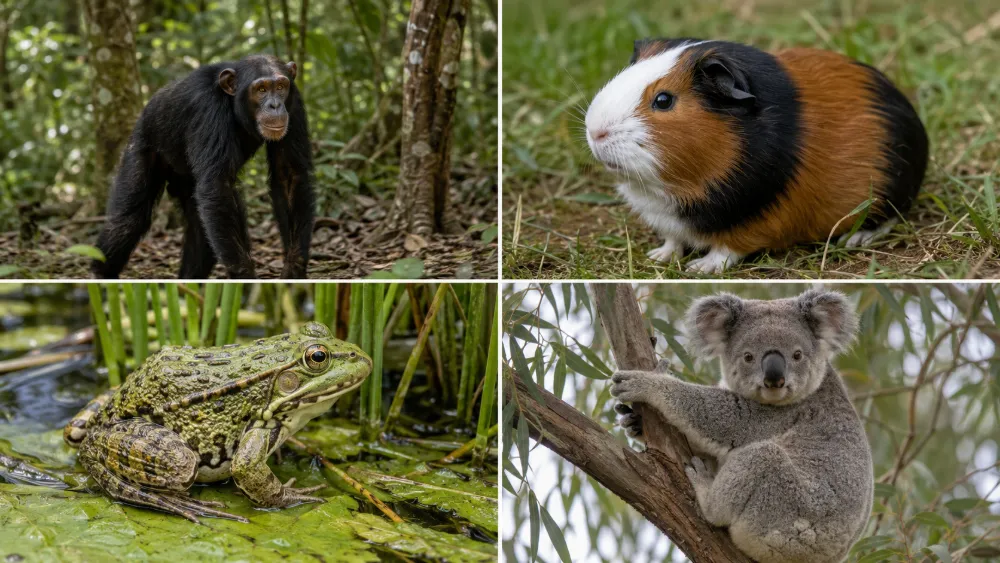
1. Frogs: Frogs are one of the most common amphibians. They can live in water and on land and like to eat insects and small animals.
2. Salamander: Salamander is a small amphibian that usually lives near water or in moist environments, feeding on insects and other small animals.
3. Tree toad: Tree toad is an amphibian that is accustomed to climbing trees. Their body is flat and their skin has many raised nodules.
4. Red-bellied frog: The red-bellied frog is an amphibian living in North America. They have a wide head, a triangular shape, and a large body.
5. American bullfrog: The American bullfrog is a large amphibian that usually lives in freshwater lakes and rivers and feeds on small fish, insects, etc.
6. Japanese giant salamander: The Japanese giant salamander is one of the largest amphibians in the world. They can reach a length of 1 meter and usually live in mountain forests.
7. Giant-mouthed frog: Giant-mouthed frog is an amphibian that lives in tropical rain forests. It feeds on insects and has a particularly large mouth.
8. American Spring Toad: The American Spring Toad is a small amphibian with a dark green body and black spots on its back. It usually lives in the tropical rain forests of South America.
9. Sea snake: Sea snake is a kind of swimming amphibian. Their body is long and strip-shaped. They usually live in shallow water areas near the ocean and coast.
10. Tap Salamander: Tap salamanders are small, reddish-brown amphibians that live in Europe. They usually live in lakes or rivers.