What Are Corvids (Corvidae)?
Corvids are members of the bird family Corvidae, one of the most widespread and diverse families within the order Passeriformes, also known as “songbirds.”
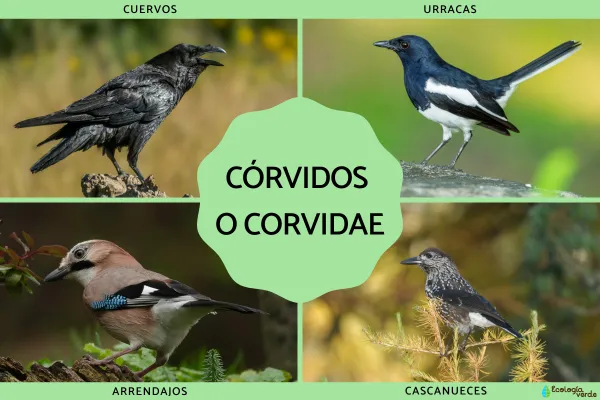
This family includes some of the world’s most recognizable birds—such as crows, ravens, magpies, rooks, jackdaws, and jays—as well as several lesser-known but equally fascinating species.
Despite their varied appearances and habitats, all corvids share certain biological and behavioral traits that make them stand out among birds, especially their remarkable intelligence, omnivorous scavenging diet, and highly developed vocal abilities.
This article explores what corvids are, their most important characteristics, and the different types found around the world.
Key Characteristics of Corvids
1. Exceptional Intelligence
Corvids are widely considered the most intelligent birds on the planet, and many species display cognitive abilities comparable to primates.
Modern studies have confirmed several advanced skills:
Tool use (e.g., New Caledonian crows craft hooks and probes)
Problem-solving and puzzle-solving abilities
Memory for human faces and social hierarchies
Planning for future needs
Mirror self-recognition in some species—previously thought to occur only in great apes
Learning through observation and cultural transmission
Their intelligence is not merely for survival—it also plays a key role in their complex social interactions and group communication.
2. Omnivorous, Opportunistic Diet
Corvids are highly adaptable omnivores with a strong tendency toward scavenging. Their thick, conical beaks are perfect for:
Tearing meat from carrion
Breaking into shells, fruits, and nuts
Catching insects, small animals, and eggs
Foraging for seeds, grains, and human scraps
Some species—like nutcrackers and certain jays—are specialized seed gatherers, caching hundreds or even thousands of nuts for winter.
3. Global Distribution
Corvids are found on nearly every continent and thrive in diverse environments:
Arctic tundra
Grasslands and savannas
Temperate and tropical forests
Deserts
Urban centers and farmlands
Only South America, New Zealand, and Antarctica lack native corvid species.
This adaptability is one of the reasons corvids have flourished so successfully.
4. Complex Social and Vocal Behavior
Being songbirds, corvids possess advanced vocal capabilities:
Many species can imitate human speech and other sounds
Some engage in duet calls, group songs, and alarm systems
They maintain long-term social bonds, especially in family groups
Some species engage in “funerary behavior,” gathering around dead flockmates
Their communication systems are among the most sophisticated of any bird group.
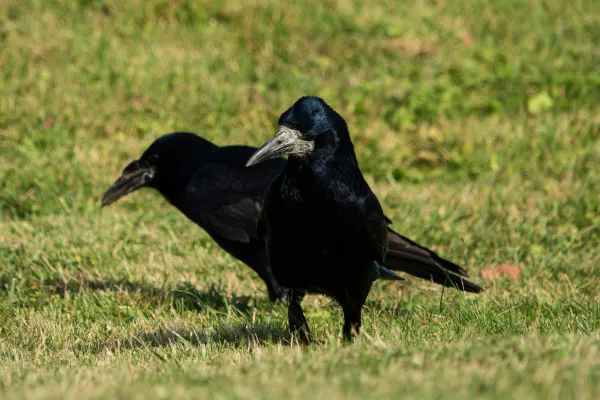
Main Types of Corvids
Although the family includes 25 genera and 139 species, corvids can be grouped into several recognizable categories based on their common names and physical traits.
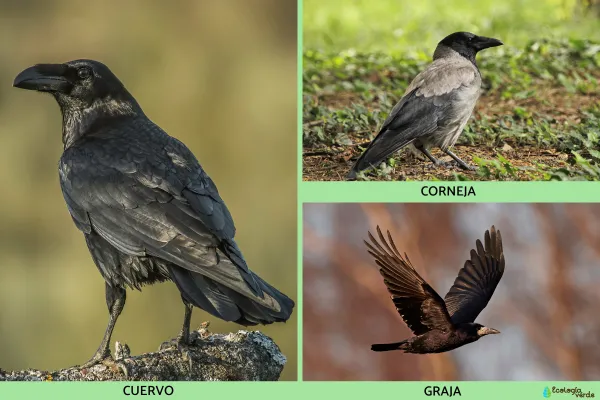
1. Crows, Ravens, and Rooks (Corvus spp.)
These are the largest and most iconic corvids.
Key Features
Mostly black plumage, sometimes with white patches
Large, conical beaks adapted for scavenging
Body length: 30–65 cm, making them some of the biggest passerines
Extremely intelligent and highly opportunistic
Common Representatives
Common raven (Corvus corax) – found across the Northern Hemisphere
Carrion crow (C. corone)
Hooded crow (C. cornix), with its striking grey-and-black coloration
Rook (C. frugilegus) – distinguished by its pale, bare facial skin around the bill
Behavior and Ecology
These birds are comfortable living near humans, feeding on:
Waste in cities
Roadkill
Insects, seeds, and small animals
Their adaptability makes them successful in a wide range of habitats.
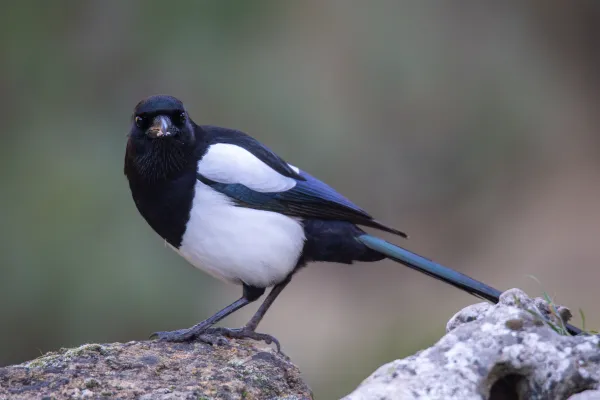
2. Magpies (Pica, Urocissa, Cissa, Dendrocitta, Crypsirina, Platysmurus, Temnurus)
Magpies are famous for being noisy, social, and vocal, often associated with "chattering" behavior.
Appearance
Compact body with a long, elegant tail
Usually black and white in Europe and North America
In Asia, magpies come in vibrant shades:
Blue
Green
Chestnut
Purple
Yellow
Black is typically used as the “base color,” especially on the head
Magpies are skilled mimics and participate in group communication, making them one of the most social corvid groups.
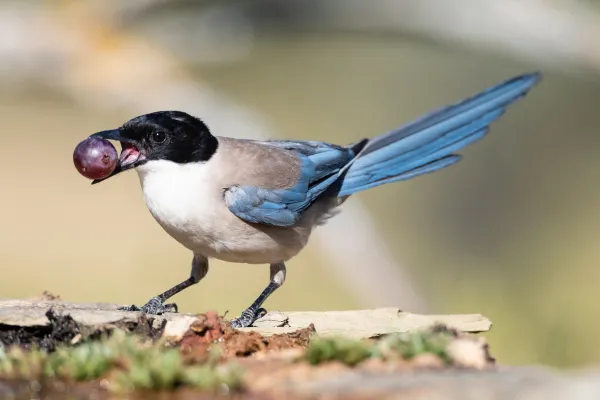
3. Azure-Winged Magpies (Cyanopica spp.)
These birds are instantly recognizable.
Features
Black head, sharply contrasted with a pale brown or grey body
Bright sky-blue wings and tail
Tail feathers can be up to four times the body length
Compared to true magpies, they have smaller beaks and more delicate bodies.
They are especially common in East Asia and the Iberian Peninsula.
4. Jays (Garrulus, Cyanocitta, Aphelocoma, Gymnorhinus, Perisoreus, Cyanocorax, Platylophus)
Jays are the most colorful members of the corvid family.
Appearance
Small to medium-sized
Bright colors:
Blue
Violet
Beige
White
Yellow
Green
Very little black compared to crows and ravens
Often loud, bold, and conspicuous
Famous Species
Blue jay (Cyanocitta cristata) – North America
Eurasian jay (Garrulus glandarius) – Europe and Asia
Green jay (Cyanocorax yncas) – Central and South America
Jays are also known for caching seeds and playing a role in forest regeneration.

5. Jackdaws (Coloeus spp.)
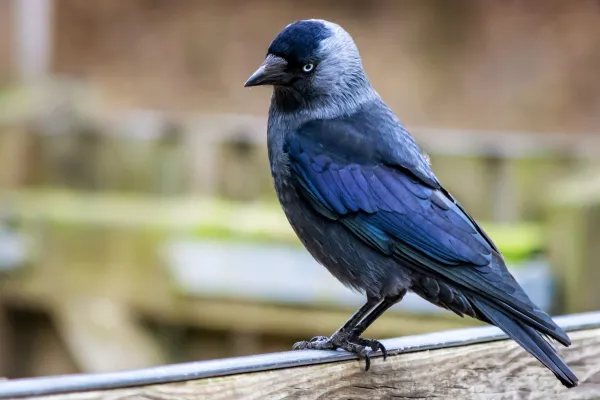
Jackdaws are the smallest corvids, yet highly social and intelligent.
Features
Average length ~35 cm
Plumage tends to be greyish with black accents
Often have pale or bright blue eyes
They thrive in urban and rural environments alike, nesting in towers, chimneys, and cliffs.
6. Nutcrackers (Nucifraga spp.)
These birds are specially adapted for eating nuts.
Distinctive Features
Sharp, pointed bill rather than a broad corvid beak
Smaller head
Diet heavily based on:
Pine nuts
Other seeds
Occasional insects and small animals
They are key seed dispersers in conifer forests.

7. Choughs (Pyrrhocorax spp.)
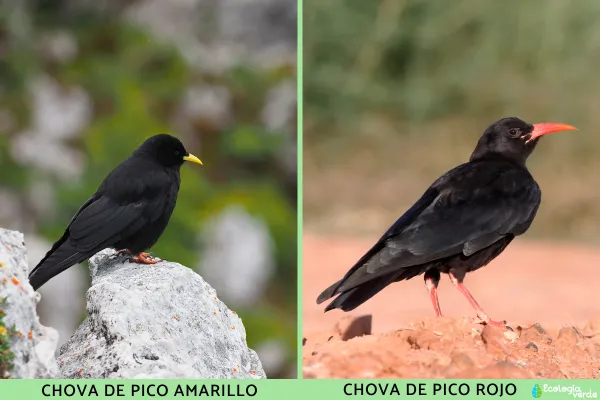
Unmistakable among corvids due to their colorful features.
Typical Traits
Black or dark bodies
Brightly colored red or yellow bills and legs
Found mainly in Europe, North Africa, and parts of Asia
Two Species
Yellow-billed chough (P. graculus)
Red-billed chough (P. pyrrhocorax)
These agile birds often live in mountainous regions and coastal cliffs.
Final Thoughts
The corvid family is remarkably diverse, ranging from the imposing raven to the brilliantly colored jays of tropical forests. Their intelligence, adaptability, and strong social structures make them some of the most intriguing birds on Earth.
If you’re exploring nature or simply watching birds in a city park, chances are you’ll encounter a corvid nearby—curious, observant, and possibly watching you right back.
Referencias
Bugnyar T. (2024). Why are ravens smart? Exploring the social intelligence hypothesis. Journal of ornithology, 165(1), 15–26. Disponible en: https://pmc.ncbi.nlm.nih.gov/articles/PMC10787684/
Winkler, D. & Billerman, S. (2020) Corvidae Crows, Jays, and Magpies. Cornell Lab, Birds of the World. Disponible en: https://birdsoftheworld.org/bow/species/corvid1/cur/introduction