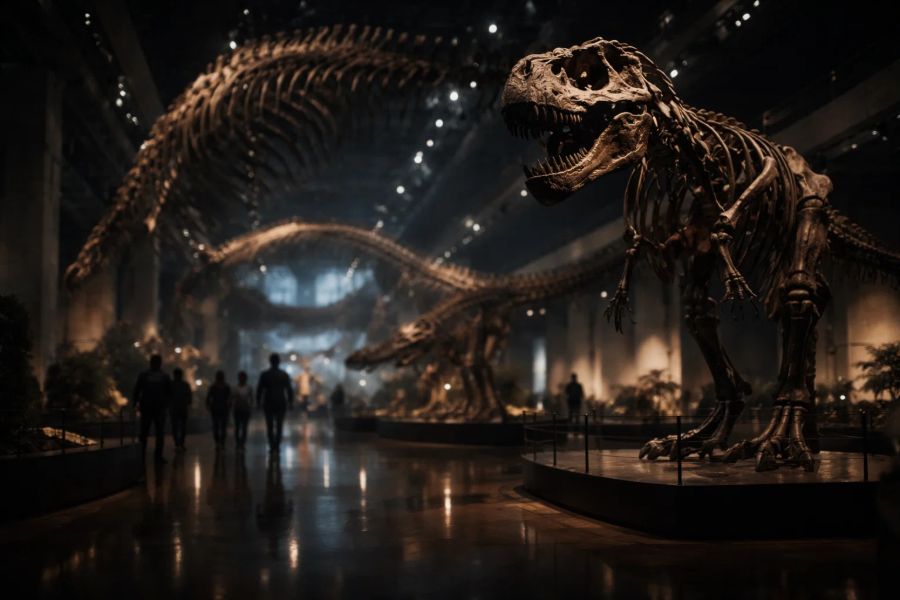
Dinosaur Museums: Where Prehistoric Giants Meet Modern Science
Walk into a dinosaur museum and you’ll see towering skeletons, dramatic dioramas, and fossil bones that look like relics from another planet. But the real story is bigger than spectacle: a dinosaur museum is a working interface between research, conservation, education, and public trust—a place wh...
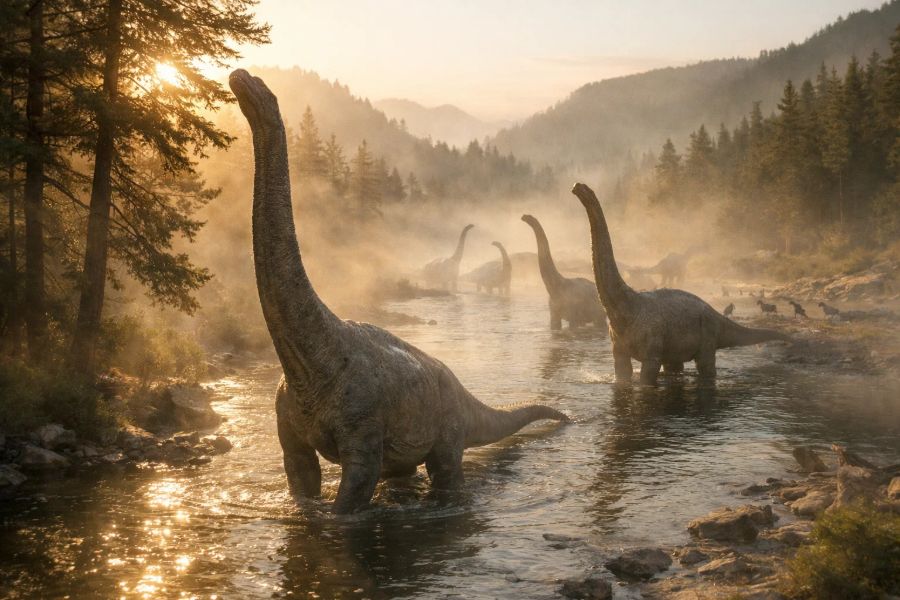
Long-Neck Dinosaurs: How Sauropods Built the Greatest Reaching Machines in Earth’s History
1) What people mean by “long-neck dinosaur”When most people say “long-neck dinosaur,” they’re usually talking about sauropodomorphs—especially sauropods, the giant, four-legged herbivores such as Diplodocus, Apatosaurus, and Brachiosaurus. These animals evolved necks that could exceed 6–9 met...


Ophthalmosaurus
Ophthalmosaurus was a fast-swimming marine reptile that lived during the Jurassic. It was not a dinosaur, even though it lived at the same time as many dinosaurs. Instead, it belonged to the ichthyosaurs, a group of highly specialized reptiles that evolved fish-like bodies for life in the sea. Ophth...

Mussaurus
Mussaurus was an early plant-eating sauropodomorph from what is now Argentina. It became famous because the first fossils belonged to tiny hatchlings and juveniles, making scientists think of it as a very small dinosaur. Later discoveries showed that adult Mussaurus was much larger and had the long...

Tuojiangosaurus
Tuojiangosaurus was a plated herbivorous dinosaur from Jurassic China. It belonged to the stegosaur group, known for body armor made of upright plates and a spiked tail. Although it is sometimes compared with the more famous Stegosaurus from North America, Tuojiangosaurus had its own distinct look,...

Yangchuanosaurus
Yangchuanosaurus was a large meat-eating theropod dinosaur from Jurassic China. It is one of the best-known predatory dinosaurs from Asia and is especially famous for its powerful skull, sharp teeth, and strong hunting build. Although it is sometimes described as an Asian equivalent of Allosaurus be...

Shunosaurus
Shunosaurus was a plant-eating sauropod dinosaur from Jurassic China. It was not one of the largest sauropods, but it is one of the most unusual because it appears to have carried a bony tail club. That feature makes it stand out from many other long-necked dinosaurs. Shunosaurus also had a relative...

Pterodactylus
Pterodactylus was a small flying reptile from the Late Jurassic of Europe. It was not a dinosaur, although it lived at the same time as many dinosaurs and is often grouped with them in popular media. As a pterosaur, it belonged to a different branch of reptile evolution specialized for powered fligh...

Omeisaurus
Omeisaurus was a large long-necked plant-eating dinosaur that lived in what is now China during the Jurassic. It is one of the most famous sauropods from Asia and is especially well known for its very long neck, heavy body, and classic “high-browsing” silhouette. Although it is sometimes overshado...

Compsognathus
Compsognathus was a small, slender carnivorous dinosaur that lived during the Late Jurassic in Europe. It is one of the best-known tiny theropods and is often remembered for its graceful build, long legs, and lightweight body. Even though it was much smaller than famous predators such as Allosaurus...

Megalosaurus
Megalosaurus was a large meat-eating theropod dinosaur from Jurassic England. Today it is known as one of the earliest named dinosaurs and one of the most important animals in the history of dinosaur science. Although it is not as famous in popular culture as Tyrannosaurus or Velociraptor, Megalosau...

Apatosaurus
Apatosaurus (Apatosaurus ajax) was one of the best-known long-necked dinosaurs of the Jurassic Period. With a huge body, a thick muscular neck, and a long tail, Apatosaurus represents the classic image of a giant sauropod moving through river floodplains.Time PeriodApatosaurus lived during the Late...

Ceratosaurus
Ceratosaurus (Ceratosaurus nasicornis) was a predatory dinosaur from the Jurassic Period. It is famous for the horn on its nose and its distinctive skull shape. Although it lived in the same ecosystems as the more famous Allosaurus, Ceratosaurus had its own unique features and likely filled a slight...

Archaeopteryx
Archaeopteryx (Archaeopteryx lithographica) is one of the most famous early birds in history. It lived during the Jurassic and is known for combining bird-like features (feathers and wings) with dinosaur-like features (teeth, clawed hands, and a long bony tail). Because of this unique mix, Archaeopt...

dilophosaurus
Dilophosaurus (Dilophosaurus wetherilli) was a large predatory dinosaur from the Jurassic Period and is best known for the pair of bony crests on its skull. It lived in what is now the southwestern United States during the Early Jurassic, making it one of the key theropods for understanding early di...

Seismosaurus
Seismosaurus is a famous name from dinosaur pop culture, often associated with one of the longest sauropods ever described. Many modern studies treat “Seismosaurus” as the same dinosaur as Diplodocus hallorum, meaning Seismosaurus is widely considered an older or informal name rather than a separa...

Indominus rex
Indominus rex is a fictional genetically engineered hybrid from the Jurassic World film series. It was created by InGen as a new attraction—designed to be bigger, scarier, and more marketable than the park’s traditional dinosaurs.Not a Real DinosaurIndominus rex did not exist in prehistory and is...

Pterodactyl
Pterodactyl is the popular name often used for Pterodactylus—a famous flying reptile from the Jurassic. Pterodactylus was not a dinosaur. Instead, it belonged to the pterosaurs, a separate group of reptiles that evolved powered flight long before birds.Time PeriodPterodactylus lived during the Late...

Brontosaurus
Brontosaurus (Brontosaurus excelsus)—often called the “thunder lizard”—was one of the most iconic long-necked dinosaurs of the Jurassic Period. With its massive body, pillar-like legs, and sweeping tail, Brontosaurus represents the classic image of a giant sauropod moving across ancient floodpla...