Birds with black feathers include American crows, common ravens, black lories, palm cockatoos, common blackbirds, black larks, black drongos, common grackles, black vultures and black swans. Some are truly black from bill to tail, while others only look black at a distance because glossy feathers reflect blue, purple, green or bronze. In a few species, only the adult male is black.
This guide focuses on 10 real species with clearly black or mostly black plumage, explains how to identify them, and shows why “black bird” can describe very different birds—from parrots and songbirds to vultures and swans.
10 Birds With Black Feathers at a Glance
| Bird | Scientific name | Where found | Best identification clue |
|---|---|---|---|
| American Crow | Corvus brachyrhynchos | North America | Entirely black body, bill and legs; familiar caw |
| Common Raven | Corvus corax | Much of the Northern Hemisphere | Very large black corvid with heavy bill and wedge-shaped tail |
| Black Lory | Chalcopsitta atra | Western New Guinea and nearby islands | Mostly black parrot with colorful undertail and some subspecies markings |
| Palm Cockatoo | Probosciger aterrimus | New Guinea and northern Australia | Dark plumage, huge bill, crest and red cheek patch |
| Common Blackbird | Turdus merula | Europe, western Asia and North Africa | Adult male is black with yellow-orange bill and eye-ring |
| Black Lark | Melanocorypha yeltoniensis | Kazakhstan and southwestern Russia | Adult male develops striking black plumage |
| Black Drongo | Dicrurus macrocercus | South and Southeast Asia | Glossy black body with deeply forked tail |
| Common Grackle | Quiscalus quiscula | North America | Looks black from a distance but flashes blue and bronze iridescence |
| Black Vulture | Coragyps atratus | Americas | Sooty-black plumage, bare black head and pale wingtips in flight |
| Black Swan | Cygnus atratus | Australia | Predominantly black plumage, red bill and white flight feathers |
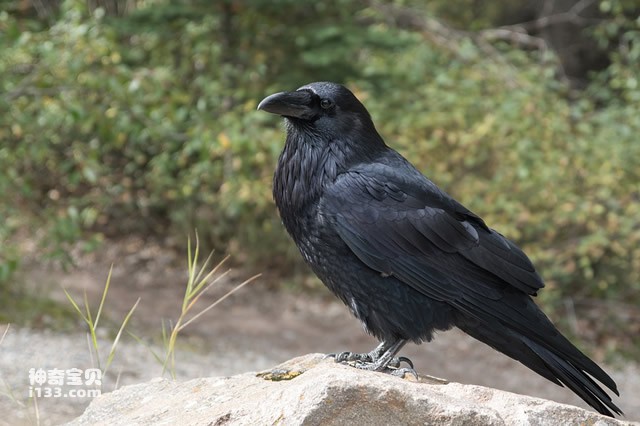
Crows are among the most familiar birds with entirely black plumage.
Why Do Some Birds Have Black Feathers?
Black feather coloration is usually associated with melanin, especially eumelanin. Melanin does more than produce dark color: it can also strengthen feather material, which is one reason dark pigmentation is common in parts of feathers exposed to wear.
But not every bird that looks black is simply covered in flat black pigment. Microscopic feather structure can reflect light and produce iridescence. That is why a grackle or raven may look black in shade but flash blue, purple, green or bronze in sunlight.
Cornell Lab’s Bird Academy explains that iridescent color is structural: keratin, melanin and air are arranged so that different wavelengths are reflected at different viewing angles.
American Crow
The American crow (Corvus brachyrhynchos) is one of the clearest examples of an all-black bird. Cornell Lab describes American crows as black across the feathers, bill and legs.
Old or worn feathers can fade toward brownish tones, especially before molt, but fresh plumage is glossy black.
American crows are widespread across much of North America and thrive in forests, farmland, suburbs and cities. They are highly social and are well known for learning, problem-solving and mobbing larger predators.
If you want to compare crow species with ravens, see 10 Types of Ravens and Crows.
Common Raven
The common raven (Corvus corax) is larger and heavier than a typical crow and is one of the largest passerine birds.
Adults are entirely black, including the bill, legs and eyes. In strong sunlight the feathers can show subtle blue or purple gloss.
Useful identification features include:
a very heavy bill
shaggy throat feathers
a wedge-shaped tail in flight
deep, croaking vocalizations
Common ravens occur across large parts of North America, Europe, Asia and North Africa.
Black Lory
The black lory (Chalcopsitta atra) is an unusual parrot because its plumage is predominantly black rather than bright green, red or blue.
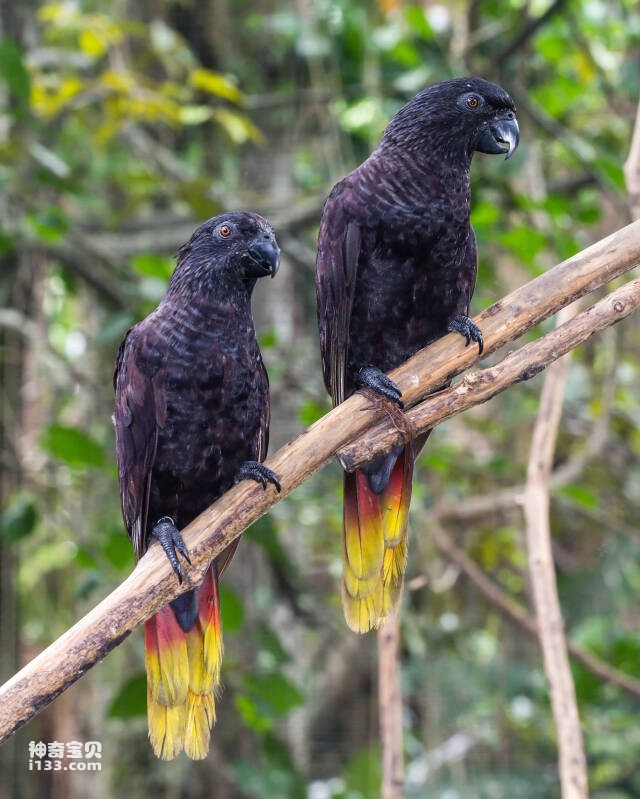
World Parrot Trust describes it as the only all-black lory or lorikeet. The nominate form is generally black with a violet-blue rump and olive-yellow undertail washed with red. Some subspecies show more obvious red or purple markings.
The species is native to western New Guinea and nearby islands. Its dark body makes the brighter eye, rump and undertail colors especially noticeable.
Palm Cockatoo
The palm cockatoo (Probosciger aterrimus) is one of the most visually distinctive black parrots in the world.
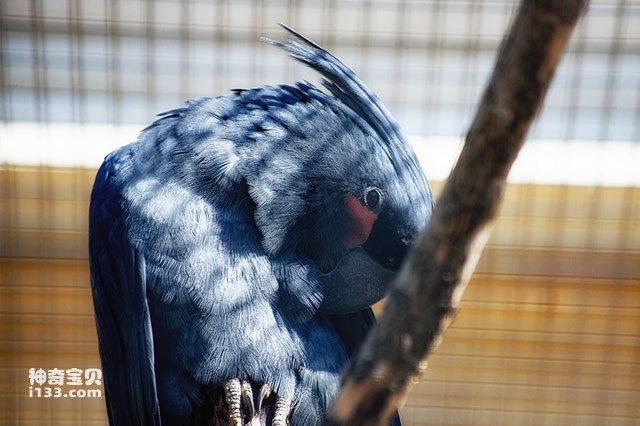
It has dark black-to-dusky-gray plumage, a huge curved bill, a tall crest and a bare red cheek patch. Fine powder from down feathers can make the black body appear grayish.
Palm cockatoos occur in New Guinea and northern Australia. They are also famous for an extraordinary behavior: males can hold sticks or seedpods and drum against tree trunks during display.
That makes this species notable for both appearance and behavior, not simply because it is dark-colored.
Common Blackbird
The common blackbird (Turdus merula) is a thrush, not a member of the New World blackbird family.

Adult males are easy to recognize because they have almost completely black plumage paired with a yellow to orange-yellow bill and eye-ring. Females are much browner and juveniles are also brown rather than black.
This is a good example of why a list of black birds must account for sex and age: the species may be called “blackbird,” but only adult males fit the classic all-black appearance.
Black Lark
The black lark (Melanocorypha yeltoniensis) is a large lark that breeds mainly in Kazakhstan and southwestern Russia.
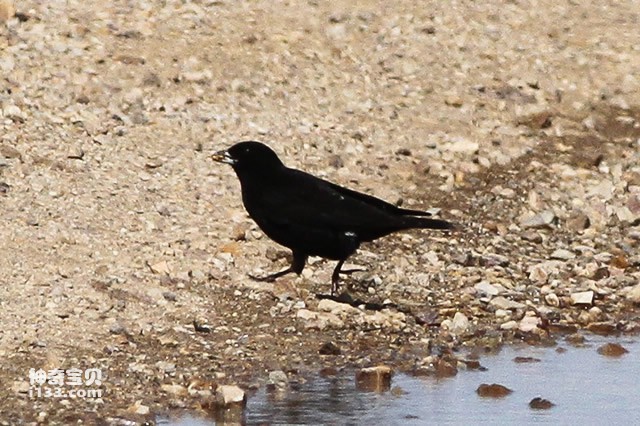
The adult male is remarkable for its dark black plumage, although pale feather fringes can sometimes be visible. Females are much less black and have mottled gray-brown coloration.
Again, the key identification point is sexual dimorphism: the male is black; the female is not.
Black Drongo
The black drongo (Dicrurus macrocercus) is a slender Asian songbird with glossy black plumage and a deeply forked tail.
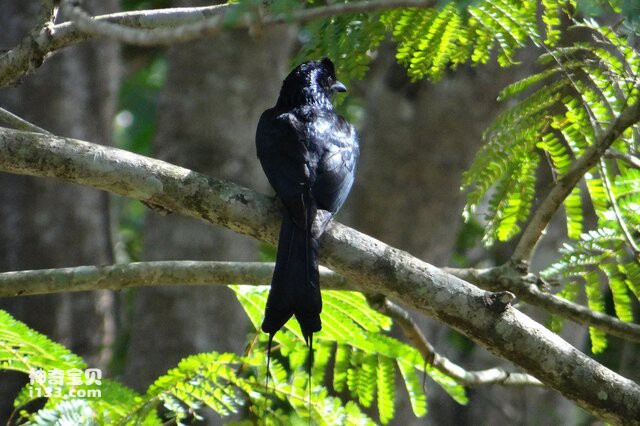
Adults are black across the body, bill, legs and feet. In bright light the feathers can show a subtle gloss.
The forked tail is one of the easiest ways to separate a black drongo from a crow, myna or blackbird. The species is common across much of South and Southeast Asia and is often seen in open countryside, farmland and around livestock.
Common Grackle
The common grackle (Quiscalus quiscula) is a useful reminder that “black bird” does not always mean flat black feathers.
From a distance, adult males look dark overall. Up close, their heads can appear glossy blue or purple while the body reflects bronze and other iridescent tones.
Cornell Lab describes adult males as large, long-tailed blackbirds with an iridescent bluish head and bronzy body in good light. Bright yellow eyes also make them easy to distinguish from crows.
Females are slightly less glossy but still appear dark.
Black Vulture
The black vulture (Coragyps atratus) is a large scavenging bird with sooty-black plumage and a bare black head.
Cornell Lab notes that the bird is almost entirely black except for pale or silvery patches on the outer wingtips, which are most obvious in flight.
Its broad wings, short tail and bare head separate it immediately from crows, ravens and grackles.
Black vultures are found across parts of North, Central and South America and often feed socially at carcasses.
Black Swan
The black swan (Cygnus atratus) is native to Australia and is one of the most dramatic examples of a large bird with predominantly black plumage.
British Trust for Ornithology describes the species as mostly black, contrasting with a bright red bill and white flight feathers. Those white wing feathers can be hidden when the bird is resting and become obvious in flight.
The black swan shows why “bird with black feathers” does not necessarily mean every feather is black.
Black Birds vs Birds That Only Look Black
Light can change how dark plumage appears. Some birds are genuinely matte black, while others contain structural colors that become visible only at certain angles.
| Appearance | Example | What is happening? |
|---|---|---|
| Uniform black | American Crow | Strong dark pigmentation across most visible plumage |
| Black with subtle gloss | Common Raven | Dark feathers can reflect blue or purple tones |
| Black from a distance, colorful up close | Common Grackle | Iridescent structure reflects different colors |
| Black only in adult males | Common Blackbird, Black Lark | Sexual dimorphism produces different male and female plumage |
| Mostly black with contrasting feathers | Black Swan | White flight feathers contrast with a black body |
How to Identify a Black Bird
Color alone is rarely enough. If you see a black bird, check several features:
Size: is it sparrow-sized, crow-sized or much larger?
Bill: thin, heavy, hooked or parrot-like?
Tail: square, wedge-shaped, forked or very long?
Eye color: dark, yellow, orange or red?
Gloss: does the body flash blue, purple or bronze?
Habitat: city street, forest, wetland, grassland or coast?
Geography: many black birds occur on completely different continents.
For a broader look at plumage, see 25 Animals With Feathers.
Are Crows and Ravens the Same Bird?
No. Crows and ravens are related and both belong to the genus Corvus, but they are different species.
Common ravens are generally larger than American crows, with heavier bills, shaggy throat feathers and wedge-shaped tails. American crows have more fan-shaped tails and a familiar cawing call.
Are All Blackbirds Actually Black?
No. “Blackbird” can be a common name rather than a literal description of every individual.
In the common blackbird, adult males are black but females are brown. In the New World blackbird family Icteridae, many species combine black with red, yellow, orange or brown.
Why Do Black Feathers Sometimes Look Blue or Purple?
Iridescent feathers contain microscopic structures that reflect different wavelengths depending on the angle of light. A feather may therefore look black in one position and metallic blue, green or purple in another.
This is especially obvious in grackles, starlings, some drongos and many other dark-plumaged birds.
Frequently Asked Questions
What bird has black feathers?
Many species do. Common examples include American crows, common ravens, black drongos, palm cockatoos and male common blackbirds.
What are some birds with black feathers?
Examples include American crows, common ravens, black lories, palm cockatoos, common blackbirds, black larks, black drongos, common grackles, black vultures and black swans.
Which birds are completely black?
American crows and common ravens are among the clearest examples of birds that appear entirely black. Some other species have hidden pale feathers, iridescent colors or contrasting bare skin.
What black bird has a yellow beak?
An adult male common blackbird has black plumage with a yellow to orange-yellow bill and matching eye-ring.
What black bird has a forked tail?
The black drongo is a strong example. It has glossy black plumage and a clearly forked tail.
What black bird has yellow eyes?
Adult common grackles have bright yellow eyes and dark iridescent plumage.
What is the difference between a crow and a raven?
Common ravens are larger, have heavier bills, shaggy throat feathers and wedge-shaped tails. American crows are smaller and usually have more fan-shaped tails.
Why do black birds look shiny?
Some black birds have structural iridescence. Microscopic feather structures reflect light so that blue, green, purple or bronze colors appear from certain angles.
Are black swans completely black?
No. Their body plumage is predominantly black, but they have white flight feathers that become especially obvious when the wings are open.
Reference Sources
Final Answer
There is no single type of “black bird.” Black feathers occur in many unrelated groups, including crows, ravens, parrots, thrushes, larks, drongos, grackles, vultures and swans. The best way to identify one is to combine plumage with body size, bill shape, tail shape, eye color, habitat and location rather than relying on color alone.