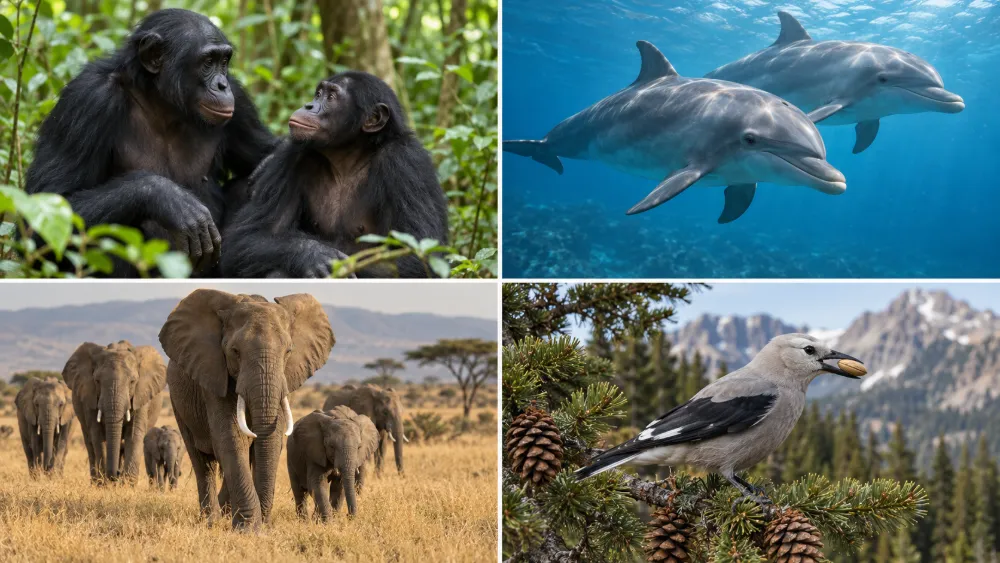
There is no scientifically accepted “horniest animal” or universal animal sex-drive ranking. Different species show intense sexual behavior for very different reasons. Bonobos are famous for frequent sociosexual behavior that extends beyond reproduction; lions can mate 20–40 times a day during a multi-day estrus bout; domestic cats may copulate repeatedly because mating helps trigger ovulation; and male antechinus compress extraordinary reproductive effort into a short breeding season.
This list compares 10 animals with unusually frequent, intense, or socially important sexual behavior. The ranking is evidence-weighted rather than an official scientific league table, because mating frequency, reproductive rate, courtship effort, and sexual behavior are not the same thing.
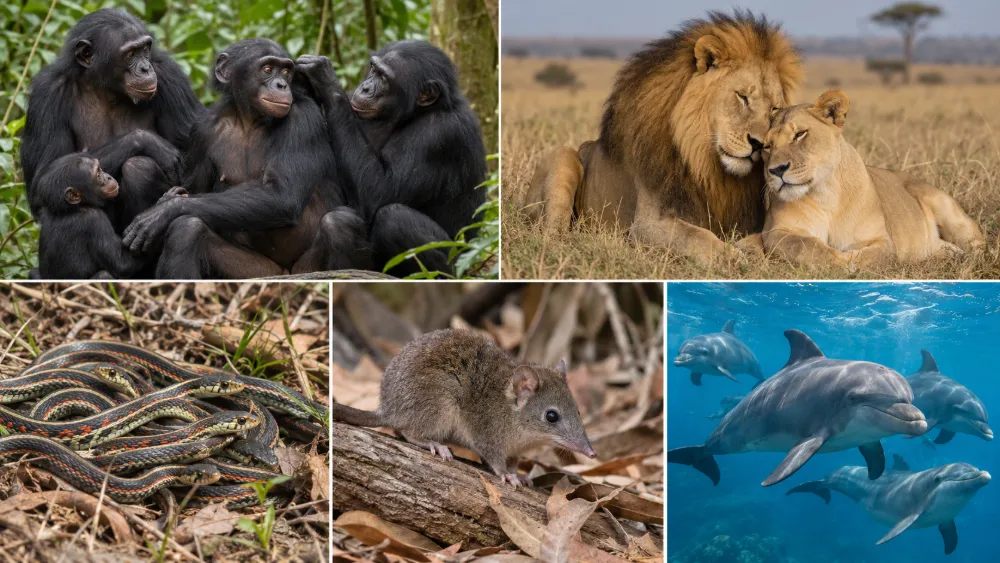
10 Most Sexually Active Animals at a Glance
| # | Animal | What makes its sexual behavior remarkable? | Important context |
|---|---|---|---|
| 1 | Bonobo | Frequent sociosexual behavior among multiple age/sex combinations | Sex can function in bonding, cooperation, tension reduction, and reproduction |
| 2 | Lion | Pairs may copulate 20–40 times per day during estrus | High frequency is concentrated in a short fertile period |
| 3 | Domestic Cat | Repeated mating over a short period; multiple partners are possible | Cats are induced ovulators, so copulation helps trigger ovulation |
| 4 | Red-Sided Garter Snake | Extremely intense spring courtship; mating balls can involve many males | Activity is highly seasonal after winter dormancy |
| 5 | Antechinus | Males intensify reproductive activity, reduce sleep, and die after their only breeding season | Extreme reproductive effort is compressed into only a few weeks |
| 6 | Japanese Macaque | Promiscuous seasonal consortships and diverse opposite- and same-sex behavior | Partner choice and behavior vary strongly among individuals and populations |
| 7 | Bottlenose Dolphin | Sociosexual behavior occurs in several social contexts | Not all sexual behavior is directly reproductive |
| 8 | Chimpanzee | Promiscuous mating plus sociosexual behavior in some social situations | Patterns overlap with bonobos more than popular stereotypes suggest |
| 9 | Rabbit | Females are receptive during much of their cycle and ovulate after mating | High reproductive potential is not the same as “high libido” |
| 10 | Assamese Macaque | Extended female sexuality and long consortships beyond the narrow fertile window | Sexual activity can continue when conception is unlikely |
What Is the Most Sexually Active Animal?
There is no universal scientific winner because “sexually active” can mean several different things.
If the question is about sexual behavior occurring frequently outside a narrow reproductive window, bonobos are among the strongest examples. If it means repeated copulations within a short fertile period, lions and domestic cats are striking. If it means extreme reproductive effort during one short breeding season, antechinus are difficult to match.
A biologically accurate comparison must therefore define what is being measured before declaring a champion.
Why “Sex Drive” Is Hard to Measure in Animals
“Sex drive” is a human-centered phrase. Animal behavior researchers usually measure more specific variables such as:
number of copulations
courtship frequency
number of partners
duration of consortships
time spent in sexual behavior
sexual behavior outside fertile periods
reproductive success
seasonal changes in sexual activity
Two species can therefore appear “highly sexual” for completely different biological reasons. A lion mates repeatedly during a short estrus bout, while a bonobo may use genital contact in a social interaction that is not directly connected to conception.
Bonobos — Sex as Social Behavior
Bonobos (Pan paniscus) are one of the best-known examples of sexual behavior extending well beyond reproduction.
Research has documented opposite-sex and same-sex genital interactions in social contexts involving bonding, feeding, tension, cooperation, and post-conflict behavior. Female-female genito-genital rubbing is particularly well studied.
In one study of a wild bonobo community, researchers analyzed 971 sexual events and found that 65% involved female same-sex genito-genital rubbing. Sexual interactions were associated with proximity, coalitionary support, and changes in oxytocin.
This does not mean bonobos spend every moment mating. It means sexual behavior has an unusually broad social function compared with many mammals.
Lions — 20 to 40 Copulations a Day During Estrus
Lions (Panthera leo) are one of the clearest examples of extremely frequent reproductive mating over a short period.
When a lioness is in estrus, a mating pair may remain together for several days and copulate roughly 20–40 times per day. Animal Diversity Web estimates about 2.2 copulations per hour across a four-day estrus period.
Each individual mating is brief, so a pair can repeat the behavior many times between periods of rest.
The important qualifier is during estrus. Lions are not mating at this rate throughout the year, so turning this reproductive burst into a permanent “sex drive score” would be misleading.
Domestic Cats — Repeated Mating Helps Trigger Ovulation
Domestic cats (Felis catus) have a reproductive system that helps explain their repeated mating behavior.
Female cats are induced ovulators: vaginal-cervical stimulation during mating helps trigger the hormonal events that lead to ovulation.
Merck Veterinary Manual reports that copulation may occur 20–36 times over about 36 hours. Multiple breedings over two to three days are commonly used in managed breeding because repeated stimulation increases the probability of ovulation.
A female in heat may also mate with multiple males, which is why kittens within one litter can sometimes have different fathers.
This is reproductive physiology—not evidence that cats possess a measurable human-style libido.
Red-Sided Garter Snakes — Explosive Spring Courtship
Red-sided garter snakes (Thamnophis sirtalis parietalis) show one of the most dramatic seasonal mating spectacles among reptiles.
In Manitoba, large numbers emerge from communal winter dens in spring. Males immediately begin intense courtship around newly emerged females.
Classic behavioral research documented mating balls in which up to 100 males can simultaneously court one female. Male courtship becomes even more intense when other males are already surrounding the female.
The striking point is that this behavior is concentrated into a short spring breeding season. It is an example of extreme seasonal courtship intensity rather than year-round sexual activity.
Antechinus — Reproduction Intense Enough to Cost Males Their Lives
Antechinus are small Australian marsupials with one of the most extreme mammalian reproductive schedules.
Species in the genus have a synchronized annual breeding season lasting only a few weeks. Males invest heavily in finding and mating with females, and all males die after their first breeding season.
A 2024 study provided direct evidence that male dusky and agile antechinus reduce sleep during the breeding season while increasing activity. Researchers interpreted this as a trade-off in which males sacrifice sleep to increase opportunities to reproduce.
The Australian Museum similarly notes that male brown antechinus live for about 11 months and die from stress and exhaustion after a short winter breeding cycle.
For reproductive effort concentrated into a tiny fraction of the lifespan, antechinus are exceptional.
Japanese Macaques — Promiscuous Seasonal Consortships
Japanese macaques (Macaca fuscata) have complex seasonal sexual behavior involving both opposite-sex and same-sex consortships.
A recent study of a semi-free population found that 71 of 76 sexually mature females were observed in consortships. Sixty-nine females formed heterosexual consorts, and 35 were also observed in homosexual consorts.
Individual females differed dramatically in number of partners and consort duration. Some changed partners frequently, while others remained with preferred partners for longer periods.
This illustrates why primate sexual behavior cannot be reduced to reproduction alone: social preference, body contact, partner choice, dominance, and seasonal fertility can all interact.
Bottlenose Dolphins — Sociosexual Behavior Beyond Conception
Common bottlenose dolphins (Tursiops truncatus) also engage in sociosexual behavior that is not limited to conception.
Studies of dolphin social relationships describe sexual interactions among different age and sex pairings and analyze them alongside affiliative and aggressive behavior.
These interactions can occur within long-term social relationships, especially among animals that spend substantial time together.
Dolphin sexuality should not be sensationalized: the scientifically useful point is that genital and sexual behaviors form one component of a complex social repertoire.
For a broader look at dolphin cognition, see Dolphin vs Orca Intelligence: Who Is Smarter?.
Chimpanzees — More Sociosexual Than the Bonobo Stereotype Suggests
Chimpanzees (Pan troglodytes) have promiscuous mating systems in many populations, and research also documents sociosexual behavior outside straightforward reproduction.
A 2025 comparison of bonobos and chimpanzees found substantial overlap in sexual behavior during socially tense contexts. Bonobos used genital contact more often after conflicts, but both species used genital contact at comparable levels in the experimental pre-feeding context.
That result is useful because popular articles often create an exaggerated contrast:
“Bonobos use sex socially, chimpanzees do not.”
Real primate behavior is more complicated. Chimpanzees also use genital contacts in greetings, play, affiliation, and some high-tension situations.
Rabbits — High Reproductive Potential, but Not a Libido Contest
Rabbits are famous for rapid reproduction, but that does not automatically mean they have the highest sexual desire.
Female rabbits are induced ovulators, and Merck Veterinary Manual reports that they can be receptive to mating for roughly 14 of every 16 days.
Short gestation, early sexual maturity, postpartum reproductive capacity, and the ability to produce multiple litters help explain their reputation for rapid population growth.
So rabbits belong in a discussion of reproductive activity, but their fame comes primarily from reproductive efficiency, not a scientifically measured “horniness score.”
Assamese Macaques — Sexual Activity Beyond the Fertile Window
Assamese macaques (Macaca assamensis) provide an especially interesting example of extended female sexuality.
Field researchers recorded 1,280 copulations while studying females across reproductive cycles. Sexual consortships could last from one to 49 days, and mating was not restricted to the brief period when conception was most likely.
This pattern may affect social relationships, mate choice, and paternity certainty.
It also demonstrates an important point: frequency of sexual behavior and timing of fertility do not necessarily match perfectly.
Mating Frequency vs Reproductive Rate
| Concept | What it means | Example |
|---|---|---|
| Mating frequency | How often copulation occurs over a period | Lions during estrus |
| Sexual behavior frequency | How often sexual or genital behavior occurs, including non-conceptive contexts | Bonobos |
| Reproductive rate | How rapidly offspring can be produced | Rabbits |
| Courtship intensity | How much effort is spent competing for or attracting mates | Red-sided garter snakes |
| Lifetime reproductive effort | How much energy an animal invests in reproduction across its life | Male antechinus |
These measurements answer different questions, which is why a single “Top 10 by sex drive” cannot be objectively calculated.
Do Animals Have Sex for Reasons Other Than Reproduction?
Yes, in some species.
Bonobos and bottlenose dolphins are well-known examples in which researchers have documented sociosexual behavior occurring in social contexts that are not limited to conception.
Chimpanzees also show genital contacts during play, greetings, affiliation, and periods of social tension.
However, scientists should interpret the function of each behavior from evidence rather than assume every sexual interaction has the same emotional meaning it might have in humans.
Which Animal Mates the Most Times per Day?
There is no reliable cross-species record book, because researchers do not monitor every species with the same methods.
Lions provide one of the clearest well-documented mammalian examples: during a lioness’s estrus, a pair may mate 20–40 times in a day for several days.
Domestic cats can also copulate repeatedly over a short period, with veterinary references reporting 20–36 copulations across roughly 36 hours.
Those numbers should always be attached to the reproductive context rather than presented as normal everyday behavior.
Frequently Asked Questions
What is the most sexually active animal?
There is no official scientific winner. Bonobos are among the strongest examples for frequent sociosexual behavior, while lions are remarkable for repeated copulation during estrus and antechinus for extreme seasonal reproductive effort.
What is the “horniest” animal?
“Horniest” is not a scientific category. If you mean frequent sexual behavior beyond reproduction, bonobos are a strong example. If you mean repeated mating during a fertile period, lions can mate 20–40 times per day during estrus.
Which animals have a high sex drive?
Scientists normally avoid ranking “sex drive” directly. Species with unusually notable sexual or mating behavior include bonobos, lions, domestic cats, Japanese macaques, bottlenose dolphins, chimpanzees, antechinus, rabbits, and red-sided garter snakes.
How many times can lions mate in a day?
During estrus, a lion pair may copulate around 20–40 times per day over several days.
Why do cats mate so many times?
Female cats are induced ovulators. Repeated mating provides the stimulation needed to produce the hormonal surge that helps trigger ovulation.
Do bonobos have sex only for reproduction?
No. Bonobo sociosexual behavior is documented in contexts involving bonding, cooperation, feeding tension, affiliation, and conflict as well as reproduction.
Why do male antechinus die after mating season?
Their one breeding season involves intense reproductive effort and major hormonal and physiological changes. Male mortality follows the synchronized breeding period, making antechinus one of the best-known semelparous mammals.
Why do garter snakes form mating balls?
When a receptive female emerges from winter dormancy, many males can be attracted by her chemical signals and court simultaneously. In red-sided garter snakes, dozens of males—and in some observations up to about 100—may surround one female.
Are rabbits really the most sexually active animals?
Not necessarily. Rabbits reproduce rapidly and females are receptive during much of their cycle, but reproductive rate is not the same as sexual-behavior frequency or libido.
Do dolphins have sex for social reasons?
Bottlenose dolphins show sociosexual behavior within their complex social relationships, and researchers study these interactions alongside affiliative and aggressive behavior. Not every sexual interaction is directly linked to reproduction.
Scientific and Reference Sources
Hormones and Behavior — Sexual Interactions and Cooperation in Bonobos
Journal of Comparative Psychology — Red-Sided Garter Snake Mating Balls
Current Biology — Antechinus Males Reduce Sleep for Reproduction
Behavioural Processes — Sociosexual Behavior in Bottlenose Dolphins
Royal Society Open Science — Bonobo and Chimpanzee Sexual Behavior
Final Answer
There is no scientifically proven “horniest animal.” Bonobos are exceptional because sexual behavior frequently serves social functions beyond conception. Lions stand out for repeated mating during estrus, domestic cats for induced-ovulation-driven multiple mating, red-sided garter snakes for explosive seasonal courtship, and antechinus for extreme reproductive effort concentrated into one short breeding season. The best answer depends on whether you mean mating frequency, social sexuality, courtship intensity, or reproductive output.