Skip to content
Animals Top
Home>Animals>Birds>Climbing birds
Animal Profile IUCN: LC

Todirhamphus recurvirostris

Todirhamphus recurvirostris,Flat-billed Kingfisher

Todirhamphus recurvirostris, Flat-billed Kingfisher, has 5 subspecies (1.Todirhamphus recurvirostris sanctus is found in Australia, Solomons East (Guadalcanal, SAN Cristobal), Indonesia and Melanesia. 2.Todirhamphus recurvirostris vagans is found in the Norfolk Islands, the Kemad Islands and New Zea

Climbing birds 406 views
Scientific Name Todirhamphus recurvirostris,Flat-billed Kingfisher
Length No textual research information is available
Weight No textual research information is available
Lifespan No textual research information is available
IUCN Status LC
Advertisement

Table of Contents

    Todirhamphus recurvirostris, Flat-billed Kingfisher, has 5 subspecies (1.Todirhamphus recurvirostris sanctus is found in Australia, Solomons East (Guadalcanal, SAN Cristobal), Indonesia and Melanesia. 2.Todirhamphus recurvirostris vagans is found in the Norfolk Islands, the Kemad Islands and New Zealand. 3.Todirhamphus recurvirostris canacorum is found in New Caledonia and Ascension. 4.Todirhamphus recurvirostris macmillani is found on Loyalty Island. 5.Todirhamphus recurvirostris recurvirostris is found in Western Samoa.) .
    f941a794d143ad4b204913b58f025aafa50f06d7_九雷图片转换器.jpg

    Flat mouth jade is generally alone or couples to hunt together. Like most forest kingfishers, they are completely carnivorous. Often searching for prey in leaves or dirt. The main diet is invertebrates such as crickets, spiders, scorpions, and snails. It also eats small vertebrates such as small fish, small snakes and lizards.
    1d1f3afab2fb431651762f0f2da4462308f7d3c9_九雷图片转换器.jpg

    Flat mouth jade nest on the earth cliff or river dyke, with the mouth digging tunnel type cave for the nest, 60 cm deep, 20 cm wide, 10 cm high long, oval. These caves are generally bare of bedding. The eggs are laid directly on the nest ground. Some also drill holes in tree trunks for nests. Oval, pure white, about 29.4×26.2 mm in size.


    Listed in the International Union for Conservation of Nature (IUCN) ver 3.1:2008 Red List of Birds.


    Protect wild animals and eliminate wild meat.


    Maintaining ecological balance is everyone's responsibility!

    Tags

    At a glance

    Profile Details

    Key characteristics, appearance, and habitat information.

    Traits & Behavior

    Appearance

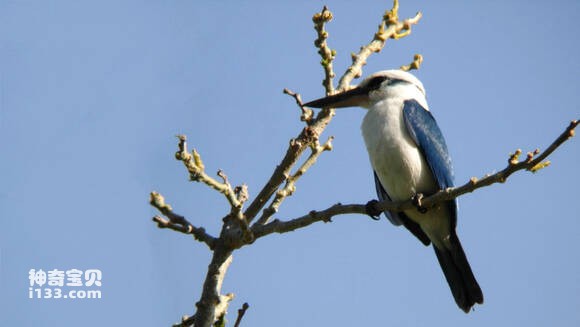
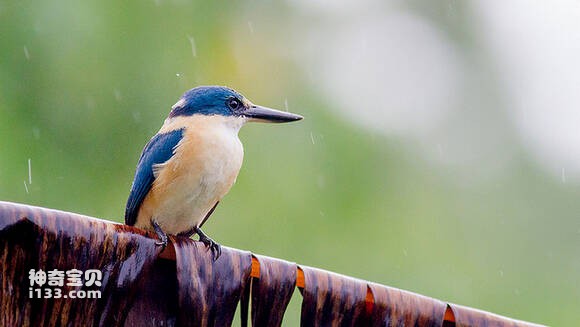
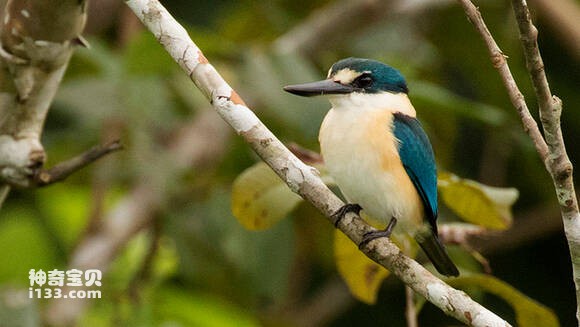
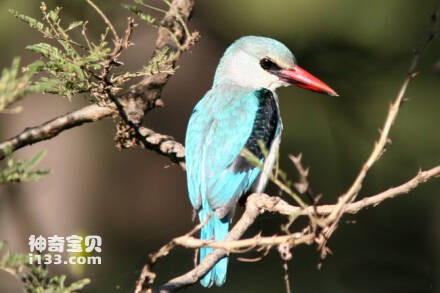
    The upper body is usually blue or turquoise, and the wings are the same color as the back, only darker. White or orange chest and abdomen, with a white collar, white eyebrows, yellow eyes first, black eyes. Gray-black legs.
    Flat mouth jade mouth thick long like chisel, the base is wider, the mouth peak slightly upward tilt, peak ridge round, no nasal groove on both sides; Wing circle, the first primary feather is equal or slightly shorter than the seventh primary feather, and the second, third, and fourth are nearly equal in length; Primary feather base with white spots; The tail is round.

    Distribution & Habitat

    It is distributed in the Pacific Islands (including Taiwan Province of China, Dongsha Islands, Xisha Islands, Zhongsha Islands, Nansha Islands, and the Philippines, Brunei, Malaysia, Singapore, Indonesia's Sumatra, Java Island, and Papua New Guinea).
    It usually inhabits dense forests and riverbanks near water.
    Advertisement

    Visual guide

    Browse available images of this species.

    Quick answers

    Todirhamphus recurvirostris FAQs