Ravens and crows often blend together in our minds as “big black birds,” but to birdwatchers and wildlife biologists, they are strikingly different. Both belong to the genus Corvus, a highly intelligent group that includes rooks and jackdaws. While these birds share similarities, subtle differences in appearance, behavior, and vocalization can help you distinguish them at a glance — once you know what to look for.
This guide focuses on North America’s two most commonly confused species:
The Common Raven (Corvus corax)
The American Crow (Corvus brachyrhynchos)
Whether you're a casual observer or a dedicated birder, here’s how to tell them apart.
1. Physical Size and Body Structure
Ravens Are Significantly Larger
The first thing most experts check is size.
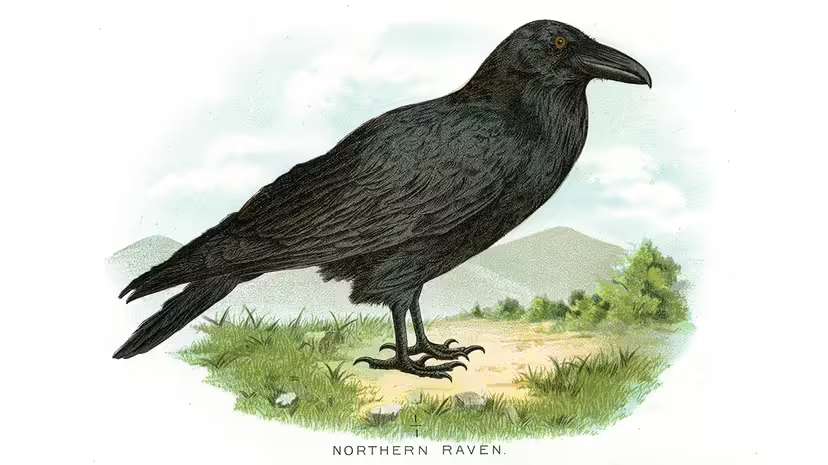
Common Raven
Wingspan: up to 46 inches (1.16 meters)
Body length: up to 27 inches (68.5 cm)
Overall bulkier and heavier
American Crow
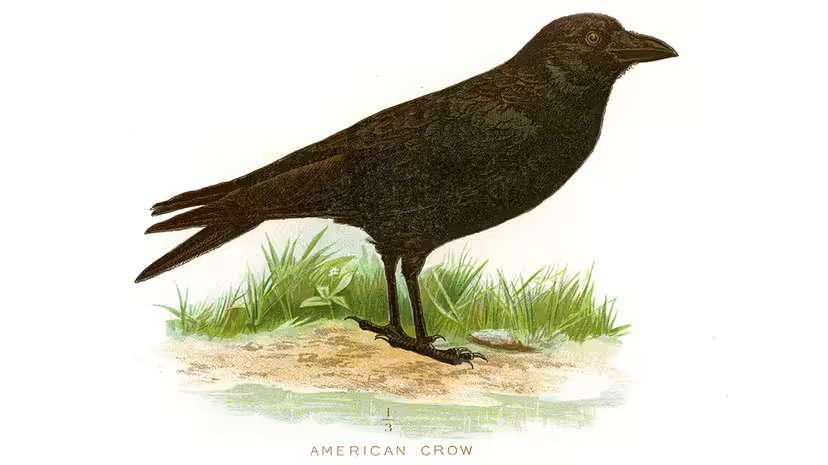
Wingspan: around 36 inches (0.9 meters)
Smaller, slimmer, and more delicate-looking
Ravens often appear almost hawk-like in silhouette, while crows look more compact.
2. Beak Shape, Throat Feathers & Facial Features
Raven Beaks Are Long, Thick and Curved
A raven’s bill is:
Heavier
More curved
Shaped like a chisel or knife
Crows, on the other hand, have:
Straight, slimmer beaks
A more “gentle” facial profile
Shaggy Throat Feathers
Ravens have shaggy throat hackles that puff out when vocalizing.
Crows lack these distinctive feathers.
This single feature is often the best clue when observing a perched bird.
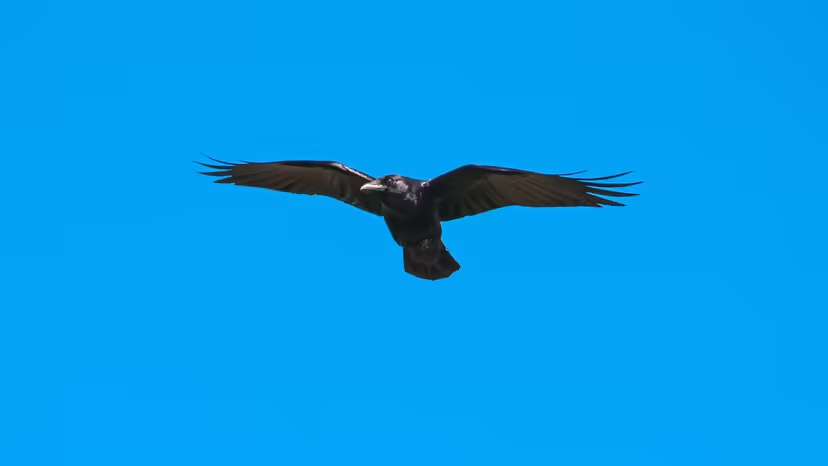
3. Tails and Wings: The Easiest Clues in Flight
Tail Shape
Look closely at the tail when the bird spreads it in flight:
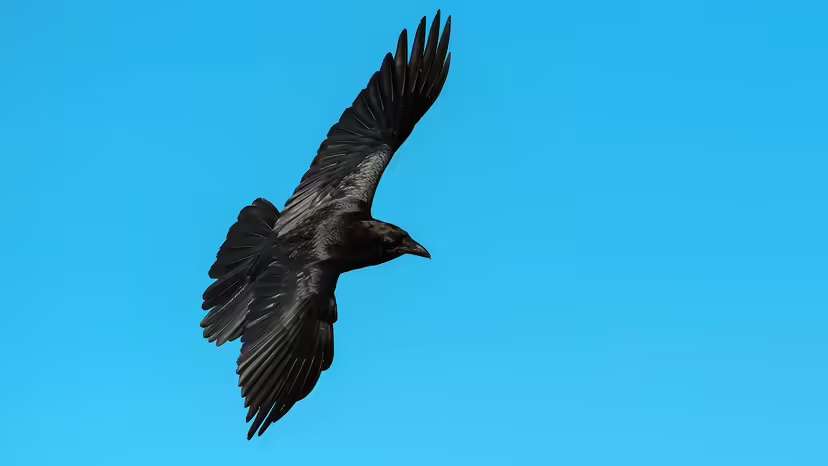
Raven tail: Wedge-shaped or diamond-like
Crow tail: Fan-shaped, all feathers equal in length
Wing Shape
Ravens: Long, pointed wings with elongated primary feathers
Built for soaring
Crows: Blunter wings
Require frequent flapping
If the bird glides effortlessly across the sky, it’s almost certainly a raven.
4. Vocalizations: Caws vs. Croaks
Both birds are technically “songbirds,” but their voices are far from melodious.
Crow Sounds
Sharp “CAW! CAW!”
Clear, ringing, repetitive
Used to alert other crows and communicate across long distances
Raven Sounds
Deep, resonant “KRROK!”
Lower pitched and croaky
Can sound like a frog or a hollow wooden drum
Ravens also make gurgles, knocks, and rolling calls that crows cannot replicate.
5. Social Behavior and Group Dynamics
Crows: Highly Social
Crows are famously gregarious. They:
Form massive flocks called “murders”
Roost together in winter by the hundreds or thousands
Thrive in urban and suburban areas
Their social intelligence allows them to cooperate, share information, and warn each other about danger.
Ravens: More Solitary
Ravens typically live:
In mated pairs
Small family groups
Large territories they defend fiercely
You are much more likely to see a raven alone or in pairs than a crowd of ravens.
6. Habitat Preferences
Although both species can overlap, they prefer different environments:
American Crows
Farmlands, cities, suburbs, open fields
Very human-adapted
Common Ravens
Wilderness areas, forests, mountains, deserts
Avoid densely populated urban zones
If you’re in a remote forest or mountainous region, the dark bird overhead is probably a raven.
7. Intelligence: Both Are Genius-Level Birds
Crows and ravens rank among the most intelligent animals on Earth — on par with apes and dolphins.
Crows
Can recognize individual human faces
Communicate warnings to other crows
Bring trinkets to humans who feed them
Use basic problem-solving strategies
Ravens
Demonstrate advanced planning
Exhibit impulse control
Use tools and manipulate objects
Work cooperatively and deceive rivals
Both birds are capable of complex vocal mimicry, memory, and emotional expression.
8. Diet and Feeding Behavior
Raven Diet
Ravens are opportunistic omnivores and scavengers. They eat:
Small mammals
Birds and eggs
Nuts and seeds
Fruits and berries
Carrion (including large carcasses)
Human refuse
Crow Diet
Crows share a similar omnivorous diet but prefer:
Insects
Earthworms
Small rodents
Seeds and grains
Mollusks
Human food scraps
Carrion (smaller carcasses)
Their ability to exploit cities gives them an edge in urban survival.
Cultural and Mythological Significance
Across cultures, these birds are loaded with symbolism:
Norse mythology: Odin’s ravens, Huginn and Muninn, gathered information from around the world.
Indigenous stories: Many Native American groups view crows as tricksters or transformative beings.
Global folklore: Ravens often represent wisdom, mystery, or prophecy.
Despite their dark reputation, most myths highlight their intelligence rather than doom.
Frequently Asked Questions
How can I tell if the bird is a crow or a raven by sound alone?
Crow: sharp, repetitive caw caw caw
Raven: deep, resonant crooaaak or gronk
Do crows and ravens live in the same areas?
Sometimes, but:
Crows prefer open spaces and cities
Ravens prefer forests, wilderness, or rural mountains
Which bird is smarter?
Both are extraordinarily intelligent, though ravens show more complex tool use and long-term planning, while crows excel at facial recognition and social intelligence.