
Malarguesaurus
Malarguesaurus (Malarguesaurus florenciae) was a titanosauriform sauropod from the Late Cretaceous of Argentina. Like other sauropods, it was a large, long-necked, plant-eating dinosaur that walked on four pillar-like legs. Malarguesaurus is best known from incomplete fossils, but it adds important...

Muyelensaurus
Muyelensaurus (Muyelensaurus pecheni) was a titanosaur sauropod from the Late Cretaceous of Patagonia, Argentina. Unlike many giant titanosaurs, Muyelensaurus is often described as more slender and small-to-medium sized, with a lighter overall build compared with the largest members of the group.Qui...

Pellegrinisaurus
Pellegrinisaurus (Pellegrinisaurus powelli) was a titanosaur sauropod from the Late Cretaceous of Patagonia, Argentina. Titanosaurs were long-necked, plant-eating dinosaurs that became especially diverse in the Southern Hemisphere near the end of the dinosaur era. Although Pellegrinisaurus is known...

Santanaraptor
Santanaraptor (Santanaraptor placidus) is a small theropod dinosaur from the Early Cretaceous of northeastern Brazil. It is best known because its fossils were found in deposits that can preserve delicate details, including rare traces of soft tissues. Only partial remains are known, and the most co...
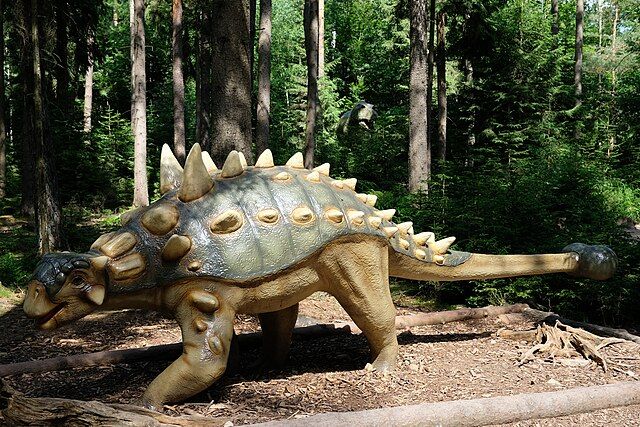
Ankylosaurus
Ankylosaurus was a tank-like armored dinosaur from the Late Cretaceous of North America. Its body was covered in tough armor, and its tail ended in a heavy club.Armor and DefenseArmor plates and spikes protected its back and sides. The tail club could deliver strong defensive blows.DietAnkylosaurus...

Spinosaurus
Spinosaurus is one of the most distinctive dinosaurs ever discovered, instantly recognizable by the tall “sail” on its back. This giant predator lived in Cretaceous North Africa and is widely discussed as a dinosaur with semi-aquatic adaptations—meaning it likely spent significant time around riv...

Velociraptor
Velociraptor is one of the most famous dinosaurs in popular culture, but the real animal was quite different from the movie version. In reality, Velociraptor was a small, feathered predator that lived during the Late Cretaceous in Asia, especially in what is now Mongolia. Despite its relatively smal...

Triceratops
Triceratops is one of the most iconic dinosaurs of all time. This large, three-horned herbivore lived in western North America during the Late Cretaceous and is famous for its massive skull, broad frill, and powerful horns.AppearanceTriceratops had a strong body, a parrot-like beak, and a large bony...

Tyrannosaurus rex
OverviewTyrannosaurus rex (often called T. rex) is one of the most iconic dinosaurs ever discovered. It was a massive meat-eating theropod that lived in western North America during the Late Cretaceous, near the very end of the dinosaur era.AppearanceT. rex had a huge skull, thick neck muscles, and...
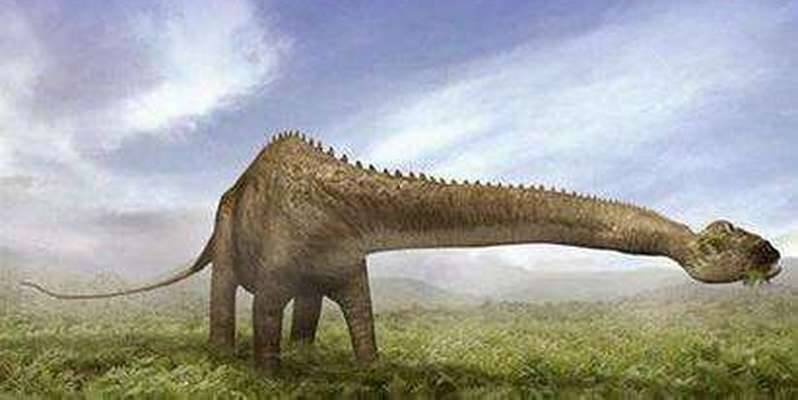
Top Ten Herbivorous Dinosaurs_Which dinosaurs were herbivorous?
Most of the large dinosaurs were herbivores. Their teeth were flat and straight, without serrations, and could only be used for chewing. The shape and size of their teeth depended on the plants they ate. Sound amazing? Next, let’s take a look at the top ten herbivorous dinosaurs with the edi...
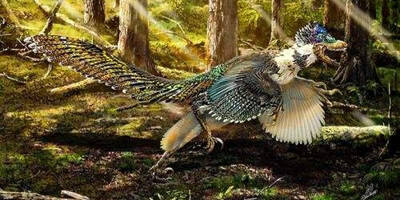
Eight kinds of dinosaurs with feathers_Which dinosaurs were likely to have feathers
Although feathers will not become fossils, archaeologists have still found clues from dinosaur clues that some dinosaurs may have had feathers. Let’s take a look at which dinosaurs may have had feathers!1. Bury the Fire DragonSolidifying the connection between dinosaurs and birdsCitipati (scientifi...
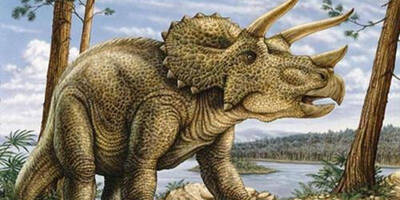
Eight kinds of dinosaurs with horns on their heads_What are the dinosaurs with horns on their heads?
Dinosaurs with horns on their heads, like rhinos, have large horns on their heads to defend themselves against predators. Next, let’s take a look at the dinosaurs with horns on their heads with this theme group, right? 1. Sheng Wanglong Has a low, rounded corne...
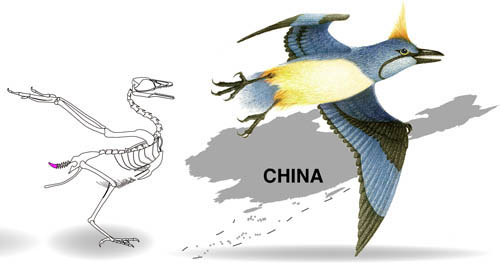
The Early Cretaceous enantiornis 130 million years ago
On February 1, Wang Min, Zhou Zhonghe, Zou Jingmei of the Institute of Vertebrate Paleontology and Paleoanthropology, Chinese Academy of Sciences, and Pan Yanhong of the Nanjing Institute of Geology and Paleontology reported in Nature Communications a discovery of 130 million The Early Cretac...
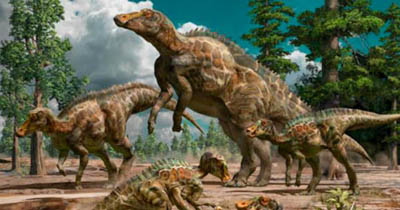
The origin and evolution of Yang's Laiyangosaurus
Hadrosaurs are a type of large terrestrial herbivorous ornithischian dinosaurs that lived in the late Cretaceous period. Their fossils are widely distributed and have been found on other continents except Oceania. The most obvious features of hadrosaurs are the long and flat head with...
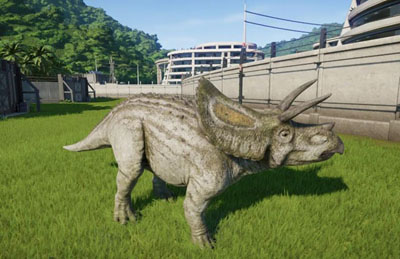
The dinosaur with the largest skull in the world: Torosaurus
Torosaurus was a herbivorous dinosaur that lived in the late Cretaceous period in North America about 70 million years ago. It was about 8 meters long. It has a huge head with a brightly colored, oversized shield on the back of its head, two large sharp horns above its eyes, and a small horn next to...