
Styracosaurus
Was Styracosaurus a dinosaur?Yes. Styracosaurus was a true dinosaur, specifically a horned ceratopsian from the Late Cretaceous of North America.How big was Styracosaurus?Styracosaurus was about 5.5 to 5.8 meters long and likely weighed around 2.5 to 3 tonnes, although these figures are still estima...

Pachycephalosaurus
Pachycephalosaurus was one of the most unusual plant-eating dinosaurs of the Late Cretaceous. It is famous for its thick, rounded skull dome, which made it look very different from horned dinosaurs, duck-billed dinosaurs, or armored dinosaurs living at the same time. Although it is often shown charg...

Argentinosaurus
Argentinosaurus was a gigantic long-necked plant-eating dinosaur from the Late Cretaceous of South America. It is usually classified as a titanosaur, a group of sauropods that included some of the largest land animals ever to live. Although its fossil remains are incomplete, Argentinosaurus has beco...

Achelousaurus
Achelousaurus was a medium-sized horned dinosaur that lived in what is now Montana during the Late Cretaceous. It belonged to the centrosaurine branch of ceratopsians, a group known for deep skull frills, facial ornamentation, and beaked mouths adapted for plant-eating. Unlike some of its more famou...

Titanosaurus
Titanosaurus is a famous name linked to the giant long-necked dinosaurs known as titanosaurs. In strict scientific usage, Titanosaurus refers to a historical dinosaur genus described from India in the Cretaceous. However, because the original fossils were fragmentary, many researchers consider Titan...

Iguanodon
Iguanodon (Iguanodon bernissartensis) was a large plant-eating dinosaur from the Cretaceous and one of the most historically important dinosaurs ever discovered. It was among the first dinosaurs described by science, helping shape early understanding of what dinosaurs were and how they lived.Time Pe...

Pteranodon
Pteranodon (Pteranodon longiceps) was a giant flying reptile from the Cretaceous of North America. It is often called a “pterodactyl” in pop culture, but scientifically it was a pterosaur, not a dinosaur. Pteranodon is famous for its long head crest, toothless beak, and impressive wingspan.Time Pe...

Baryonyx
Baryonyx (Baryonyx walkeri) was a distinctive theropod dinosaur from the Cretaceous of Europe. It belonged to the spinosaurids—a group of predators known for long, crocodile-like snouts and hunting styles that often involved water environments.Time PeriodBaryonyx lived during the Early Cretaceous....

Utahraptor
Utahraptor (Utahraptor ostrommaysorum) was a giant “raptor” dinosaur from the Cretaceous of North America. It belongs to the dromaeosaurids—theropods famous for agility, sharp teeth, and a sickle-shaped claw on the second toe. Utahraptor stands out because it was much larger than the more famous...

parasaurolophus
Parasaurolophus (Parasaurolophus walkeri) was a large duck-billed dinosaur from the Cretaceous of North America. It is best known for its long, tube-like crest extending backward from the skull—one of the most iconic head structures in dinosaur history.Time PeriodParasaurolophus lived during the La...

Acrocanthosaurus
Acrocanthosaurus (Acrocanthosaurus atokensis) was one of the largest predators of Early Cretaceous North America. Its name means “high-spined lizard,” referring to the tall neural spines along its back that gave it a dramatic silhouette.Time PeriodAcrocanthosaurus lived during the Cretaceous Perio...
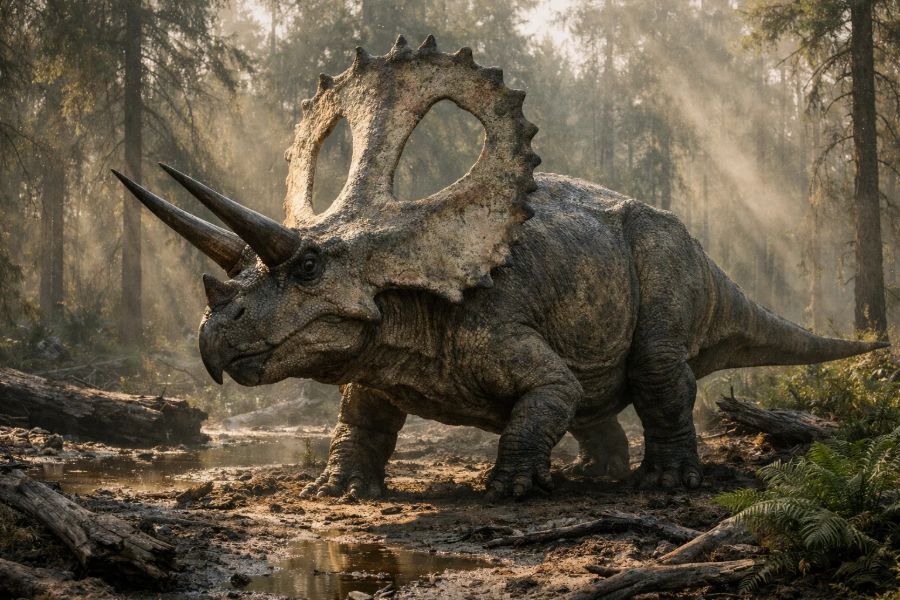
Torosaurus
Torosaurus (Torosaurus latus) was a giant horned dinosaur from the Cretaceous of North America. It is best known for its enormous frill—one of the largest skull ornaments in any ceratopsian—and for its close relationship to the famous Triceratops.Time PeriodTorosaurus lived during the Late Cretace...

mosasaurus
Mosasaurus (Mosasaurus hoffmannii) was one of the largest and most famous marine reptiles of the Cretaceous Period. Although it is often grouped with “dinosaurs” in popular media, Mosasaurus was not a dinosaur—it was a sea-dwelling reptile more closely related to modern lizards and snakes.Time Pe...

Therizinosaurus
Therizinosaurus (Therizinosaurus cheloniformis) was one of the strangest-looking dinosaurs ever discovered. Although it belongs to the theropods (the group that includes famous predators), Therizinosaurus evolved a largely plant-eating lifestyle—complete with a beak, a large belly for digestion, an...

Giganotosaurus
Giganotosaurus (Giganotosaurus carolinii) was one of the largest predatory dinosaurs ever discovered. It lived in Patagonia, Argentina during the Cretaceous and belonged to Carcharodontosauridae—giant theropods known for long skulls and blade-like teeth.Time PeriodGiganotosaurus lived in the mid-Cr...

Carnotaurus
Carnotaurus (Carnotaurus sastrei) was a large predatory dinosaur from the Cretaceous of Patagonia, Argentina. It is one of the most recognizable theropods thanks to its short, deep skull and the pair of thick horns above its eyes.Time PeriodCarnotaurus lived during the Late Cretaceous. In your site’...

Nigersaurus
Nigersaurus (Nigersaurus taqueti) was a highly specialized long-necked dinosaur from the Cretaceous of Africa. While many sauropods are known for towering necks and tree-level browsing, Nigersaurus became famous for doing the opposite: it was built to feed low to the ground with a remarkably wide, s...

Bonatitan
Bonatitan (scientific name: Bonatitan reigi) was a titanosaur sauropod from the Late Cretaceous of Patagonia, Argentina. Titanosaurs were among the last surviving long-necked sauropods and remained successful in South America until very late in the Cretaceous.Time PeriodBonatitan is placed in the Cr...

Baurutitan
Baurutitan was a titanosaur sauropod from the Late Cretaceous of Brazil. Titanosaurs were among the last surviving groups of long-necked sauropods, thriving across South America shortly before the end-Cretaceous extinction.Time PeriodBaurutitan lived in the Cretaceous Period (more specifically, Late...

Barrosasaurus
Barrosasaurus (Barrosasaurus casamiquelai) was a titanosaur sauropod from the Late Cretaceous of Patagonia, Argentina. Titanosaurs were long-necked, plant-eating dinosaurs that became especially diverse in the Southern Hemisphere near the end of the dinosaur era. Barrosasaurus is known from limited...