Some of the most striking true fox species include the Arctic fox, fennec fox, red fox, Cape fox, kit fox, Rüppell’s fox, Tibetan fox, Bengal fox, Blanford’s fox and swift fox. Beauty is subjective, so this is not a scientific ranking. Instead, this list highlights ten recognized Vulpes species with distinctive coats, faces, ears and adaptations. Silver and marble foxes are not separate species—they are color forms of the red fox.
Beautiful Fox Species at a Glance
| # | Fox | Scientific Name | Known For | Native Region |
|---|---|---|---|---|
| 1 | Arctic fox | Vulpes lagopus | Dense seasonal coat | Arctic |
| 2 | Fennec fox | Vulpes zerda | Huge ears and pale coat | North African deserts |
| 3 | Red fox | Vulpes vulpes | Red coat and white-tipped tail | Northern Hemisphere |
| 4 | Cape fox | Vulpes chama | Silver-gray coat and large ears | Southern Africa |
| 5 | Kit fox | Vulpes macrotis | Large ears and desert build | Western North America |
| 6 | Rüppell’s fox | Vulpes rueppellii | Pale desert coat | North Africa and Middle East |
| 7 | Tibetan fox | Vulpes ferrilata | Square-looking face | Tibetan Plateau |
| 8 | Bengal fox | Vulpes bengalensis | Elegant slender body | Indian subcontinent |
| 9 | Blanford’s fox | Vulpes cana | Long bushy tail and large ears | Middle East and Central Asia |
| 10 | Swift fox | Vulpes velox | Compact prairie fox | North American Great Plains |
Arctic Fox
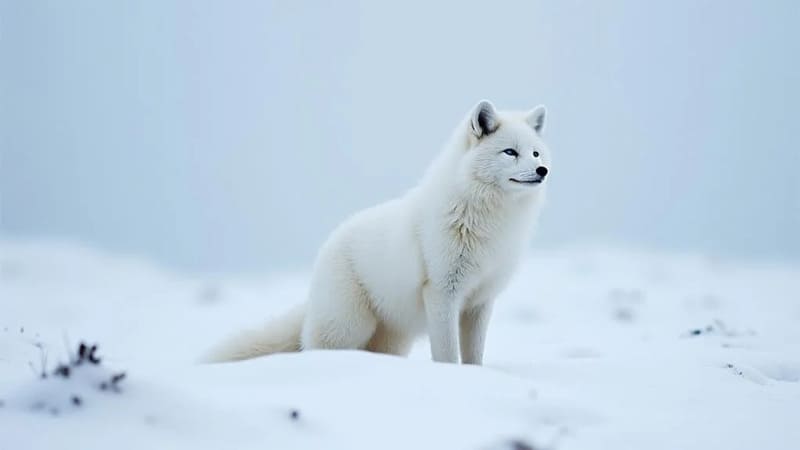
The Arctic fox has one of the most dramatic seasonal coats among wild canids.
The Arctic fox (Vulpes lagopus) is instantly recognizable in its white winter coat, although not every individual is white and summer fur is usually darker.
Its compact body, short ears and exceptionally dense fur are adaptations to Arctic cold. Even the soles of its feet are heavily furred.
The species lives across Arctic tundra regions of North America, Greenland, Iceland, Scandinavia and northern Eurasia.
Fennec Fox
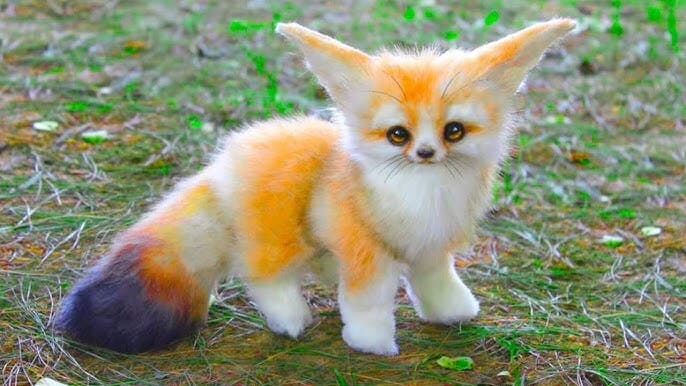
The fennec's oversized ears are both visually distinctive and useful for desert life.
The fennec fox (Vulpes zerda) combines a tiny body with enormous ears.
It inhabits sandy deserts and semi-deserts across northern Africa. Its pale coat reflects the colors of its surroundings, while the large ears help with heat loss and detecting small prey.
Its proportions make it one of the world's most recognizable fox species.
Red Fox
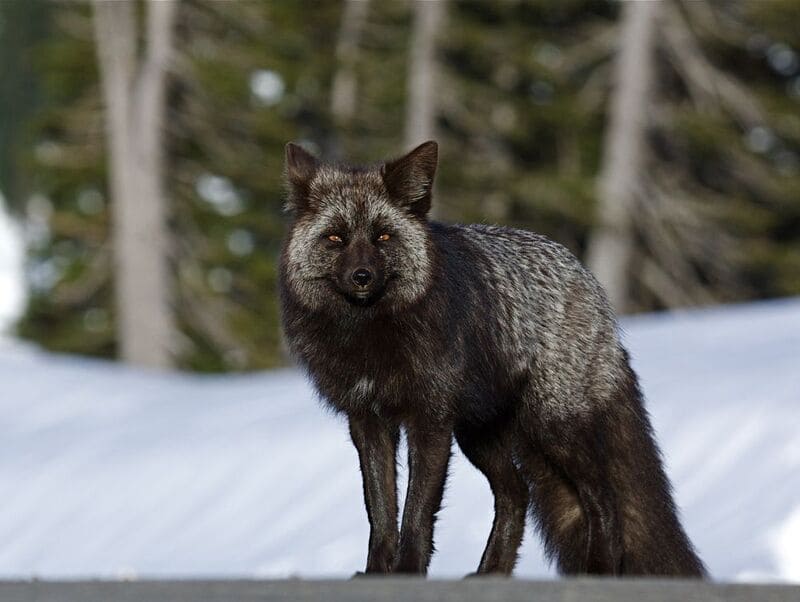
The classic red coat is only one of several color forms found in the red fox.
The red fox (Vulpes vulpes) has the widest distribution of any living canid species and occurs across much of the Northern Hemisphere.
The familiar form has reddish fur, dark lower legs and a bushy tail that commonly ends in white.
Red foxes also occur in other color forms. The silver fox, for example, is a dark color form of the red fox—not a separate fox species.
Cape Fox
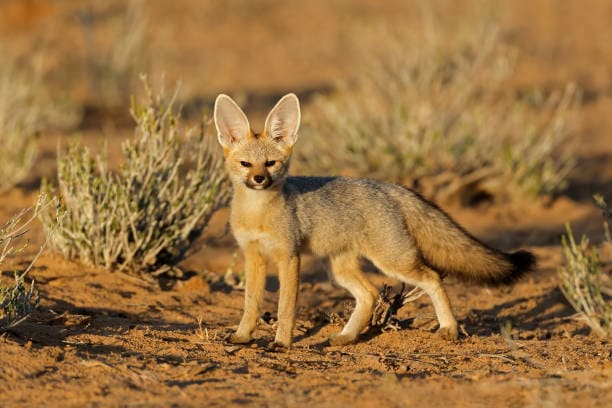
Cape foxes have a slender build, large ears and a soft gray to silver-gray appearance.
The Cape fox (Vulpes chama) is native to southern Africa.
Its coat is generally gray to silver-gray above, while the underside is paler and often buff-colored. Large ears and a slender muzzle give it a delicate appearance.
The species primarily occupies open and relatively dry habitats, including grasslands and semi-arid regions. :contentReference[oaicite:2]{index=2}
Kit Fox
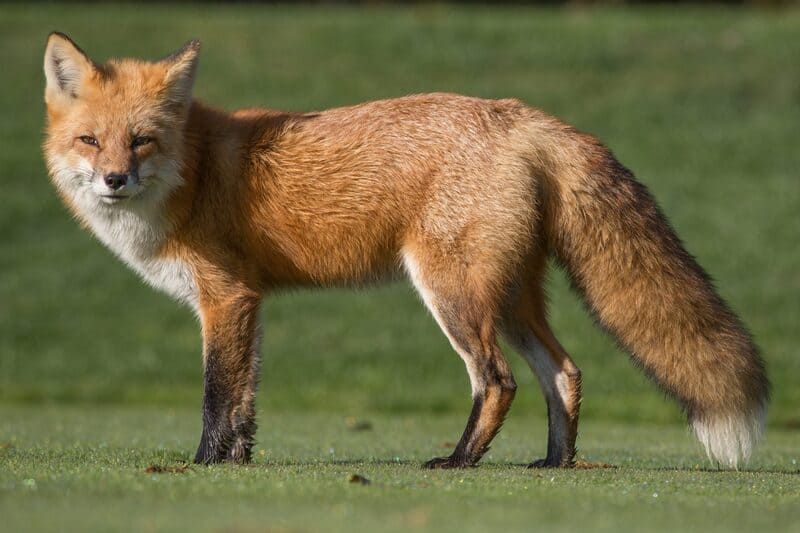
The kit fox is a small North American fox adapted to hot, dry environments.
The kit fox (Vulpes macrotis) is a small fox of western North America.
Its oversized ears and relatively long legs are useful adaptations to warm, open habitats. The coat is generally pale gray or buff, helping it blend into desert and scrub landscapes.
The kit fox is recognized as a distinct species from the closely related swift fox. :contentReference[oaicite:3]{index=3}
Rüppell’s Fox
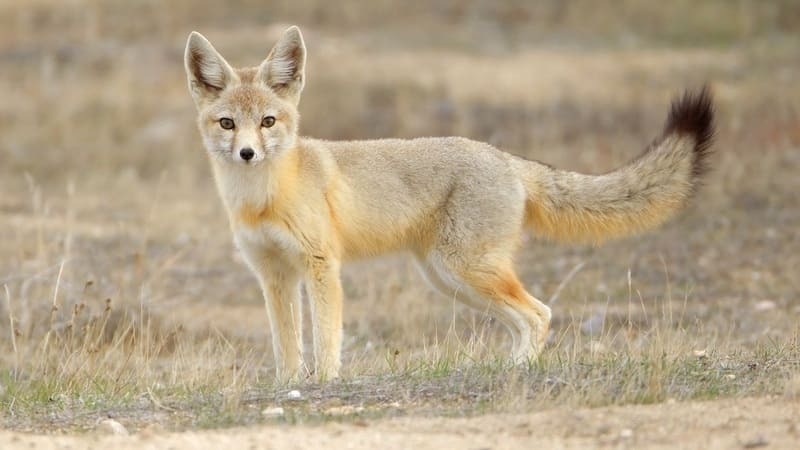
Rüppell’s fox is a pale desert species distributed from North Africa toward southwest Asia.
Rüppell’s fox (Vulpes rueppellii) has a pale sandy coat, large ears and a long bushy tail.
It inhabits deserts and semi-deserts across North Africa, the Arabian Peninsula and eastward toward Pakistan.
The pale coloration is well suited to open arid landscapes. The species is currently widespread across much of its desert range. :contentReference[oaicite:4]{index=4}
Tibetan Fox
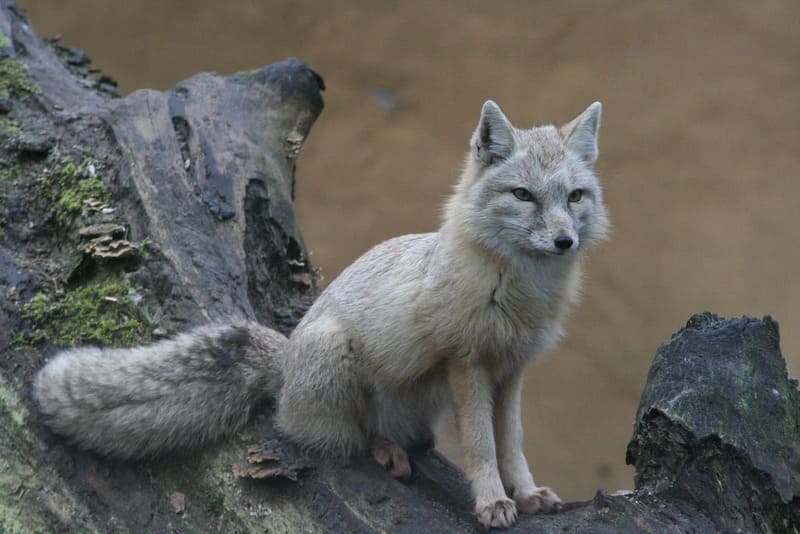
Dense cheek fur gives the Tibetan fox its unusually broad, almost square facial profile.
The Tibetan fox (Vulpes ferrilata) may be the most unusual-looking fox on this list.
Its dense cheek fur produces the famous square-faced appearance seen in wildlife photographs and online memes.
It lives mainly in high-elevation grasslands and semi-deserts of the Tibetan Plateau, where pikas are an important part of its diet. :contentReference[oaicite:5]{index=5}
Tibetan fox and Tibetan sand fox are names for the same species. They should not be counted as two separate foxes.
Bengal Fox
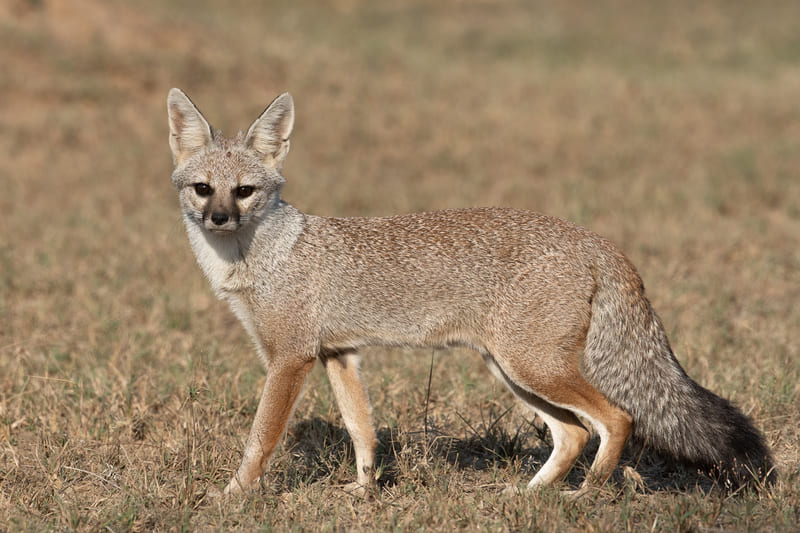
The Bengal fox has a slender frame and a particularly long, bushy tail.
The Bengal fox or Indian fox (Vulpes bengalensis) is native to the Indian subcontinent.
It has a relatively slender build, pointed muzzle and prominent ears, with a long tail that can look especially full compared with its body.
The species favors open scrub and grassland habitats rather than dense forest or true desert. :contentReference[oaicite:6]{index=6}
Blanford’s Fox
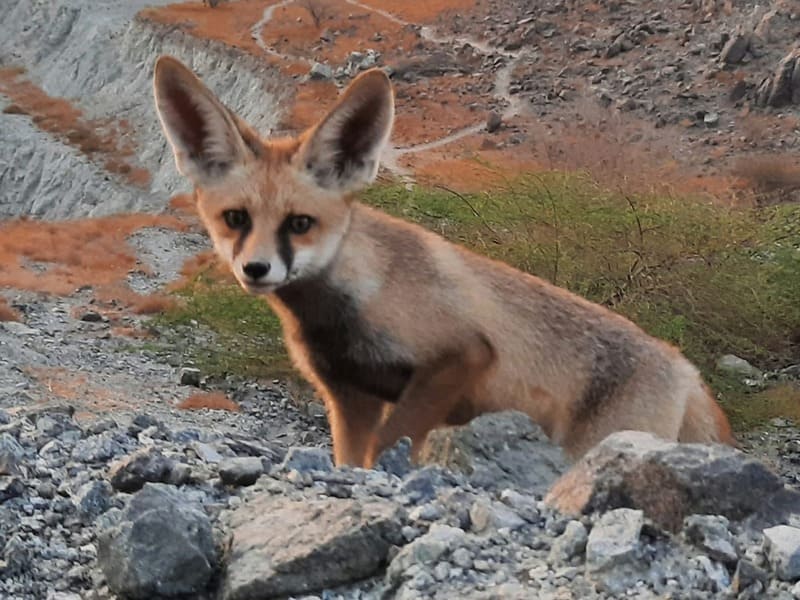
Blanford’s fox combines very large ears with a long, heavily furred tail.
Blanford’s fox (Vulpes cana) is a small fox of rocky and mountainous landscapes from the Middle East into parts of Central and South Asia.
Its large ears, narrow face and exceptionally bushy tail create a very different silhouette from heavier fox species.
It is also known as the Afghan fox in some regions. :contentReference[oaicite:7]{index=7}
Swift Fox
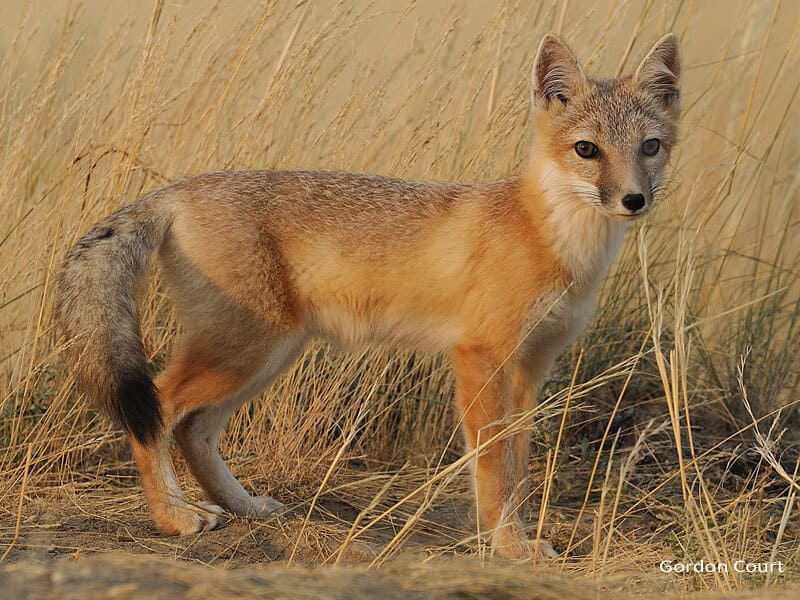
The swift fox is a compact prairie species native to the Great Plains of North America.
The swift fox (Vulpes velox) is a small fox native to the shortgrass and mixed-grass prairies of North America.
Its coat is generally grayish to buff with paler underparts, and its compact body is matched by surprisingly quick movement—the trait behind its common name.
Swift fox populations disappeared from parts of their historical range before conservation and reintroduction programs helped restore them in several regions. :contentReference[oaicite:8]{index=8}
Are Silver Foxes and Marble Foxes Separate Species?
No.
This is the biggest correction to the old version of this article.
| Name | What It Actually Is |
|---|---|
| Silver fox | A dark or melanistic color form of the red fox (Vulpes vulpes) |
| Cross fox | Another red fox color form |
| Marble fox | A distinctive color pattern associated largely with captive-bred red foxes |
The IUCN Canid Specialist Group explicitly lists “Silver Fox” and “Cross Fox” among names associated with the red fox. :contentReference[oaicite:9]{index=9}
They can certainly be beautiful foxes, but counting them as separate species makes a “Top 10 Fox Species” list taxonomically incorrect.
Which Fox Is the Most Beautiful?
There is no scientific answer because beauty is subjective.
The Arctic fox stands out for its dramatic seasonal coat, the fennec for its enormous ears, the red fox for its classic orange-and-black pattern, and the Tibetan fox for its unique face.
A better way to appreciate foxes is to notice how each appearance reflects a different habitat—from Arctic tundra to hot desert and high-elevation grassland.
Frequently Asked Questions
How many fox species are there?
The word “fox” is used for several canids, but the genus Vulpes contains the animals usually referred to as the true foxes. This article focuses on ten recognized Vulpes species rather than color morphs.
Is a silver fox a separate species?
No. A silver fox is a color form of the red fox, Vulpes vulpes.
Is a marble fox a real species?
No. “Marble fox” refers to a color pattern, particularly in captive-bred red foxes, rather than a separate species.
Are Tibetan fox and Tibetan sand fox different?
No. Tibetan sand fox is another common name used for the Tibetan fox, Vulpes ferrilata.
What is the smallest fox?
The fennec fox is generally recognized as the smallest fox species and is famous for its disproportionately large ears.
What is the most widespread fox?
The red fox has the widest geographic distribution of any living member of the order Carnivora and occurs across much of the Northern Hemisphere. :contentReference[oaicite:10]{index=10}
Sources
IUCN SSC Canid Specialist Group — Arctic Fox
IUCN SSC Canid Specialist Group — Red Fox
IUCN SSC Canid Specialist Group — Fennec Fox
IUCN SSC Canid Specialist Group — Tibetan Fox
IUCN SSC Canid Specialist Group — Bengal Fox
IUCN SSC Canid Specialist Group — Cape Fox
IUCN SSC Canid Specialist Group — Kit Fox, Swift Fox, Rüppell’s Fox and Blanford’s Fox