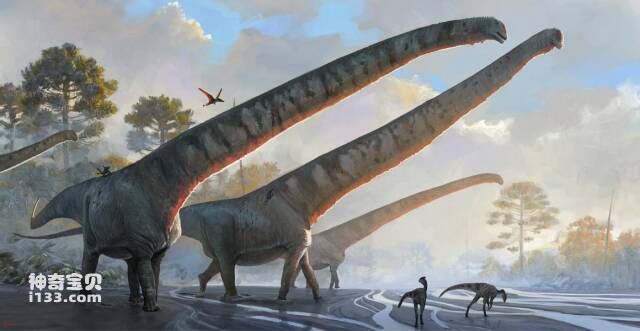
When people say “flying dinosaurs,” they usually mean one of two things:
True flying dinosaurs = birds (the only dinosaurs alive today).
Dinosaur relatives that flew = pterosaurs (often mislabeled as “flying dinosaurs,” but not dinosaurs).
And then there’s a third, fascinating middle ground: non-bird dinosaurs with wings and feathers that likely glided, parachuted, or used their wings for running assistance—evolutionary experiments that didn’t survive to the present.
1) First, the key distinction: birds vs pterosaurs
Birds are dinosaurs because they evolved from small meat-eating theropod dinosaurs; in classification terms, birds sit inside Dinosauria.
Pterosaurs are not dinosaurs—they’re close relatives within Archosauria, but they branched off earlier and represent a separate lineage of flying reptiles.
So if someone points at a “pterodactyl” and says “flying dinosaur,” the scientific correction is: flying reptile, dinosaur cousin.
2) How dinosaurs became flyers: feathers came first
A major shift in paleontology over the last few decades is the recognition that feathers did not originate for flight. Feathers (and feather-like coverings) likely first evolved for insulation, display, camouflage, or brooding, and only later were co-opted into aerodynamic structures.
This matters because it reframes “flight evolution” as a stepwise accumulation:
Stage A: fuzzy coverings → thermal regulation / display
Stage B: more organized feathers → signaling + better control of body temperature
Stage C: stiff, asymmetric feathers → aerodynamic lift and thrust potential
Stage D: skeletal & muscular changes → stronger flapping, better balance, refined control
By the time true birds appear, many “birdy” traits were already present in their dinosaur ancestors.
3) What counts as “flight” in biology?
From a zoologist’s perspective, there are multiple aerial modes that can look like “flight”:
Parachuting: slowing a fall (like a controlled drop)
Gliding: traveling forward without powered flapping
Wing-assisted running/climbing: wings provide traction and lift while legs do much of the work
Powered flight: sustained flapping that generates thrust and lift (the bird model)
This is important because many feathered dinosaurs may have been aerially capable without being true powered flyers.
4) The big debate: “trees-down” vs “ground-up” (and a third pathway)
Two classic ideas about how bird flight evolved still appear in textbooks:
Arboreal (“trees-down”): small dinosaurs in trees glide, then add flapping.
Cursorial (“ground-up”): fast runners use proto-wings for balance, leaping, or prey capture, then refine flapping.
A compelling modern bridge between them is WAIR (Wing-Assisted Incline Running): living birds can flap to generate forces that help them run up steep slopes, potentially showing how “incipient wings” could be useful before full flight.
WAIR doesn’t “solve” everything, but it illustrates a key evolutionary point: wings can be strongly advantageous even when they’re not yet good enough for true flight.
5) Real candidates for “flying dinosaurs”
A) Birds (Avialae): the only dinosaurs that truly conquered powered flight long-term
Early birds and bird-like dinosaurs such as Archaeopteryx sit near the base of the bird lineage and have a mosaic of dinosaur and bird traits. New analyses of exceptionally preserved specimens continue to refine how flight-capable these early forms were and which feather features matter most aerodynamically.
Recent reporting also highlights that the early bird story may be more diverse in the Jurassic than once thought, with new fossils pushing discussions about how early modern-like flight anatomy appeared.
B) Four-winged “experimenters”: Microraptor and gliding-style models
Microraptor is famous for having large feathers on both forelimbs and hindlimbs—often described as a “four-winged dinosaur.” Aerodynamic analyses have tested how its wing arrangement might have worked in gliding and maneuvering.
Interpretation is still nuanced (posture, behavior, ecology), but Microraptor remains a prime example of near-flight within non-bird dinosaurs.
C) Membrane-wing dinosaurs: Yi qi and Ambopteryx
A spectacular twist: a small group of theropod dinosaurs (scansoriopterygids) show evidence for membrane-supported wings, a flight apparatus more reminiscent of bats or pterosaurs than birds. Ambopteryx strengthens the idea that this was a real evolutionary pathway in some dinosaurs, not a one-off oddity.
Most researchers describe these as short-lived experiments—likely gliders or limited flyers, not ancestors of modern birds.
6) A field-guide table: types of “flying dinosaurs” at a glance
| “Flying” category | What it means (biomechanics) | Likely capability | Key evidence you’d expect | Example taxa |
|---|---|---|---|---|
| Powered flying dinosaurs | Sustained flapping flight (lift + thrust) | Full flight | Asymmetric flight feathers; forelimb/shoulder adaptations; refined wing feathering | Early birds and bird lineage near Archaeopteryx |
| Gliding / parachuting dinosaurs | Passive aerial travel; limited or no sustained flapping | Controlled descent / glide | Large surface-area feathers; lightweight body; tree-associated ecology often proposed | Microraptor |
| Wing-assisted running / climbing | Wings add traction/lift while legs do primary locomotion | “Pre-flight” performance boost | Behavior analogs in living birds; proto-wing usefulness before full flight | WAIR model (behavior documented in birds) |
| Membrane-wing experiments | Wing membrane supported by skeletal elements | Likely gliding/short flights | Membranous wing traces + styliform element; mixed feather + membrane system | Yi qi, Ambopteryx |
| Not dinosaurs (often mislabeled) | True powered flight in a separate archosaur lineage | Full flight (non-dinosaur) | Pterosaur wing anatomy (membrane, elongated finger) | Pterosaurs (e.g., “pterodactyls”) |
7) Why only birds survived as flying dinosaurs
Non-bird dinosaurs (including the gliders and membrane-wing experimenters) disappeared in the end-Cretaceous mass extinction, while one branch—birds—survived and diversified. From an evolutionary standpoint, “flying dinosaurs” aren’t a single story; they’re multiple experiments, with birds being the lineage that combined:
efficient feathered wings,
refined respiratory and skeletal systems,
and adaptable ecologies
…well enough to persist through planetary crisis.
References (bibliography)
Dial, K. P. (2003). Wing-assisted incline running and the evolution of flight. Proceedings of the Royal Society B. (WAIR concept; widely cited).
Chatterjee, S., & Templin, R. J. (2007). Biplane wing planform and flight performance of the feathered dinosaur Microraptor gui. Proceedings of the Royal Society B.
Hefler, C., et al. (2026). Aerodynamic features and wing planform specializations of Microraptor (study on glide/flight performance). PNAS.
Xu, X., et al. (2015). A bizarre Jurassic maniraptoran theropod with evidence of membranous wings. Nature 521:70–73. (Related overview source).
Wang, M., et al. (2019). A new Jurassic scansoriopterygid and the loss of membranous wings in theropod evolution: Ambopteryx longibrachium. Nature.
Natural History Museum (UK). Articles on dinosaur-to-bird evolution and pterosaur distinctions (educational syntheses).
UC Berkeley Evolution (Understanding Evolution). “The origin of birds” (evolutionary overview with theropod context).
Reuters / The Guardian reporting on major Jurassic bird fossils and new Archaeopteryx analyses (high-level summaries of recent peer-reviewed work).
Natural History Museum of Utah. Explanation of why pterosaurs aren’t dinosaurs (public science communication).