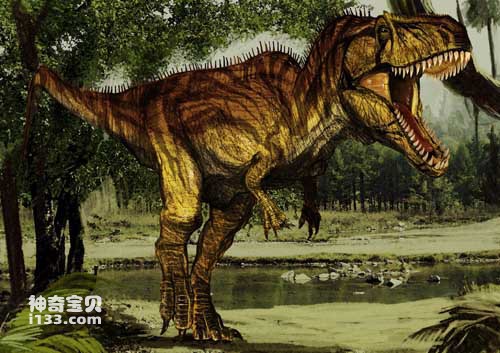
In paleontology, nicknames often emerge when a fossil animal’s ecology feels instantly familiar—but scaled up to nightmare proportions. “Hell heron” is one of those phrases: it’s been used for spinosaurid theropods that likely hunted like modern wading birds—standing in shallow water, striking at fish—except they were multi-ton carnivores with crocodile-like snouts and teeth built to trap slippery prey.
In 2026, the nickname became especially popular again because a newly described species, Spinosaurus mirabilis, was explicitly envisioned as a “hell heron” by the discovery team.

1) What is the “hell heron dinosaur” most people mean in 2026?
Spinosaurus mirabilis (Late Cretaceous, ~95 million years ago)
A University of Chicago–led team reported a new spinosaurid species from Niger, Spinosaurus mirabilis, described in Science.
Key reported features include:
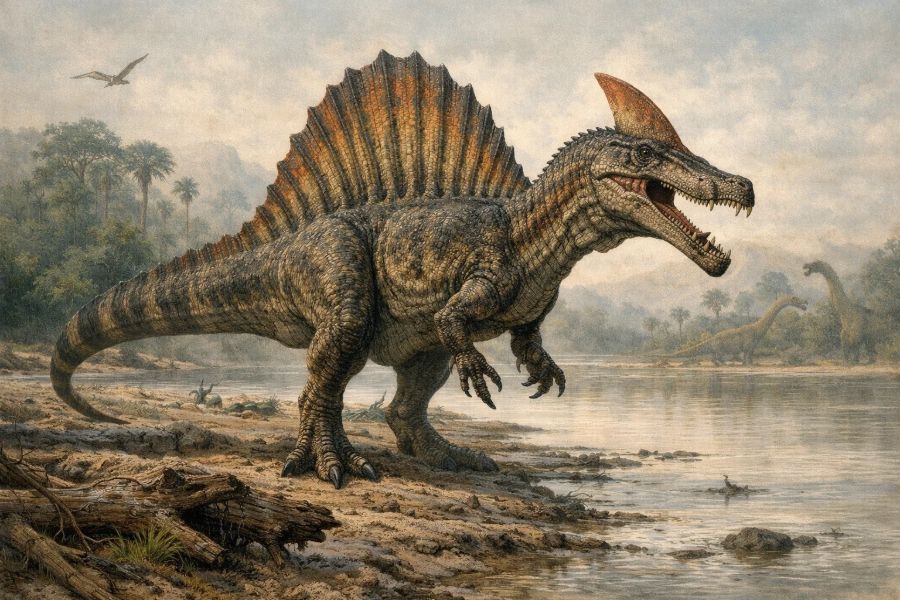
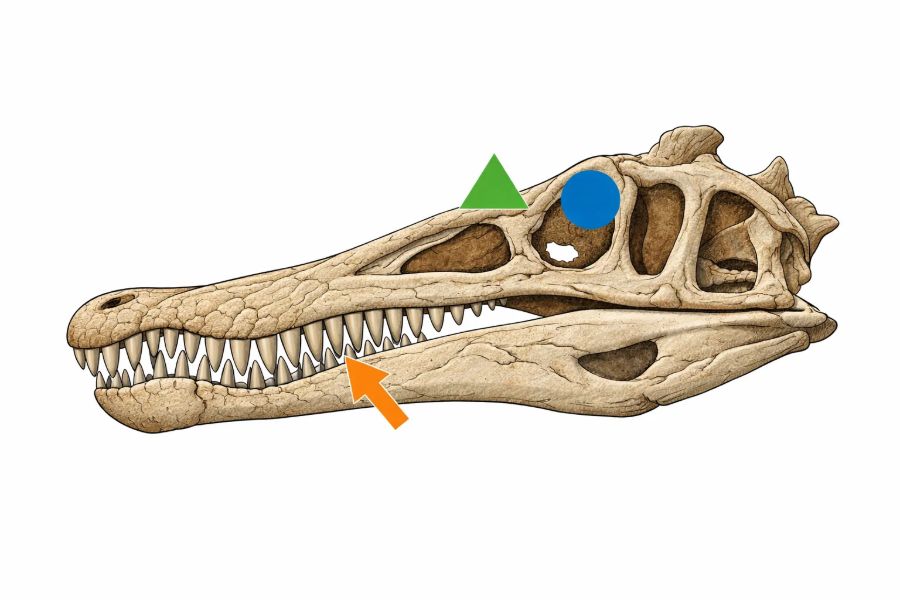
A tall, scimitar-shaped cranial crest, inferred to have had a keratin sheath and likely used for display.
Interlocking/interdigitating conical teeth, described as forming an effective “fish trap.”
A setting interpreted as inland river deposits far from the nearest ancient shoreline, supporting a strong river-ecosystem association.
Importantly, even reputable summaries emphasize uncertainty around overall size because available individuals may not represent fully grown adults.
2) Why “heron”? The biology of a spinosaurid fish hunter
Spinosaurids stand out among large theropods because their skulls and teeth are often compared to aquatic predators:
Long, narrow snouts
Conical teeth suited to gripping (not slicing)
Jaw proportions consistent with seizing slippery prey
The “heron” analogy is specifically about hunting mode: a large animal wading and striking in shallows, rather than chasing prey like a typical land predator. In the 2026 reporting, Sereno’s “hell heron” wording explicitly frames wading—even into deep water—while still spending much of its time stalking shallower fishing spots.
3) “Hell heron” wasn’t invented in 2026: the Isle of Wight connection
The phrase also echoes a 2021 spinosaurid name: Ceratosuchops inferodios, whose species name is explained as referencing a “hell heron,” inspired by the idea that some spinosaurs were riverbank predators.
That matters because it shows this isn’t a one-off metaphor—it’s a recurring ecological hypothesis applied to multiple spinosaurids across time and geography.
4) Wader or swimmer? The ongoing Spinosaurus debate (and where S. mirabilis fits)
Spinosaurus research has been unusually contentious because different datasets can suggest different levels of aquatic adaptation:
A landmark 2014 Science study argued semiaquatic adaptations in Spinosaurus aegyptiacus.
A 2020 Nature paper presented evidence consistent with tail-powered aquatic locomotion in S. aegyptiacus.
Other syntheses and critiques highlight a “wading model” as plausible for at least some spinosaurids, emphasizing shoreline/riparian hunting rather than full aquatic pursuit.
The 2026 coverage of S. mirabilis adds a new twist: inland river deposits and anatomy interpreted as consistent with wading fish predation, contributing to the view that spinosaurids may have ranged from mostly-waders to more strongly aquatic forms rather than fitting a single lifestyle template.
5) Field-guide table: what makes a “hell heron” dinosaur?
| Feature | What it is | Why it matters (ecology) | “Hell heron” connection |
|---|---|---|---|
| Scimitar-shaped head crest | Tall cranial crest in S. mirabilis | Likely display/species recognition; could signal in low-visibility wetland habitats | A “beacon” on a river hunter’s head |
| Interdigitating conical teeth | Upper/lower teeth overlap like a trap | Better at restraining slippery fish than slicing flesh | “Wading fisher” jaw toolkit |
| River-system fossils far inland | Deposits interpreted as inland rivers | Strong tie to freshwater food webs, not just coastal margins | Heron-like habitat preference scaled up |
| Spinosaurid skull plan | Long snout, fish-gripping teeth | Repeated across spinosaurids; supports aquatic prey use | Underlies why “heron” metaphor keeps coming back |
| Aquatic vs wading signals | Tail, bone density, posture models | Determines whether “heron from hell” is literal wader vs true swimmer | Debate is active; likely diversity across the group |
6) A short “ecology scene” reconstruction (evidence-based, not fantasy)
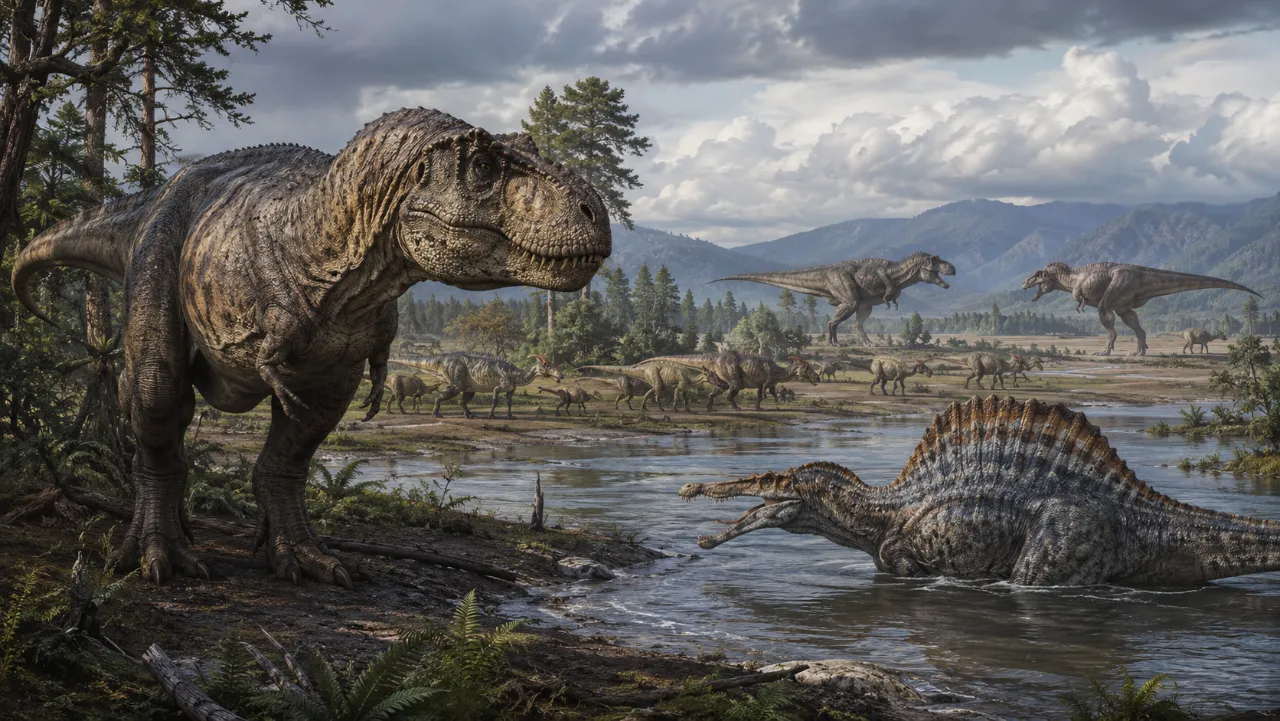
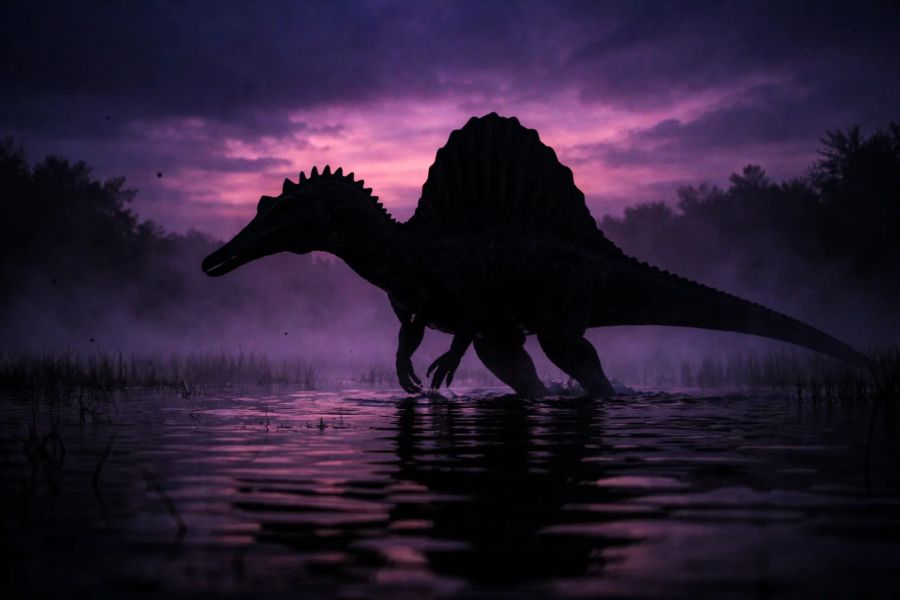
Picture a humid Cretaceous river network: large fish, crocodilians, and dense vegetation along channels. A spinosaurid like Spinosaurus mirabilis could stand in shallows, using its long jaws and interlocking teeth to seize fish—less like a sprinting land predator, more like a colossal ambush wader. That’s the biological core of the “hell heron” idea.
References (cited works)
Sereno, P. C., et al. (2026). Scimitar-crested Spinosaurus species from the Sahara. Science. DOI: 10.1126/science.adx5486.
University of Chicago News (2026). ‘Hell-heron’ dinosaur discovered in the central Sahara (reporting summary and quotes).
Reuters (2026). Fossils of a new species of huge dinosaur Spinosaurus unearthed in Niger (news report).
Natural History Museum, London (2026). New sabre-crested Spinosaurus species named from desert dinosaur fossils.
Ibrahim, N., et al. (2014). Semiaquatic adaptations in a giant predatory dinosaur. Science.
Ibrahim, N., et al. (2020). Tail-propelled aquatic locomotion in a theropod dinosaur. Nature.
Hone, D. W. E., & Holtz, T. R. (2021). The ecology of Spinosaurus. Palaeo-Electronica.
Barker, C. T., et al. (2021). New spinosaurids from the Wessex Formation (Early Cretaceous, UK)… Scientific Reports.
National Geographic (2021). “Hell heron” naming explanation for Ceratosuchops inferodios (reporting summary).
University of Chicago News (2024). Spinosaurus wader vs swimmer debate (bone density and modeling discussion).