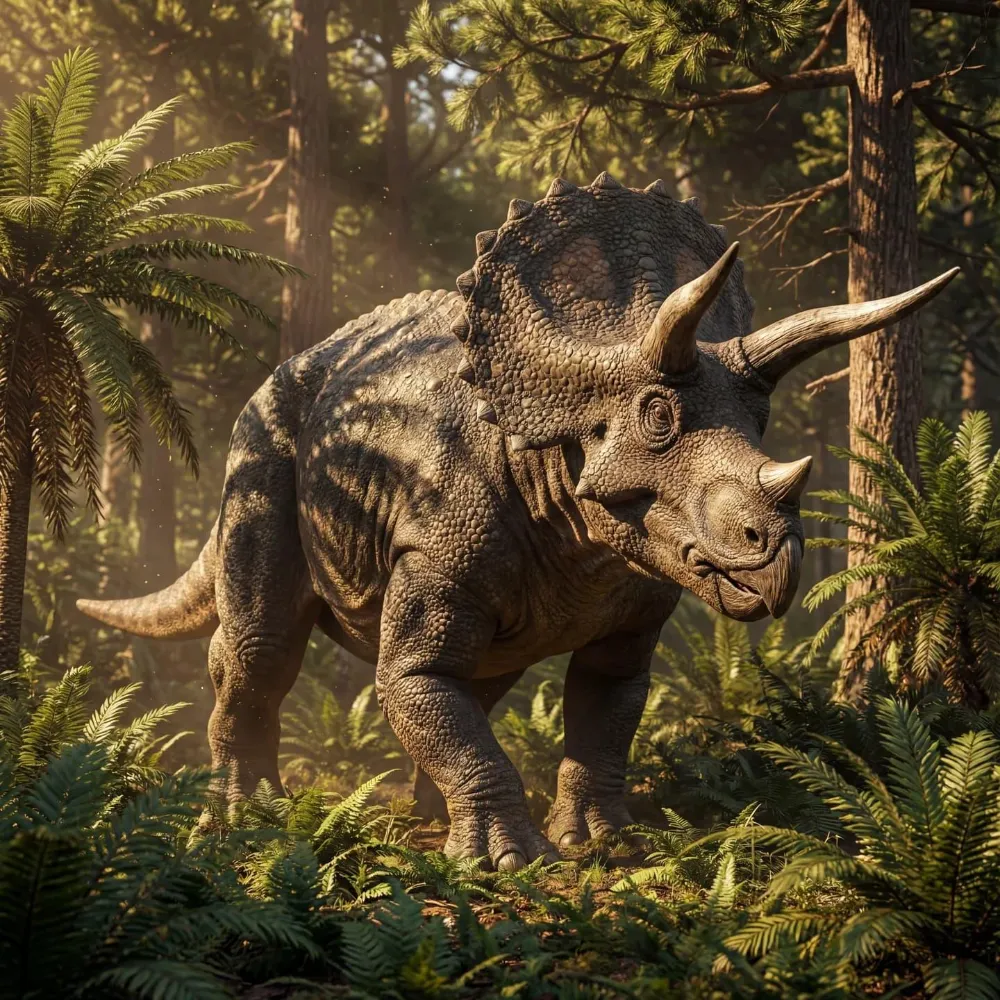
Maiasaura was a large duck-billed dinosaur from the Late Cretaceous of North America. It is best known for the remarkable fossil evidence connected with nests, eggs, hatchlings, and growing juveniles. Because of these discoveries, Maiasaura became one of the most famous dinosaurs in discussions about parenting behavior and herd life. It was not a giant predator or a heavily armored dinosaur, but it became scientifically important because it offered a rare look at how dinosaurs may have reproduced and raised their young.
Time Period
Maiasaura lived during the Late Cretaceous, likely around 76 to 74 million years ago. For backend use, Cretaceous is the best simple value. More specifically, it belonged to the Campanian stage, a time when western North America supported rich dinosaur ecosystems full of hadrosaurs, horned dinosaurs, tyrannosaurs, and smaller theropods.
Habitat
Maiasaura lived in what is now Montana, in environments that likely included river plains, floodplains, forested lowlands, and seasonally changing open areas. The Two Medicine Formation preserves a landscape that may have included relatively dry intervals as well as more vegetated nesting grounds. Maiasaura appears to have lived in social groups, and some fossil sites suggest that it nested in colonies, returning to places suitable for breeding and raising young.
Size and Appearance
Maiasaura was a medium-to-large hadrosaur, commonly estimated at about 7 to 9 meters long and roughly 2 to 3 tonnes in weight, although exact figures remain approximate. It had a broad duck-like beak, a deep body, strong hind limbs, shorter forelimbs, and a long stiff tail for balance. Unlike crested hadrosaurs such as Parasaurolophus, Maiasaura did not have a long hollow head crest. Its head was more modest in profile, giving it the classic look of a non-crested duck-billed dinosaur built for efficient plant feeding.
Diet and Lifestyle
As a herbivore, Maiasaura likely fed on leaves, shoots, seeds, and other Cretaceous plant material. Like other hadrosaurs, it had complex dental batteries that helped it process food efficiently. It could probably move on both two legs and four legs depending on speed and activity. Maiasaura is especially famous for the idea that adults may have cared for their young in nesting areas, although the exact level of parental care is still discussed. Even with that caution, it clearly provides some of the strongest fossil evidence for dinosaur nesting behavior and early growth stages.
Why It Matters
Maiasaura matters because it changed how many people picture dinosaur family life. The discovery of nests, eggs, and young individuals in the same area suggested that some dinosaurs did more than simply lay eggs and leave. It also helped show that hadrosaurs could be social, successful, and ecologically important herbivores. In paleontology, Maiasaura remains one of the clearest examples of a dinosaur associated with reproduction, growth, and possible parental behavior.