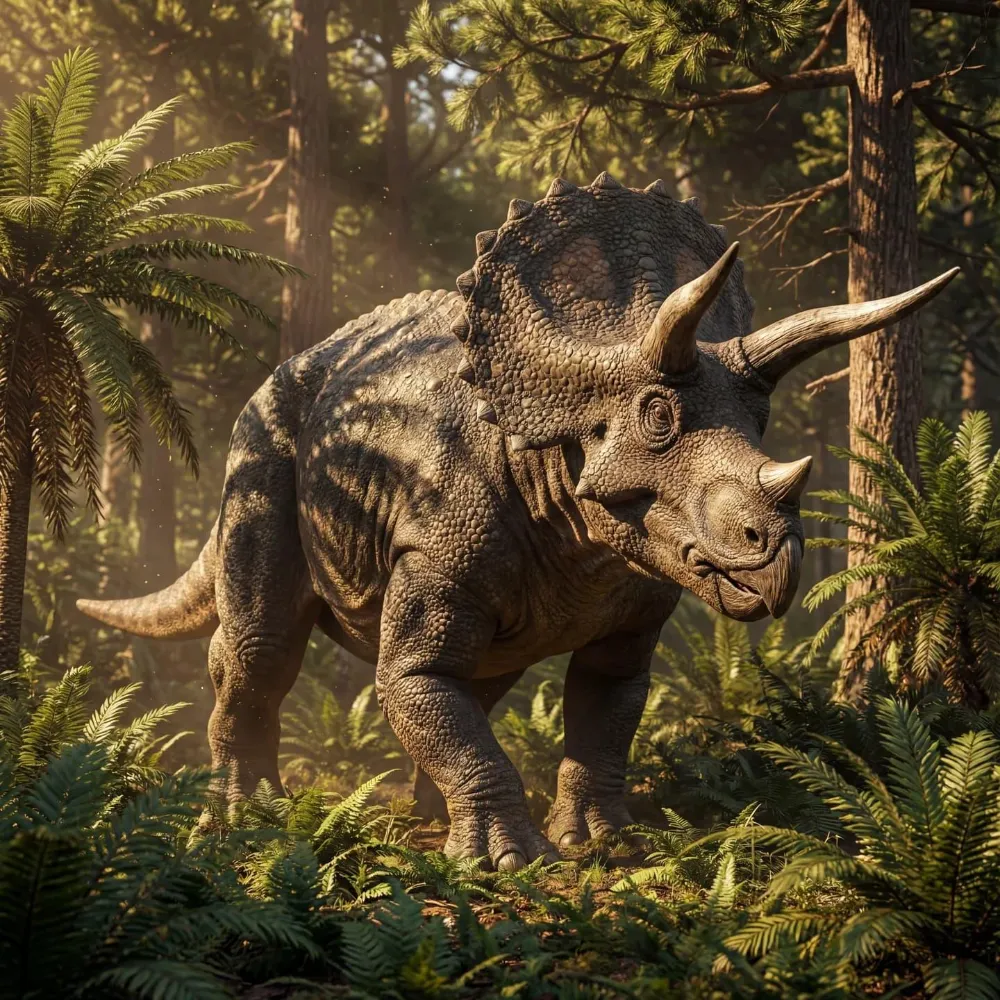
Neuquensaurus was a long-necked plant-eating dinosaur from the Late Cretaceous of South America. It belonged to the titanosaurs, a major sauropod group that became especially successful during the later part of dinosaur history. Unlike the giant record-holding sauropods, Neuquensaurus was more moderate in size, but it remains important because it helps show the broader range of titanosaur body forms. It was a sturdy herbivore with the classic sauropod plan of a small head, long neck, deep body, and long tail.
Time Period
Neuquensaurus lived during the Late Cretaceous, likely in the Campanian to Maastrichtian part of the period depending on the material being discussed. For backend use, Cretaceous is the best simple value. It lived during a time when titanosaurs were among the most important large herbivores in South America, sharing the landscape with abelisaurid predators, crocodyliforms, and many other reptiles.
Habitat
Neuquensaurus lived in what is now Argentina, in environments that likely included river plains, floodplains, open woodlands, and seasonally dry lowlands. These inland habitats supported a variety of plant life and would have provided food for medium-sized and large herbivores. The landscapes of Late Cretaceous Patagonia were not all lush swamps. Some were more seasonal and open, with changing water availability across the year.
Size and Appearance
Neuquensaurus was a relatively compact sauropod, commonly estimated at about 10 to 14 meters long and roughly 8 to 15 tonnes in weight, although exact figures remain rough estimates. It had a small head, long neck, broad torso, pillar-like legs, and a long tail. Compared with some more elongated sauropods, Neuquensaurus appears to have been fairly sturdy in build, with robust limb bones that suggest a strong and heavy body for its size. As a titanosaur, it probably had a somewhat compact overall profile rather than the extremely stretched look seen in some earlier sauropods.
Diet and Lifestyle
As a herbivore, Neuquensaurus likely fed on a wide range of Cretaceous vegetation, including leaves, shoots, and other plant material gathered with its long neck and simple teeth. Like other sauropods, it probably did not chew food heavily in the mouth, relying instead on digestive processing deeper in the body. It may have moved in loose groups at times, but direct evidence for herd structure in this genus is limited. Its body size would have offered some protection, though young individuals would still have been vulnerable to predators.
Why It Matters
Neuquensaurus matters because it helps paleontologists understand the diversity of titanosaurs in South America. Not every titanosaur was a gigantic giant, and Neuquensaurus shows that medium-sized forms were also successful members of Late Cretaceous ecosystems. It is also important historically, because fossils assigned to this dinosaur have been discussed for a long time and have played a role in sorting out the classification of South American sauropods. Even today, Neuquensaurus remains a useful dinosaur for studying how titanosaurs varied in size, proportions, and evolution.