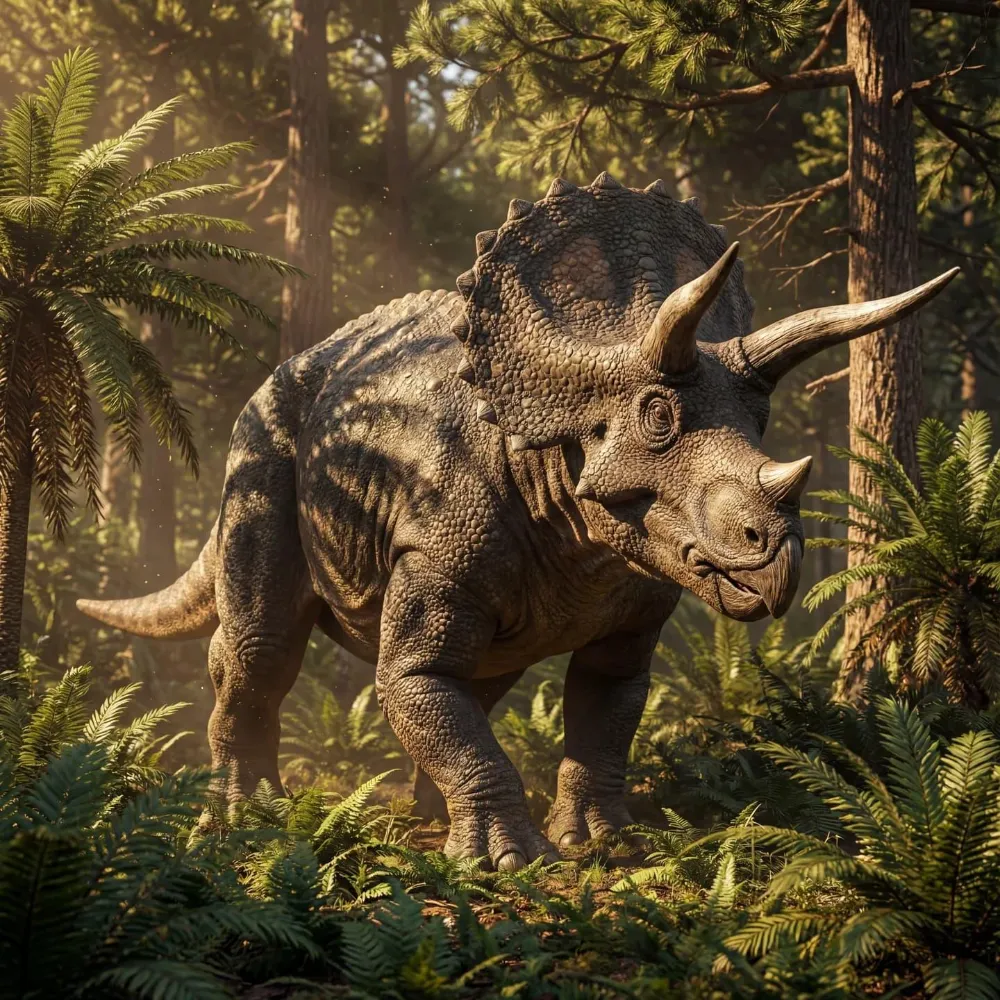
Pentaceratops was a large horned dinosaur from the Late Cretaceous of what is now the southwestern United States. It is best known for its enormous skull, deep frill, strong beak, and long facial horns. Among ceratopsians, Pentaceratops stands out as one of the most impressive skull-bearing animals ever discovered. Although it is sometimes compared with Triceratops, it had a longer, more dramatic frill and a somewhat different overall head shape.
Time Period
Pentaceratops lived during the Late Cretaceous, likely around 76 to 73 million years ago. For backend use, Cretaceous is the best simple value. More specifically, it lived during a time when horned dinosaurs were becoming especially diverse across western North America, with different species evolving distinctive horn and frill arrangements in different regions.
Habitat
Pentaceratops lived in what is now North America, especially in areas of present-day New Mexico. Its environment likely included river systems, floodplains, coastal lowlands, and vegetated plains near the margin of the Western Interior Seaway. These habitats supported abundant plant growth and many other dinosaurs, making them suitable for large herbivores and the predators that hunted them.
Size and Appearance
Pentaceratops was about 5.5 to 6 meters long and may have weighed roughly 2.5 to 5 tonnes, though these numbers remain approximate. It had a sturdy four-legged body, a powerful beak, and one of the most remarkable skulls of any dinosaur. The skull included a large nasal horn, two long brow horns, and a very elongated frill. Its name means “five-horned face,” but part of that count includes cheek-region projections rather than five equally obvious horns. Even so, Pentaceratops had a dramatic and unmistakable appearance.
Diet and Lifestyle
As a herbivore, Pentaceratops likely fed on tough low-growing vegetation, using its beak to crop plant matter and its dental batteries to process food. Like other ceratopsians, it probably relied on a strong jaw system for efficient feeding. It may have lived in groups at least part of the time, although the details of its behavior are still uncertain. Its large horns and frill were likely useful for display, species recognition, and possibly defense or rivalry between individuals.
Why It Matters
Pentaceratops matters because it helps show just how varied horned dinosaurs became during the Late Cretaceous. It is especially important for understanding the evolution of large ceratopsid skulls and display structures in the southern part of western North America. Its huge skull also makes it a favorite in museum displays and paleoart, where it represents the more extreme side of ceratopsian head ornamentation.