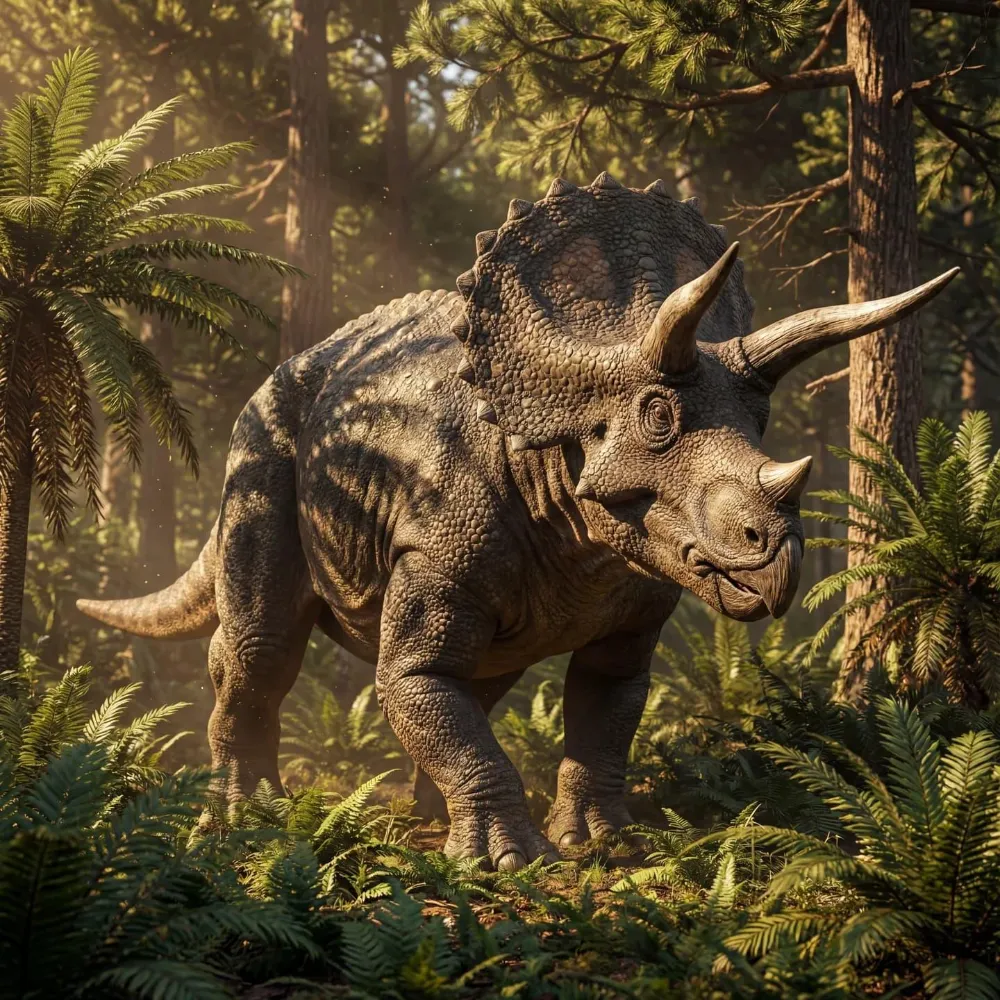
Sauroposeidon was a giant long-necked plant-eating dinosaur from the Early Cretaceous of North America. It is famous for its extraordinary neck vertebrae, which suggest that it was one of the tallest dinosaurs ever discovered. Although it is sometimes mentioned alongside the biggest sauropods of all time, Sauroposeidon is known from incomplete material, so many full-body reconstructions remain partly estimated. Even so, there is little doubt that it was an enormous and highly specialized sauropod with a remarkably elevated browsing reach.
Time Period
Sauroposeidon lived during the Early Cretaceous, likely around 113 to 110 million years ago. For your backend field, Cretaceous is the best simple choice. More specifically, it lived during a time when giant sauropods were less common in North America than they had been earlier, which makes Sauroposeidon especially notable in its ecosystem.
Habitat
Sauroposeidon lived in what is now North America, especially in environments linked to the Antlers Formation. Its habitat likely included river deltas, coastal swamps, floodplains, and warm lowland forests near the shores of an inland sea. In broad ecological terms, it probably moved through lush, wet landscapes with abundant vegetation, where a very tall browser could take advantage of food sources well above the reach of smaller herbivores.
Size and Appearance
Sauroposeidon was an enormous sauropod with a very long neck, small head, deep body, pillar-like legs, and long tail. Its total length is often estimated at about 28 to 34 meters, and its mass may have been roughly 40 to 60 tonnes, though these numbers are still debated because the skeleton is incomplete. What makes Sauroposeidon especially distinctive is the neck. Its cervical vertebrae were exceptionally long and internally lightened by air spaces, allowing the neck to become massive without becoming impossibly heavy. This likely gave the animal one of the tallest feeding postures of any known dinosaur.
Diet and Lifestyle
As a herbivore, Sauroposeidon likely fed on large quantities of leaves, shoots, and other high-growing vegetation. Its long neck would have allowed it to browse over a wide vertical range without moving its entire body as often as shorter animals. Like other sauropods, it probably used peg-like teeth mainly for stripping vegetation rather than chewing it in the mouth. Much of its food processing would have happened deeper in the digestive system. Its great size would also have provided a strong defense against many predators.
Why It Matters
Sauroposeidon matters because it shows that giant sauropods did not disappear entirely from North America after the Jurassic. It also helps paleontologists study the upper limits of neck length, body height, and lightweight skeletal design in dinosaurs. Even though the fossil material is incomplete, Sauroposeidon remains one of the most important dinosaurs for understanding how truly gigantic herbivores evolved and functioned.