Some places really are named after insects, but several famous examples are more complicated than they first appear. Dali's Butterfly Spring has a genuine connection to local butterfly gatherings, while Taiwan's Purple Butterfly Valley is an ecological name associated with overwintering butterflies. But the Mosquito Coast was not named because it had many mosquitoes, and Panama's supposed “butterfly” origin is only one of several competing explanations. Here are five well-known insect-related place names and the real stories behind them.
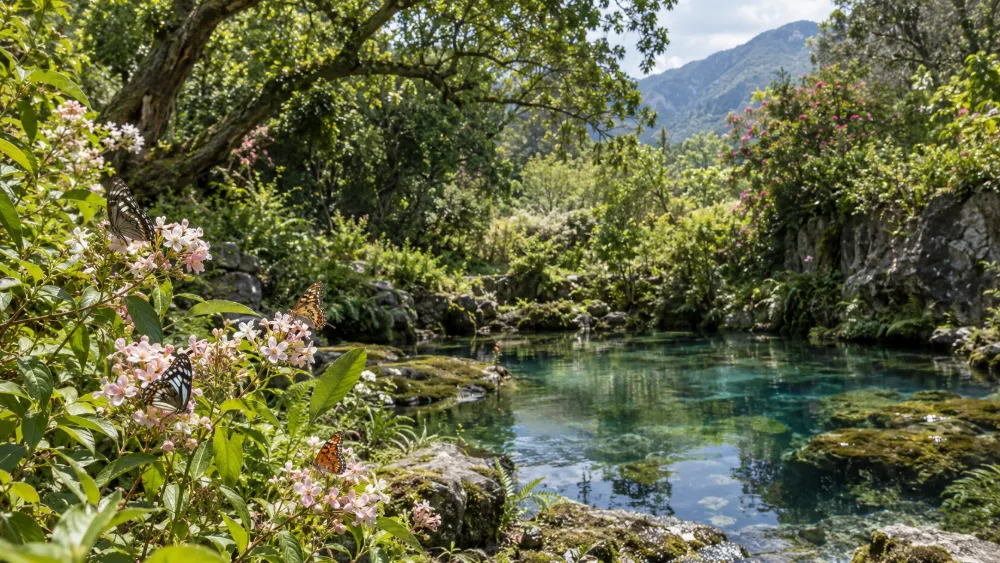
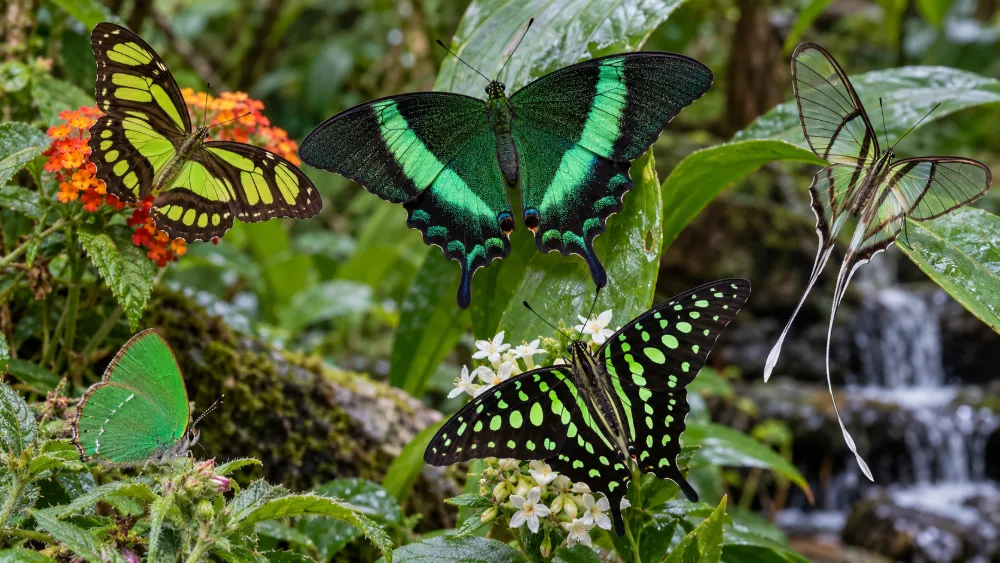
Butterfly Spring in Dali, China, is one of the clearer examples of a place whose modern identity is closely associated with butterflies.
Are There Really Places Named After Insects?
Yes, but the answer depends on what counts as a “place name.”
Some official geographic names have historical links to animals or insects. Others are scenic names, tourist attractions, ecological terms or popular nicknames rather than official names of countries or cities.
There is another complication: folk etymology.
A place may have a name that sounds like an insect word in English, leading people to invent an insect-based explanation even when historical evidence points somewhere else.
| Place | Claimed Insect Connection | What the Evidence Shows |
|---|---|---|
| Panama | Butterflies | Possible connection, but the origin of the name is uncertain and several explanations exist |
| Kota Kinabalu, Malaysia | Fireflies | Mostly a myth; historical Api-Api is associated with the Malay word for fire, not firefly |
| Mosquito Coast | Mosquitoes | False; the name is connected to the Miskito people |
| Butterfly Spring, China | Butterflies | Real modern connection to butterfly gatherings around the spring |
| Purple Butterfly Valley, Taiwan | Purple crow butterflies | Real ecological name, although it is not an official administrative place name |
Panama: Is the Country Really Named After Butterflies?
Panama is often described online as a country whose name means “butterfly” or “place of many butterflies.” The real story is less certain.
Official Panamanian information describes the word Panamá as Indigenous in origin, probably from the Cueva language, but acknowledges several proposed meanings.
One widely repeated interpretation is “an abundance of fish and butterflies.” That gives butterflies a genuine place in the traditional explanations of the country's name.
However, it is not the only explanation.
Other theories connect the name to a local tree known as the panamá tree, Indigenous settlements near the site of Panama City, a local chief, or other Indigenous-language meanings.
It is therefore more accurate to say:
Panama may have an etymological connection to butterflies, but historians do not have one universally proven explanation for the name.
Why Is Panama Associated With Butterflies?
The association is not surprising from a biological point of view. Tropical Central America has exceptionally rich butterfly diversity, and butterflies are conspicuous throughout many of Panama's forest ecosystems.
That ecological reality probably helped the “fish and butterflies” interpretation become especially memorable.
But abundant butterflies alone do not prove the origin of a geographic name.
Kota Kinabalu: Was It Really Called the Firefly City?
No reliable evidence supports the common internet claim that Kota Kinabalu was named after fireflies.
The modern city in Sabah, Malaysia, was formerly known as Jesselton. An earlier settlement in the area was called Api-Api or simply Api.
This is where the confusion appears to have developed.
According to Kota Kinabalu City Hall, api is a Malay word meaning fire. Several historical explanations have been proposed for the older Api-Api name, including fires associated with conflict and a nearby river called Sungai Api-Api.
It does not mean “firefly.”
Jesselton was officially renamed Kota Kinabalu in 1968, and the present name refers to nearby Mount Kinabalu.
Therefore, Kota Kinabalu should not normally appear on a list of cities definitely named after insects.
Mosquito Coast: Surprisingly, It Was Not Named After Mosquitoes
This is one of the best examples of a misleading animal-sounding place name.
The Mosquito Coast, also called the Mosquito Shore or Mosquitia in historical sources, stretches along parts of the Caribbean coasts of modern Nicaragua and Honduras.
Given the humid tropical environment, it is easy to assume that Europeans called it the Mosquito Coast because the region had huge numbers of mosquitoes.
That explanation is incorrect.
The name is associated with the Indigenous Miskito people of the region. Historical European spellings transformed or rendered the tribal name in forms such as Mosquito or Moskito.
NASA's Earth Observatory likewise explains that “Mosquito Coast” is a corruption of the name Miskito rather than a reference to the insect.
Are There Mosquitoes on the Mosquito Coast?
Of course. The tropical lowlands of Central America provide suitable habitat for many mosquito species.
But the presence of mosquitoes and the origin of the geographic name are two different questions.
This distinction is important because folk explanations often arise when a place name happens to resemble a familiar English word.
Butterfly Spring in Dali: A Genuine Butterfly-Related Place
Butterfly Spring is a well-known scenic attraction near Dali in Yunnan Province, southwestern China.
Unlike the Mosquito Coast example, butterflies really are central to the modern identity of this place.
The spring lies beneath vegetation and flowering trees that historically attracted butterflies during favorable seasons. Accounts from the official Butterfly Spring tourist area describe butterflies gathering around flowering trees and the spring in early summer.
The site has consequently become strongly associated with butterfly viewing, local culture and tourism.
Do Thousands of Butterflies Always Appear at Butterfly Spring?
No.
Butterfly activity changes with season, weather, habitat conditions and local butterfly populations.
Historical and tourism descriptions sometimes portray enormous butterfly gatherings, but visitors should not assume that spectacular swarms occur every day.
The more defensible statement is that the site has a long-established cultural and ecological association with butterflies.
Purple Butterfly Valley in Taiwan
Another strong insect-related example is Taiwan's Purple Butterfly Valley.
The term is associated especially with the Maolin area of southern Taiwan, where large numbers of purple crow butterflies gather in sheltered valleys during winter.
Several species of Euploea butterflies participate in this seasonal phenomenon.
Depending on conditions, very large numbers of butterflies can accumulate in suitable overwintering habitat.
Is Purple Butterfly Valley an Official Place Name?
Not exactly.
Taiwan's Maolin National Scenic Area Administration explains that “Purple Butterfly Valley” is not a single official geographic place name. Instead, butterfly researchers use the term for valleys where purple crow butterflies gather to overwinter.
This makes it a useful reminder that not every insect-related name on a map or travel website represents an official administrative location.
Where Is Taiwan's Purple Butterfly Valley?
The phenomenon is especially associated with Maolin in Kaohsiung, southern Taiwan.
Purple crow butterflies generally arrive in the region during the cooler months and use warm, sheltered valleys as overwintering habitat before dispersing again as conditions change.
The Maolin National Scenic Area has developed butterfly-watching routes and conservation programs around this unusual seasonal migration.
What About the “Valley of Thousand Butterflies” in Taipei?
Older articles sometimes refer to a “Valley of Thousand Butterflies” in Taipei and describe tens of thousands of nectar plants attracting butterflies.
That description should be treated cautiously.
The much better documented Taiwanese butterfly-valley phenomenon occurs in southern Taiwan, particularly around Maolin in Kaohsiung, rather than being a famous Taipei attraction of that exact name.
For this reason, Maolin's Purple Butterfly Valley is a more reliable example when discussing insect-related geographic names in Taiwan.
Why Are False Insect Place-Name Stories So Common?
Place-name myths are easy to create because people naturally search for familiar meanings inside unfamiliar words.
If a place is called Mosquito Coast, most English speakers immediately picture mosquitoes. If a historical Malaysian settlement was called Api-Api and a translation incorrectly connects it with fireflies, that explanation can spread quickly from one website to another.
Three problems are especially common:
Folk etymology: a familiar-looking word is given an attractive but historically unsupported explanation.
Translation errors: words in Indigenous or local languages are translated incorrectly.
Tourism stories becoming “facts”: legends, nicknames and promotional descriptions are later repeated as formal historical explanations.
For reliable place-name research, historical records and official geographic or cultural sources are generally more useful than lists copied from travel blogs.
Which of These Places Are Actually Named After Insects?
The answer is not simply yes or no.
Butterfly Spring: genuinely and strongly associated with butterflies.
Purple Butterfly Valley: a genuine butterfly-related ecological name, although not one formal administrative place.
Panama: butterflies feature in one important traditional explanation of the name, but the etymology remains uncertain.
Mosquito Coast: not named after mosquitoes; its name comes from the Miskito people.
Kota Kinabalu: not named after fireflies; the modern name refers to Mount Kinabalu.
So some famous “insect place names” are genuine, while others survive mainly because an incorrect explanation sounds convincing.
Frequently Asked Questions
What country is named after a butterfly?
Panama is sometimes described this way because one traditional interpretation of its Indigenous name refers to an abundance of fish and butterflies. However, several other explanations for the name Panama exist, so it is misleading to state as a proven fact that the country was simply named after butterflies.
Why is it called the Mosquito Coast?
The Mosquito Coast was named after the Miskito people of the Caribbean coast of Nicaragua and Honduras. It was not named because the region had unusually large numbers of mosquitoes.
Is Mosquito Coast named after mosquitoes?
No. Despite the English spelling, historical and geographic sources trace the name to the Miskito people.
Does Api-Api mean firefly?
No. Kota Kinabalu City Hall identifies api as the Malay word for “fire.” The older name Api-Api has several proposed local historical origins, but it should not be translated simply as “firefly.”
Why is Kota Kinabalu called Kota Kinabalu?
The modern city is named after Mount Kinabalu. “Kota” can mean a fort or city in Malay, while Kinabalu refers to the nearby mountain.
Is Butterfly Spring really full of butterflies?
Butterflies are genuinely associated with Butterfly Spring in Dali, especially during favorable seasonal conditions. However, butterfly numbers vary, so visitors should not assume that the huge swarms described in traditional stories occur continuously.
Where is Purple Butterfly Valley?
The best-known Purple Butterfly Valley phenomenon is associated with Maolin in southern Taiwan. The name refers to overwintering valleys used by large numbers of purple crow butterflies rather than to one formally designated administrative place.
Are spiders insects?
No. Spiders are arachnids, not insects. Both belong to the phylum Arthropoda, but insects have six legs and three main body regions, while spiders have eight legs and two main body regions.
Scientific and Official Sources
NASA Earth Observatory — The Mosquito Coast and the origin of the name from the Miskito people.
Embassy of Panama — historical explanations for the name Panamá, including the “fish and butterflies” interpretation and alternative theories.
Dewan Bandaraya Kota Kinabalu — official history and etymology of Kota Kinabalu and the earlier Api-Api settlement.
Dali Butterfly Spring official tourism site — history and butterfly associations of Butterfly Spring in Yunnan.
Maolin National Scenic Area Administration — Purple Butterfly Valley, purple crow butterfly migration and overwintering ecology in southern Taiwan.