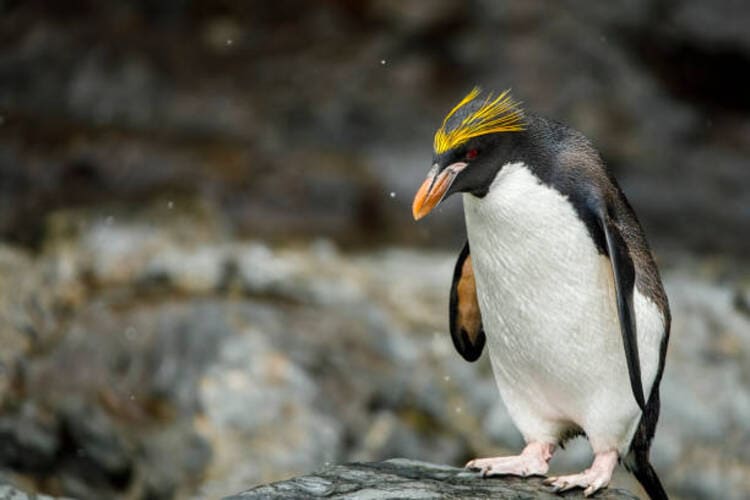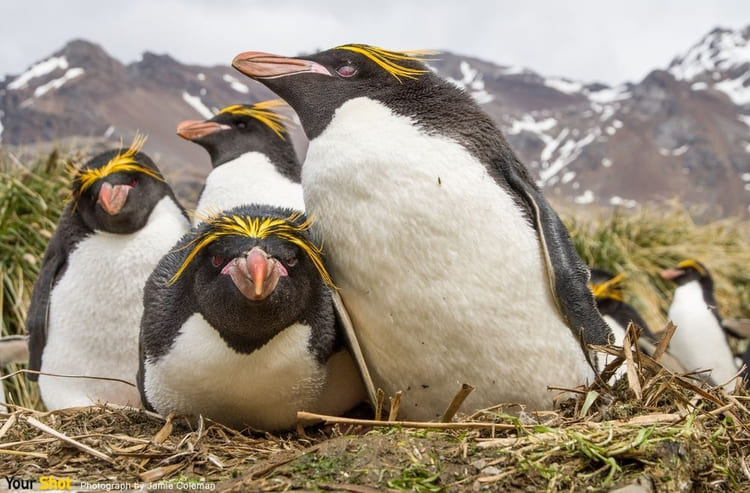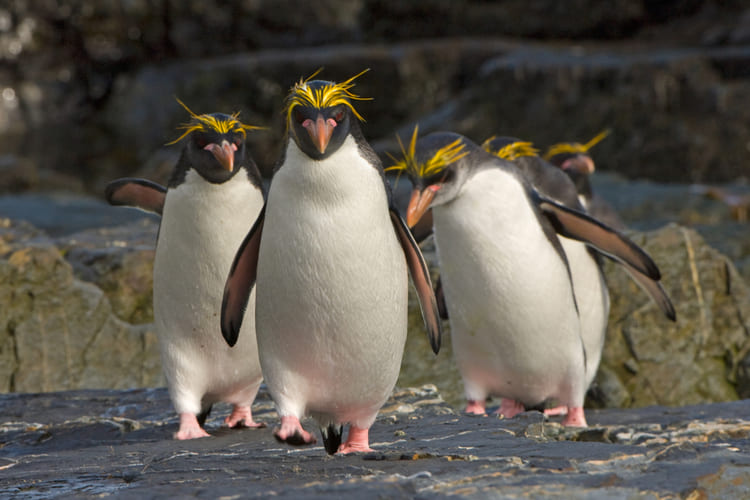
Macaroni penguin (Eudyptes chrysolophus) is a large crested penguin distinguished by its long, bright golden crest. It breeds on sub‑Antarctic islands including South Georgia, South Shetland, South Orkney, Prince Edward, Crozet, Kerguelen, Heard–McDonald and Bouvet, and forages widely in the Southern Ocean. IUCN status:Vulnerable (VU) with an overall declining trend.
Ecology & Behaviour
Diet dominated by Antarctic krill, with fish and cephalopods varying by site and year. Huge colonies nest on rocky slopes and tussock grass; both parents incubate and guard chicks. Dive depths and trip distances respond to oceanographic conditions.
Identification
Extensive golden crest sweeping back from the forehead; black upperparts, white underparts, and an orange‑brown bill. Compared with Fiordland/rockhopper penguins, the crest is longer and denser and facial/bill tones differ.
Breeding
Two‑egg clutch with the first egg smaller and less likely to hatch; incubation ~33–37 days; fledging ~60–70 days. Wild longevity typically 8–15 years.
Threats & Conservation
Climate‑driven changes in krill availability affecting breeding success and adult condition.
Fishery interactions (krill harvest, bycatch) and disturbance at some colonies.
Ongoing biosecurity to prevent invasive species and disease.
Actions: biosecurity and visitor controls on key islands, bycatch mitigation and ecosystem‑based krill management, long‑term monitoring.